追随力

Search documents
不会当追随者的人,很难成为卓越的领导者
3 6 Ke· 2026-01-16 00:22
Core Insights - The most effective leaders are not heroic commanders but exemplary followers who deeply listen, continuously learn, collaborate broadly, courageously question, and consistently adjust [1][3][6] Group 1: Leadership and Followership - Top leaders possess undervalued skills of excellent followers, emphasizing the importance of listening to engineers, customers, and critics rather than issuing top-down commands [3][4] - Leadership and followership are dynamic processes of co-creation rather than fixed hierarchical relationships, requiring leaders to master good followership skills even when in power [4][5] Group 2: Challenges in Leadership - Many leaders struggle with followership due to a focus on appearing smart or capable, which hinders effective listening and learning [5][6] - Leadership failures often stem from a lack of understanding that the foundation of leadership is not about controlling others but inspiring voluntary followership [5][6] Group 3: Importance of Followership - In today's complex world, leaders must rely more on emotional intelligence and the ability to connect genuinely with others, as no individual can fully grasp all answers [6][7] - Effective leaders often have experiences as excellent followers, learning how organizations operate and what is needed for success [6][7] Group 4: Core Followership Qualities - Five core followership qualities that organizations should seek in leaders include: 1. **Active Listening**: Effective followers listen to understand, not just to confirm their beliefs, which helps avoid disconnection from reality [9] 2. **Goal Orientation**: Valuable followers prioritize team or organizational benefits over personal accolades, fostering a culture of collective performance [10] 3. **Reliable Execution**: Followers are practical doers who translate strategies into tangible results, ensuring leaders understand the realities of implementation [11] 4. **Constructive Challenge**: Competent followers challenge constructively, providing valuable insights and avoiding pitfalls of unchallenged authority [12] 5. **Coachability**: Excellent followers maintain a learning mindset, seeking feedback and adapting to new challenges, which is crucial for leadership development [13]


所谓领导力,不是谁管谁,而是谁帮谁
3 6 Ke· 2025-06-30 01:27
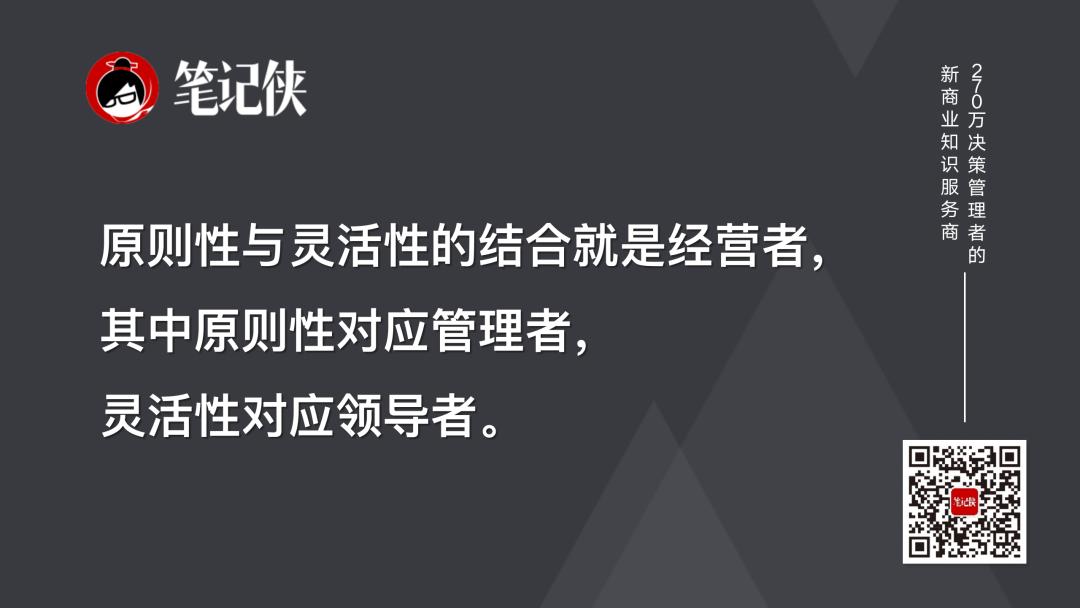
Group 1 - The core viewpoint of the article emphasizes the redefinition of leadership in the context of digital transformation, where leaders must navigate not only human management but also the integration of AI and robotics in teams [1] - The article discusses the distinction between leaders and managers, suggesting that effective leadership combines adherence to rules with the flexibility to adapt to changes [2][3] - It highlights the concept of VUCA (Volatility, Uncertainty, Complexity, Ambiguity), stressing that volatility is a greater challenge than uncertainty in today's environment [5][7] Group 2 - The article defines leadership as the mutual influence between leaders and followers in a specific environment to achieve goals, encompassing four key elements: the presence of leaders and followers, their interaction, and the achievement of objectives [8][10] - It outlines the responsibilities of leaders, which include establishing direction, building followership, managing power dynamics, and creating an enabling environment [15][29][41] - The concept of "Job Crafting" is introduced, emphasizing the importance of allowing employees to customize their work roles to enhance engagement and satisfaction [41][53] Group 3 - The article discusses the importance of altruism in leadership, suggesting that leaders should create environments that empower employees to take ownership of their work and responsibilities [44][54] - It emphasizes the need for leaders to adapt their influence strategies based on the evolving dynamics of their teams, particularly with the emergence of younger generations in the workforce [33][36] - The article concludes that effective leadership in the digital age requires a balance of traditional management skills and the ability to foster a collaborative and adaptive organizational culture [1][55]