选边站队

Search documents
贺文萍:强迫非洲“选边站队”已不现实
Xin Lang Cai Jing· 2026-01-16 23:11
Group 1 - Kenya has achieved zero-tariff access for 98.2% of its products to the Chinese market, following ongoing communication between the two countries regarding tariff exemptions for African products announced by China for 2025 [1] - The U.S. has reportedly pressured Kenya regarding its trade agreements with China, suggesting that such cooperation could jeopardize Kenya's prospects of joining the U.S. "Strategic Trade and Investment Partnership Agreement" [1] - The U.S. has a history of exerting pressure on African nations, as seen in its actions against South Africa, indicating a pattern of increasing assertiveness in its foreign policy towards Africa [2] Group 2 - Historically, African nations have struggled with external pressures and influences, often lacking the agency to make independent choices in their development paths [3] - There is a growing recognition among African countries that their foreign relations should be based on mutual respect and equality, moving away from the notion of "choosing sides" [4] - Many African nations are pursuing political stability and economic reforms, aiming to capitalize on new industrial development opportunities, reflecting a shift towards self-determined development strategies [4] Group 3 - The U.S. is attempting to maintain its influence in Africa by pressuring specific countries like Kenya, which holds significant regional importance, while imposing strict political and economic conditions [5] - Kenyan scholars emphasize the importance of balancing relationships with both China and the U.S., highlighting the impracticality of being forced into a binary choice between the two [5] - African nations are increasingly focused on their development progress rather than external pressures to align with specific powers, indicating a shift towards a more proactive role in international relations [5]
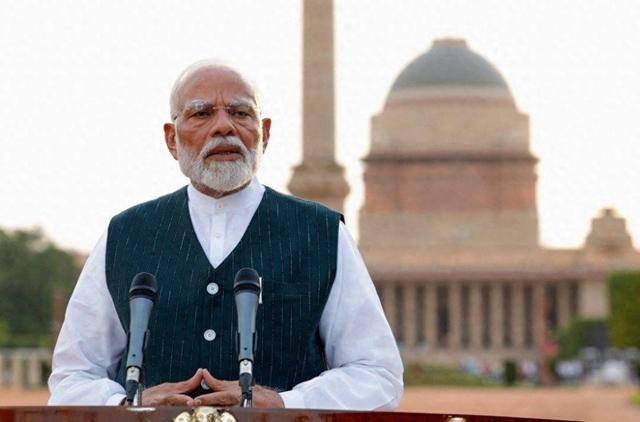
印度背后捅刀中国,美高官前脚到,莫迪后脚递出“投名状”
Sou Hu Cai Jing· 2025-12-12 15:43
Group 1 - India imposed a temporary 12% tariff on imported steel to protect domestic manufacturers, particularly small and medium-sized steel companies, starting from April 21, 2023 [1][3] - The tariff aims to stabilize the local market and reduce reliance on cheap imports, especially from China, which has become India's second-largest source of steel imports for the fiscal year 2024-2025 [1][3] - The Indian government acknowledges that while the tariff may alleviate short-term pressures, it does not address the underlying issues of domestic steel production competitiveness [3] Group 2 - During a visit by U.S. Vice President JD Vance to India, discussions included a roadmap for reducing tariffs, marking a significant shift in U.S.-India trade relations [5][8] - India is expected to increase its imports of U.S. oil and gas by 30% by 2026 as part of the negotiations, while also discussing defense cooperation and technology transfers [10] - The U.S. is leveraging tariff reductions to encourage India to align more closely with American interests, particularly in reducing dependence on Chinese manufacturing [7][10] Group 3 - Despite the tariff on steel, India remains dependent on China for various imports, including electronic and pharmaceutical raw materials, indicating a complex trade relationship [8][12] - The overall trade deficit with China is significant, with steel being a focal point, while India's total trade volume with China reached 127.7 billion tons [10][12] - Future cooperation between India and China is anticipated, with potential agreements to enhance mutual trade and address previous conflicts [12]