通江达海

Search documents
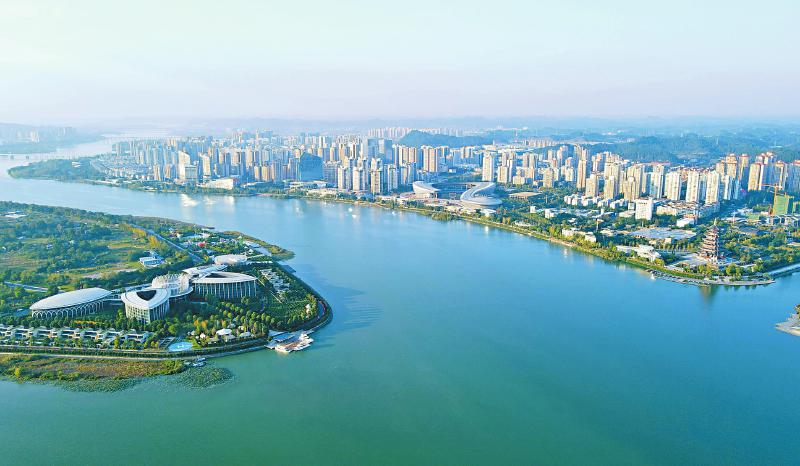
涪江复航有了时间表 打开遂宁“通江达海”想象空间
Si Chuan Ri Bao· 2026-01-06 09:24
Core Viewpoint - The construction of the Fuxi River navigation project in Suining marks a significant step towards revitalizing water transport along the river, aiming to enhance connectivity and logistics efficiency in the region by 2030 [3][5]. Group 1: Project Overview - The Fuxi River, a major tributary of the Jialing River, is undergoing a revival with the launch of the first phase of the navigation project, which aims to facilitate the passage of 1,000-ton vessels by 2030 [3][5]. - The project includes the construction of a single-direction lock at the Sanxing Hydropower Station, which is expected to handle an annual cargo volume of 14.67 million tons, addressing a critical bottleneck in the navigation system [4][5]. Group 2: Economic Impact - The revival of the Fuxi River is anticipated to significantly reduce logistics costs for industries in Suining, particularly the lithium battery sector, which is projected to reach a scale of 67 billion yuan by 2024 [7][8]. - The estimated annual transportation cost from Chongqing Guoyuan Port to Suining via waterway is projected to be 1,344 million yuan, a substantial reduction compared to the current road transport costs of 3,024 million yuan [8]. Group 3: Infrastructure Development - The project includes the development of the Suining Port Dasha Basin operation area, which will have a throughput capacity of 2.1 million tons and is expected to be completed by 2028 [8]. - The overall plan involves the construction of 20 hydropower hubs along the Fuxi River, with 16 already completed, although some lack necessary locks for full navigation [4][6]. Group 4: Strategic Positioning - Suining aims to establish itself as a central hub for water transport in the Sichuan region, leveraging its unique position along the only high-grade national waterway in the central Sichuan area [9]. - The strategic development of ports in Suining is expected to attract cargo from surrounding regions, enhancing its role in the broader logistics network [9].

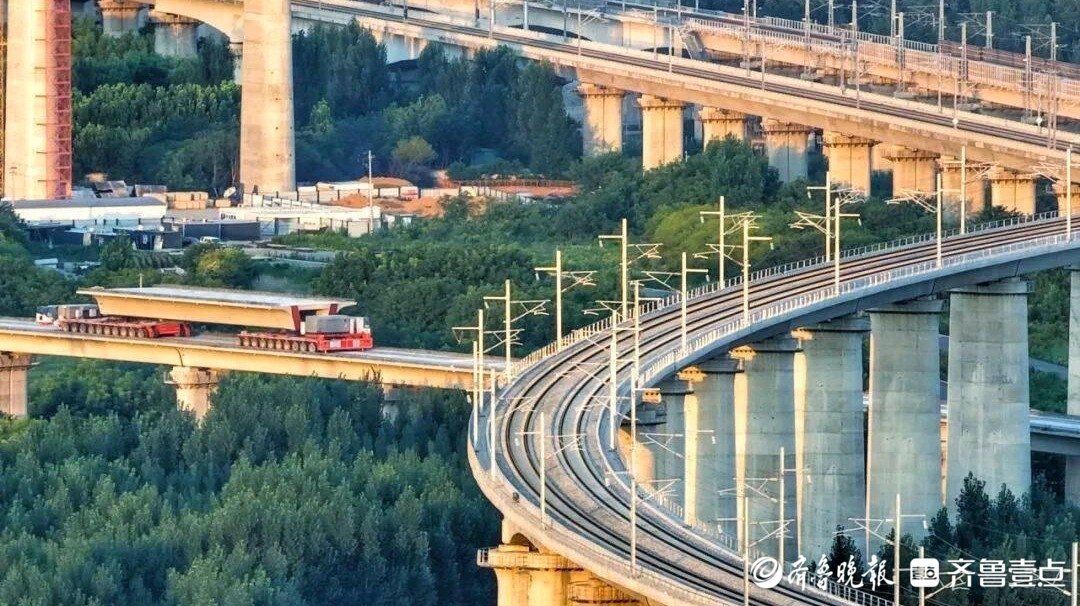
跨黄通道21处、高铁通达366城!济南筑牢全国枢纽地位
Qi Lu Wan Bao Wang· 2025-10-08 03:02
Core Insights - Jinan has significantly accelerated its transportation infrastructure development over the past five years, enhancing connectivity and urban vitality [1] Group 1: Metro Development - Jinan's metro system has expanded with operational lines totaling nearly 97 kilometers, including the recently opened Phase II of Line 3, which connects directly to the airport [3] - By 2027, the metro network is expected to exceed 315 kilometers with six additional lines under construction, improving accessibility for residents [3] Group 2: Public Transport Integration - The integration of bus and metro services has improved last-mile connectivity, with 218 bus routes now seamlessly connecting to 46 metro stations [5] - Over the past five years, Jinan has optimized 278 bus routes and filled 355.9 kilometers of service gaps, introducing innovative services like "street block buses" for short-distance travel [5] Group 3: Railway Infrastructure - Jinan is a key national railway hub with 20 operational rail lines totaling 835 kilometers, including 12 high-speed rail lines [5] - Approximately 660 high-speed trains depart daily from Jinan, connecting to 366 cities nationwide, enhancing the city's role as a transportation hub [5] Group 4: Highway Network - The highway network in Jinan has developed a comprehensive structure, with a total of 899.3 kilometers of highways, maintaining the highest road density in the province [5] Group 5: Cross-River Infrastructure - Jinan has constructed 21 cross-river passages, significantly improving traffic efficiency across the Yellow River [7] - The city is advancing its airport expansion, aiming to accommodate large aircraft and enhance its status as a major transportation hub with a projected annual passenger capacity of 55 million [7] Group 6: Waterway Development - The upcoming opening of a 23.34-kilometer waterway on the Little Qing River will provide Jinan with direct access to coastal ports, fulfilling its goal of maritime connectivity [7]