通用函数逼近器

Search documents
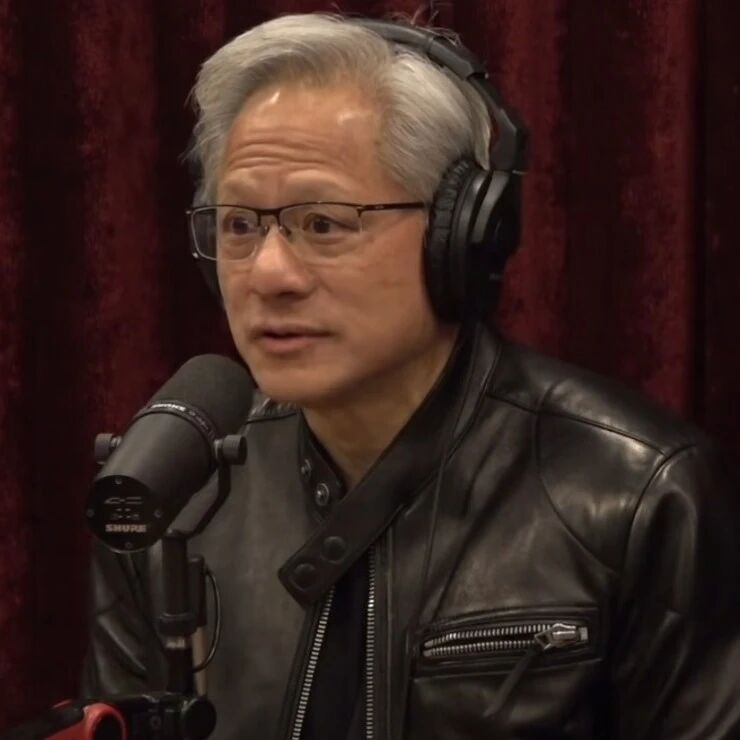
黄仁勋最新采访:依然害怕倒闭,非常焦虑
半导体芯闻· 2025-12-08 10:44
Core Insights - The discussion highlights the transformative impact of artificial intelligence (AI) and the role of NVIDIA in driving this technological revolution, emphasizing the importance of GPUs in various applications from gaming to modern data centers [2][10]. Group 1: AI and Technological Competition - The conversation underscores that the world is in a significant technological race, particularly in AI, where the first to reach advanced capabilities will gain substantial advantages [11][12]. - Historical context is provided, indicating that the U.S. has always been in a technological competition since the Industrial Revolution, with AI being the latest frontier [12][13]. Group 2: Energy and Manufacturing - The importance of energy growth and domestic manufacturing is emphasized as critical for national security and economic prosperity, with a call for revitalizing U.S. manufacturing capabilities [8][9]. - The discussion points out that without energy growth, industrial growth and job creation would be severely hindered, linking energy policies directly to advancements in AI and technology [9][10]. Group 3: AI Development and Safety - Concerns about the risks associated with AI are acknowledged, particularly regarding its potential military applications and ethical implications [19][20]. - The conversation suggests that AI's development will be gradual rather than sudden, with a focus on enhancing safety and reliability in AI systems [14][15]. Group 4: Future of AI and Knowledge Generation - The potential for AI to generate a significant portion of knowledge in the future is discussed, with predictions that AI could produce up to 90% of knowledge within a few years [41][42]. - The necessity for continuous verification of AI-generated information is highlighted, stressing the importance of ensuring accuracy and reliability in AI outputs [41][42]. Group 5: Cybersecurity and Collaboration - The dialogue emphasizes the collaborative nature of cybersecurity, where companies share information and best practices to combat threats collectively [23][24]. - The need for a unified approach to cybersecurity in the face of evolving threats is reiterated, suggesting that cooperation is essential for effective defense [23][24].


黄仁勋最新采访:依然害怕倒闭,非常焦虑
半导体行业观察· 2025-12-06 03:06
Core Insights - The discussion highlights the transformative impact of artificial intelligence (AI) and the role of NVIDIA in driving this technological revolution, emphasizing the importance of GPUs in various applications from gaming to modern data centers [1] - Huang Renxun discusses the risks and rewards associated with AI, the global AI race, and the significance of energy and manufacturing for future innovations [1] Group 1: AI and Technological Competition - The ongoing technological competition has been a constant since the Industrial Revolution, with the current AI race being one of the most critical [10][11] - Huang Renxun emphasizes that technological leadership is essential for national security and economic prosperity, linking energy growth to industrial growth and job creation [7][8] - The conversation touches on the historical context of technological races, including the Manhattan Project and the Cold War, underscoring the continuous nature of these competitions [11] Group 2: AI Development and Safety - Huang Renxun expresses optimism about the gradual development of AI, suggesting that advancements will be incremental rather than sudden [13] - The discussion addresses concerns about AI's potential risks, including the ethical implications of military applications and the need for robust cybersecurity measures [16][20] - Huang Renxun believes that AI's capabilities will increasingly focus on safety and reliability, reducing the occurrence of errors or "hallucinations" in AI outputs [14] Group 3: Future of Work and AI's Impact - The conversation explores the potential for AI to create a future where traditional jobs may become obsolete, leading to a society where individuals receive universal basic income [37] - Huang Renxun acknowledges the challenges of identity and purpose as AI takes over tasks traditionally performed by humans, emphasizing the need for society to adapt to these changes [38] - The discussion highlights the importance of maintaining human engagement and problem-solving in a future dominated by AI technologies [38] Group 4: Quantum Computing and Security - Huang Renxun discusses the implications of quantum computing on encryption and cybersecurity, suggesting that while current encryption methods may become outdated, the industry is actively developing post-quantum encryption technologies [22][23] - The conversation emphasizes the collaborative nature of cybersecurity efforts, where companies share information to enhance collective defenses against threats [20][21] - Huang Renxun asserts that AI will play a crucial role in future cybersecurity measures, leveraging its capabilities to protect against evolving threats [21]