通用大脑

Search documents
一个大脑控制所有机器人,真的可能吗?特斯拉、Skild AI、Agility 激辩人形机器人的量产路线|GTC 2026
AI科技大本营· 2026-03-18 07:52
Core Insights - The article discusses the transition of humanoid robots from laboratory settings to real-world applications, emphasizing the challenges and strategies involved in scaling production and deployment [1][3][10]. Group 1: Industry Trends - The focus of discussions has shifted from whether humanoid robots can be created to how they can be effectively produced and integrated into various environments [3][5]. - Companies are recognizing that the most significant challenges now lie in ensuring robots can operate reliably and continuously in real-world conditions, rather than merely getting them to move [8][10]. Group 2: Data Collection Strategies - Agility Robotics emphasizes a "data pyramid" approach, where the most valuable data comes from direct remote operation in real environments, while lower tiers consist of easier-to-collect data that may be less relevant [28][30]. - Physical Intelligence advocates for collecting large amounts of real-world data from various robot forms to enhance the model's understanding and adaptability [38][41]. - Tesla's experience with autonomous driving data informs its humanoid robot development, focusing on identifying valuable data rather than just accumulating large volumes [44][46]. Group 3: Simulation and Real-World Integration - The article highlights the importance of simulation in training robots, but stresses that it cannot fully replace real-world data due to the complexities of physical interactions [84][90]. - Companies are exploring how to bridge the "sim-to-real gap" by using real-world data to refine simulations and improve robot performance in unpredictable environments [111][128]. Group 4: Model Architecture - Different companies are pursuing varied approaches to robot intelligence, with some advocating for a single, unified model to control multiple robot forms, while others prefer a layered architecture for task management [130][132]. - The hierarchical model allows for more efficient task execution and supervision, enabling robots to break down complex tasks into manageable steps [132][135].



2年估值破100亿,千寻智能却不敢松口气
Sou Hu Cai Jing· 2026-02-27 08:08
Core Insights - The humanoid robot sector is witnessing a significant shift with the emergence of new players, as evidenced by Spirit AI's recent funding round that raised nearly 2 billion yuan, pushing its valuation over 10 billion yuan [2][3] - The entry of Spirit AI into the "billion club" indicates a growing trend where high valuations are becoming more common in the humanoid robot industry, suggesting a developing sector effect [4][5] Company Overview - Spirit AI, founded in January 2024, achieved a valuation of over 10 billion yuan within just 26 months, making it one of the youngest companies to reach this milestone [7][8] - The company has completed six funding rounds, raising approximately 3.328 billion yuan in total, reflecting a rapid financing pace that aligns with the industry's evolving landscape [8][15] Market Dynamics - The current investment climate shows that capital is willing to bet on future potential, but only for companies that are already in the leading tier [5][6] - The humanoid robot sector is transitioning from a conceptual phase to a validation phase, with investors now focusing on practical applications and production capabilities rather than just ideas [27] Technological Advancements - The founder of Spirit AI, Han Fengtao, emphasizes the importance of data in developing humanoid robots, stating that the lack of sufficient data has historically hindered the industry's growth [17][21] - The company adopts a unique approach to data collection, prioritizing large-scale, cost-effective methods over traditional, smaller-scale experiments, which has led to significant cost reductions [19][20] Competitive Landscape - Spirit AI faces competition from larger tech companies like Xiaomi and Huawei, which have the potential to dominate the market due to their comprehensive hardware and software capabilities [26] - The company aims to establish itself as a "mid-tier" player by selling at least 100,000 robots annually before larger firms fully enter the market [26] Industry Trends - The humanoid robot sector is experiencing a decline in overall funding activity, with a 42% year-over-year decrease in financing amounts and a 35% reduction in the number of financing events by Q3 2025 [27] - This shift indicates a move from speculative investments to a focus on tangible results and operational capabilities within the industry [27]
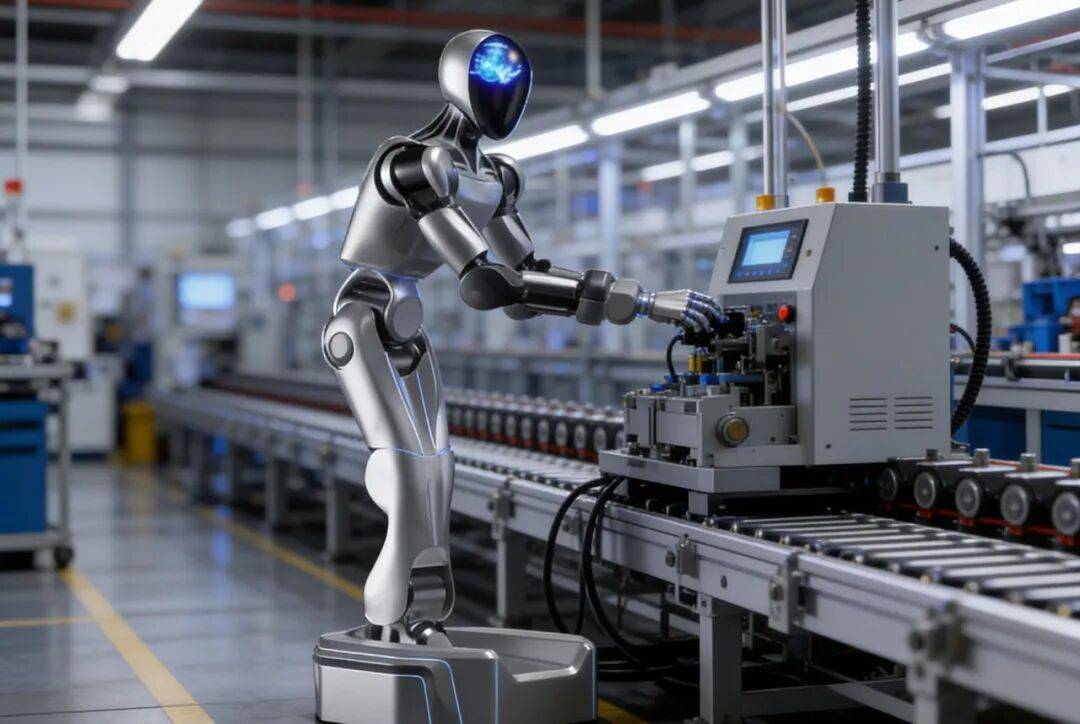
太狠了,四条腿被锯掉也能爬,通用大脑开启机器人「无休」时代
3 6 Ke· 2025-10-17 12:47
Core Insights - Skild AI has introduced a revolutionary concept called Skild Brain, an independent robotic brain that allows robots to adapt and continue functioning even after sustaining damage or losing limbs [3][12][20] - The technology aims to decouple the robot's brain from its physical body, enabling a universal intelligence that can operate across various robotic forms and tasks [4][20] Technological Innovation - Skild Brain employs a dual-layer control strategy, with high-frequency layers for navigation planning and low-frequency layers for translating strategies into joint movements [6] - The system is designed to allow robots to adapt to extreme damage scenarios, such as losing limbs or having motors jammed, by finding alternative ways to move [6][12][19] - The technology utilizes large-scale simulation training and a generalized model to ensure that robots can adapt to new forms without needing to relearn from scratch [13][19] Applications and Future Potential - In industrial settings, Skild Brain can prevent production line shutdowns due to minor faults, allowing robots to continue working until maintenance can be performed [21][22] - The technology has significant implications for disaster rescue operations, enabling robots to perform search and rescue tasks even when damaged [25] - Military applications could benefit from the ability of robots to maintain functionality in combat scenarios despite sustaining damage [26][27] - The concept of a single brain controlling multiple robotic bodies could lead to a new ecosystem where robots share a common intelligence, raising questions about control and societal impact [30]