
通货紧缩压力

Search documents
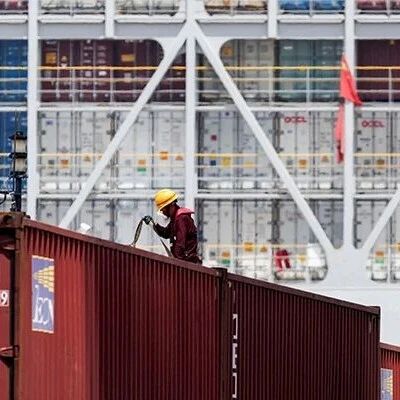
中国9月进口增长7.4%,外国产品涌入
日经中文网· 2025-10-14 03:17
Group 1 - China's imports have shown positive growth for four consecutive months, with a year-on-year increase of 7.4% in September, reaching 238.1 billion USD, marking the highest growth rate since April 2024 [1][3] - The increase in imports is attributed to various countries boosting their exports to China, influenced by the U.S. tariff policies, which may lead to new deflationary pressures from foreign products entering the market [1] - Notable growth in imports from specific countries includes a 26% increase from the UK, 24% from Brazil, 23% from India, and 21% from Japan, all achieving double-digit growth [3] Group 2 - Key imported products showed significant growth, with iron ore increasing by 17% and integrated circuits by 14%, alongside notable increases in cosmetics and soybeans compared to the same month last year [3]

摩根士丹利:上调中国GDP预期至5%,任受关税影响和被动的政策措施制约
摩根· 2025-03-24 01:55
Investment Rating - The report revises the GDP forecast for 2025 upward to 4.5% from 4.0% due to stronger-than-expected growth in Q1 and solid capital expenditure momentum [1][2][3] Core Insights - The growth recovery is expected to soften from Q2 2025 onwards due to tariff impacts and reactive policy measures, despite initial positive momentum [2][4] - The report highlights a higher contribution from capital formation to GDP, driven by emerging industries and AI adoption [3][5] - The policy framework is aimed at providing a floor to growth rather than aggressive stimulus, with limited actions anticipated in the near term [11][12] Summary by Sections GDP Forecast - The revised GDP forecast for 2025 is 4.5%, reflecting a stronger-than-expected Q1 performance and solid capital expenditure [1][2] - The nominal GDP growth is projected at 3.6% YoY for 2025, below consensus expectations [2][3] Economic Drivers - Key drivers for the GDP revision include robust Q1 growth tracking at 5.4% YoY and higher capital expenditure growth supported by emerging sectors [3][4] - The report notes that the economy has become less sensitive to tariffs due to lower direct trade exposure to the US and supply chain adjustments [4][5] Policy and Market Dynamics - The report indicates a reactive policy response rather than proactive stimulus, with a wait-and-see approach on potential new initiatives [11][12] - The housing market is not expected to see a sustained recovery, with recent rebounds attributed to pent-up demand rather than broader economic strength [12][13] Currency and Inflation Outlook - The RMB forecast has been revised, expecting USDCNY to reach 7.35 by mid-2025, reflecting a focus on currency stability [14][16] - The GDP deflator is forecasted at -0.9% YoY for 2025, indicating ongoing deflationary pressures despite stronger domestic demand [13][14]
