避险替代资产

Search documents
惊魂跳水!白银一度重挫35% 贵金属狂潮已见顶?
Di Yi Cai Jing· 2026-01-31 01:18
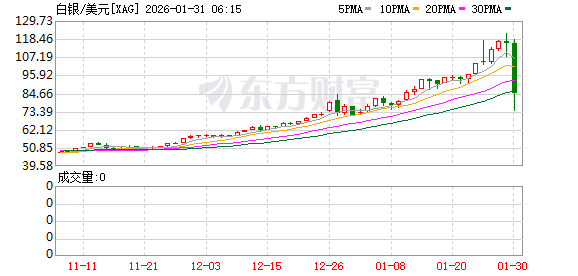
Core Viewpoint - The nomination of Kevin Warsh as the next Federal Reserve Chairman by President Trump has alleviated market concerns regarding the independence of the Federal Reserve, leading to a rise in the dollar and a significant drop in precious metals prices [2][4]. Market Reaction - The COMEX silver price for February delivery plummeted over 35%, reaching a low of $74 per ounce, while COMEX gold for February fell more than 10%, nearing $4,700 [2]. - The sell-off extended to the entire precious metals market, with LME platinum and palladium futures both declining over 15%, entering a technical bear market alongside silver [2]. Analysis of the Sell-off - Analysts attribute the panic selling to profit-taking and overcrowded trading positions, with leveraged positions exacerbating market volatility [2][4]. - Krishna Guha from Evercore ISI noted that the market is trading on "Warsh's hawkish expectations," which has contributed to the stabilization of the dollar and the subsequent decline in gold and silver prices [4]. - Matt Maley from Miller Tabak indicated that the current market behavior has lost rationality, suggesting that the recent drop is likely due to "forced selling" as silver has been a popular asset among day traders [4]. Investor Sentiment and Positioning - Richard Hunter from Interactive Brokers highlighted that the previous bets on dollar depreciation have shown signs of solidification, catching investors seeking safe-haven assets off guard [4]. - Federico Manicardi from JPMorgan pointed out that precious metals had previously risen in tandem with global economic recovery expectations and benefited from a reallocation of funds towards major U.S. tech stocks [4]. Market Dynamics - The World Gold Council reported that global gold demand reached a record high last year, with a shift in buying power from central banks to various investors, contributing to the historic price surge [8]. - The report projected that global gold demand would exceed 5,000 tons by Q4 2025, valued at $555 billion, marking a 45% year-on-year increase [8]. - Despite a slowdown in central bank purchases, the need for diversification in foreign exchange reserves remains, driven by concerns over U.S. trade policies [8]. Future Projections - JPMorgan's quantitative analyst proposed that if private investors increase their gold allocation from 3% to 4.6%, gold prices could theoretically rise to between $8,000 and $8,500 per ounce [9]. - However, the analyst cautioned that the current overbought status of gold and silver suggests a risk of profit-taking and price reversion in the short term [9]. - Long-term bullish logic for gold remains intact, with $5,000 per ounce seen as a reasonable support level for adjustments [9].

惊魂跳水!白银一度重挫35%,贵金属狂潮已见顶?
第一财经· 2026-01-31 01:13
Core Viewpoint - The market's concerns regarding the independence of the Federal Reserve have eased following President Trump's nomination of Kevin Warsh as the next Fed Chair, leading to a significant rise in the dollar and a sharp decline in precious metals prices [3][4]. Market Reaction - The COMEX silver price plummeted over 35%, reaching a low of $74 per ounce, while COMEX gold fell more than 10%, nearing $4,700. This sell-off extended to the entire precious metals market, with LME platinum and palladium futures dropping over 15%, entering a technical bear market [3][4]. - Analysts attribute the panic selling to profit-taking and crowded trading positions, exacerbated by leveraged positions being liquidated, which amplified market volatility [3][5]. Investor Sentiment - The market is currently trading on "Warsh's hawkish bias" expectations, which has contributed to a stabilization of the dollar and a reduction in the asymmetric risks of a prolonged dollar depreciation, thus causing the significant drop in gold and silver prices [4][5]. - The recent market behavior is characterized as irrational, with the precious metals market being a popular asset for day traders and short-term investors, leading to a buildup of leveraged positions that were vulnerable to price drops [5][6]. Precious Metals Demand - Over the past 12 months, various factors such as market volatility, dollar depreciation, geopolitical tensions, and concerns over the Fed's independence have driven precious metal prices upward. However, the recent decline may reflect a reassessment of concentrated holding risks in the market [6][9]. - The World Gold Council reported that global gold demand reached a record high, with total demand surpassing 5,000 tons in 2025, valued at $555 billion, marking a 45% year-on-year increase. However, central bank purchases have decreased, indicating a shift in the primary drivers of gold demand from central banks to various investors [8][9]. Future Projections - Analysts suggest that if private investors increase their gold allocation from 3% to 4.6% by reducing long-term bond holdings, gold prices could theoretically rise to between $8,000 and $8,500 per ounce. However, the current overbought status of gold and silver suggests a risk of profit-taking and price corrections in the short term [10]. - The long-term bullish outlook for gold remains intact, with $5,000 per ounce seen as a reasonable support level for adjustments [10].