强制抛售

Search documents
金银价暴跌,国内金饰克价一夜大跌上百元;柜姐:不能因降价就退货
Mei Ri Jing Ji Xin Wen· 2026-01-31 06:22
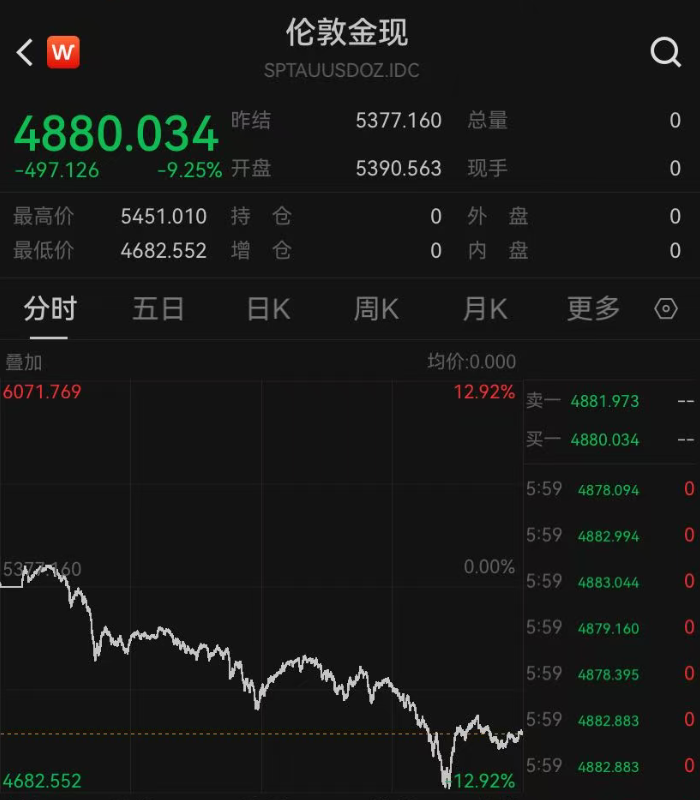
Core Viewpoint - The nomination of Kevin Warsh as the Federal Reserve Chairman by President Trump has triggered hawkish market expectations, leading to a panic sell-off in precious metals, with gold experiencing its largest drop in 40 years and silver hitting a historic intraday decline [1][3]. Group 1: Market Reactions - Gold prices fell over 12%, reaching a low of $4682 per ounce, marking the largest single-day drop since the early 1980s, and closed down 9.25% at $4880 per ounce [1]. - Silver saw a dramatic decline of over 36%, with an intraday low of $74.28 per ounce, ultimately closing down 26.42% at $85.259 per ounce [3]. - Domestic gold jewelry prices also plummeted, with major brands reporting significant price drops, such as Chow Sang Sang's gold price falling from 1708 RMB per gram to 1543 RMB per gram within two days [5]. Group 2: Market Sentiment and Trading Dynamics - The sharp decline in gold prices has led to a cautious market sentiment, with many traders and consumers adopting a wait-and-see approach, resulting in a significant drop in transaction volumes [7]. - Analysts attribute the sell-off to profit-taking pressures accumulated from previous gains, the announcement of the Fed Chairman, and the cascading effect of leveraged positions being liquidated [9]. - The market is currently trading based on "Warsh's hawkish expectations," which has contributed to a stabilization of the dollar and a subsequent decline in gold and silver prices [9]. Group 3: Trading Conditions and Regulations - Major precious metal exchanges have raised margin requirements for gold futures trading, increasing the financial pressure on high-leverage traders [10]. - The decline in precious metal prices has triggered a cycle of forced selling, where stop-loss orders are activated, leading to further price drops and additional margin calls [10]. - The legal framework surrounding gold purchases indicates that physical gold items generally do not qualify for a seven-day return policy, complicating consumer options in a volatile market [18].



白银一度重挫35%,贵金属狂潮是否已经见顶
Xin Lang Cai Jing· 2026-01-31 05:00
Group 1 - The market's concerns about the independence of the Federal Reserve have eased following President Trump's nomination of Kevin Warsh as the next Fed Chair, leading to a rise in the dollar and a significant drop in precious metals prices [1] - COMEX silver prices fell over 35%, reaching a low of $74 per ounce, while COMEX gold prices dropped more than 10%, nearing $4700 [1] - The sell-off extended to the entire precious metals market, with LME platinum and palladium futures both declining over 15%, entering a technical bear market alongside silver [1] Group 2 - The market is trading on the expectation of a "hawkish" stance from Warsh, which has contributed to a stabilization of the dollar and a reduction in the asymmetric risk of a continued significant dollar depreciation, causing the sharp declines in gold and silver prices [2] - The recent market movements are characterized by forced selling, as precious metals had become popular among day traders, leading to a buildup of leveraged positions that were liquidated during the price drop [2][3] - The World Gold Council reported that global gold demand reached a record high, with total demand projected to exceed 5000 tons by Q4 2025, valued at $555 billion, marking a 45% year-over-year increase [4] Group 3 - Analysts suggest that the recent price drop in precious metals may be a reassessment of concentrated holding risks, similar to the situation in tech stocks, where a high concentration of positions can lead to significant sell-offs [3] - The demand for gold has shifted from central banks to various investors, with a notable increase in ETF holdings, indicating a strong investment interest despite a slowdown in central bank purchases [4][5] - A hypothesis from JPMorgan suggests that if private investors increase their gold allocation from 3% to 4.6%, gold prices could theoretically rise to between $8000 and $8500 per ounce, although short-term risks of profit-taking exist [6]

惊魂跳水!白银一度重挫35%,贵金属狂潮已见顶?
第一财经· 2026-01-31 01:13
Core Viewpoint - The market's concerns regarding the independence of the Federal Reserve have eased following President Trump's nomination of Kevin Warsh as the next Fed Chair, leading to a significant rise in the dollar and a sharp decline in precious metals prices [3][4]. Market Reaction - The COMEX silver price plummeted over 35%, reaching a low of $74 per ounce, while COMEX gold fell more than 10%, nearing $4,700. This sell-off extended to the entire precious metals market, with LME platinum and palladium futures dropping over 15%, entering a technical bear market [3][4]. - Analysts attribute the panic selling to profit-taking and crowded trading positions, exacerbated by leveraged positions being liquidated, which amplified market volatility [3][5]. Investor Sentiment - The market is currently trading on "Warsh's hawkish bias" expectations, which has contributed to a stabilization of the dollar and a reduction in the asymmetric risks of a prolonged dollar depreciation, thus causing the significant drop in gold and silver prices [4][5]. - The recent market behavior is characterized as irrational, with the precious metals market being a popular asset for day traders and short-term investors, leading to a buildup of leveraged positions that were vulnerable to price drops [5][6]. Precious Metals Demand - Over the past 12 months, various factors such as market volatility, dollar depreciation, geopolitical tensions, and concerns over the Fed's independence have driven precious metal prices upward. However, the recent decline may reflect a reassessment of concentrated holding risks in the market [6][9]. - The World Gold Council reported that global gold demand reached a record high, with total demand surpassing 5,000 tons in 2025, valued at $555 billion, marking a 45% year-on-year increase. However, central bank purchases have decreased, indicating a shift in the primary drivers of gold demand from central banks to various investors [8][9]. Future Projections - Analysts suggest that if private investors increase their gold allocation from 3% to 4.6% by reducing long-term bond holdings, gold prices could theoretically rise to between $8,000 and $8,500 per ounce. However, the current overbought status of gold and silver suggests a risk of profit-taking and price corrections in the short term [10]. - The long-term bullish outlook for gold remains intact, with $5,000 per ounce seen as a reasonable support level for adjustments [10].