重磅药物

Search documents
国产创新药,正在破局
3 6 Ke· 2026-02-05 11:26
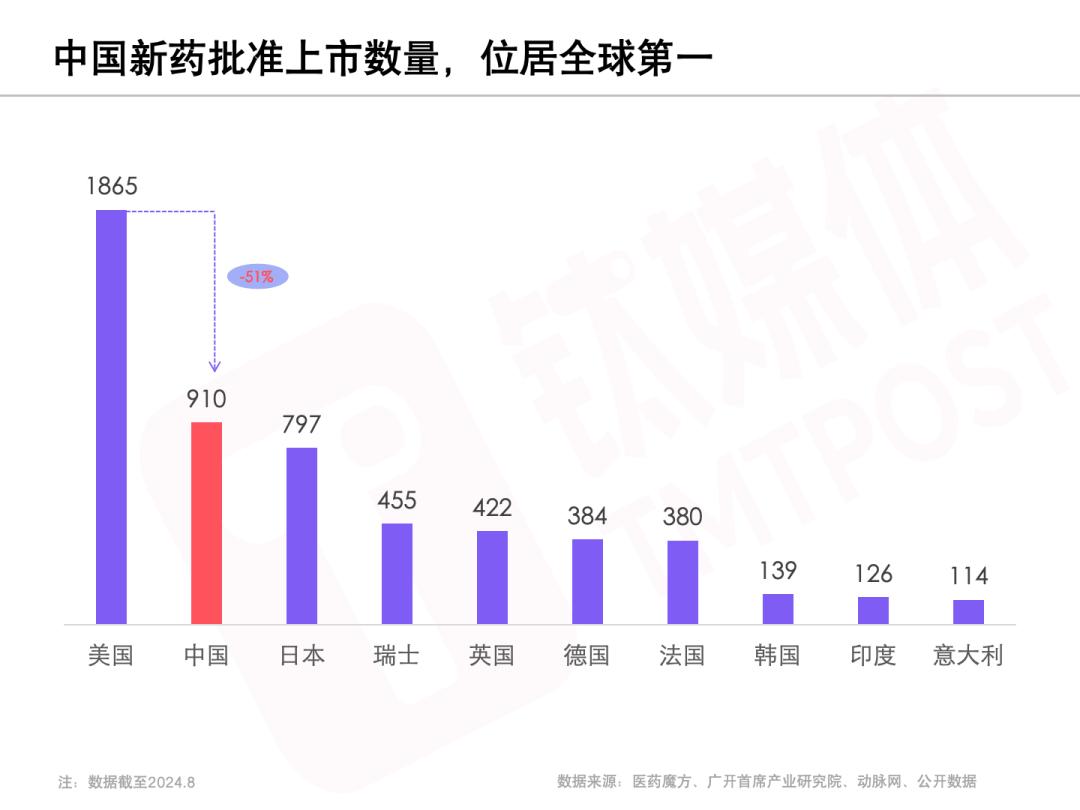
Core Viewpoint - The article discusses the significant progress in China's innovative drug development, highlighting the increase in the number of new drugs approved and the growing competitiveness of Chinese pharmaceutical companies in both domestic and international markets [4][16]. Group 1: Growth of Innovative Drugs - In 2024, the number of domestically developed Class 1 new drugs in China reached 40, a substantial increase from just 9 in 2018 [2][3][4]. - Since the beginning of the 14th Five-Year Plan, 113 innovative drugs have been approved, which is 2.8 times the number approved during the 13th Five-Year Plan [4]. - As of August 2024, there are 910 new drugs available in China, indicating a robust growth in the pharmaceutical market [6]. Group 2: Clinical Trials and Breakthroughs - In a head-to-head clinical trial, the drug Ivoris (依沃西单抗) developed by Kangfang Biopharma outperformed the global best-selling cancer drug, Pembrolizumab (K drug), marking a significant achievement for Chinese innovation [7][9]. - The global sales of Pembrolizumab reached $29.482 billion in 2024, underscoring the competitive landscape [8]. Group 3: Market Dynamics and International Expansion - Chinese innovative drugs are not only performing well domestically but are also gaining traction in international markets, with products like Sidakio (西达基奥仑赛) achieving $1.596 billion in cumulative sales since its launch [12][13]. - The total transaction scale of technology licensing by Chinese pharmaceutical companies exceeded $34 billion in 2024, indicating a shift towards international collaboration [14][15]. Group 4: R&D Landscape and Challenges - As of August 2024, there are 5,380 new drug candidates in development in China, accounting for over one-third of the global pipeline [18]. - The average cost of developing an innovative drug is around $1 billion, with a typical development timeline of 10 years [20][21]. - The efficiency of drug development in China is improving, with preclinical phases taking 12-20 months compared to 24-36 months internationally [23]. Group 5: Policy Support and Ecosystem - The Chinese government has implemented various policies since 2008 to support innovative drug development, including expedited approval processes and financial incentives [28][29]. - The combination of government support, industry collaboration, and technological advancements is creating a conducive environment for innovation in the pharmaceutical sector [41]. Group 6: Future Outlook - The article emphasizes that the development of innovative drugs in China has made significant strides over the past decade, transitioning from imitation to innovation [42]. - The government's continued support for innovative drugs is expected to enhance the industry's growth and provide hope for patients [42].