头对头试验

Search documents
国产创新药,正在破局
3 6 Ke· 2026-02-05 11:26
Core Viewpoint - The article discusses the significant progress in China's innovative drug development, highlighting the increase in the number of new drugs approved and the growing competitiveness of Chinese pharmaceutical companies in both domestic and international markets [4][16]. Group 1: Growth of Innovative Drugs - In 2024, the number of domestically developed Class 1 new drugs in China reached 40, a substantial increase from just 9 in 2018 [2][3][4]. - Since the beginning of the 14th Five-Year Plan, 113 innovative drugs have been approved, which is 2.8 times the number approved during the 13th Five-Year Plan [4]. - As of August 2024, there are 910 new drugs available in China, indicating a robust growth in the pharmaceutical market [6]. Group 2: Clinical Trials and Breakthroughs - In a head-to-head clinical trial, the drug Ivoris (依沃西单抗) developed by Kangfang Biopharma outperformed the global best-selling cancer drug, Pembrolizumab (K drug), marking a significant achievement for Chinese innovation [7][9]. - The global sales of Pembrolizumab reached $29.482 billion in 2024, underscoring the competitive landscape [8]. Group 3: Market Dynamics and International Expansion - Chinese innovative drugs are not only performing well domestically but are also gaining traction in international markets, with products like Sidakio (西达基奥仑赛) achieving $1.596 billion in cumulative sales since its launch [12][13]. - The total transaction scale of technology licensing by Chinese pharmaceutical companies exceeded $34 billion in 2024, indicating a shift towards international collaboration [14][15]. Group 4: R&D Landscape and Challenges - As of August 2024, there are 5,380 new drug candidates in development in China, accounting for over one-third of the global pipeline [18]. - The average cost of developing an innovative drug is around $1 billion, with a typical development timeline of 10 years [20][21]. - The efficiency of drug development in China is improving, with preclinical phases taking 12-20 months compared to 24-36 months internationally [23]. Group 5: Policy Support and Ecosystem - The Chinese government has implemented various policies since 2008 to support innovative drug development, including expedited approval processes and financial incentives [28][29]. - The combination of government support, industry collaboration, and technological advancements is creating a conducive environment for innovation in the pharmaceutical sector [41]. Group 6: Future Outlook - The article emphasizes that the development of innovative drugs in China has made significant strides over the past decade, transitioning from imitation to innovation [42]. - The government's continued support for innovative drugs is expected to enhance the industry's growth and provide hope for patients [42].





依沃西头对头试验连胜两局,康方生物扭亏的希望来了
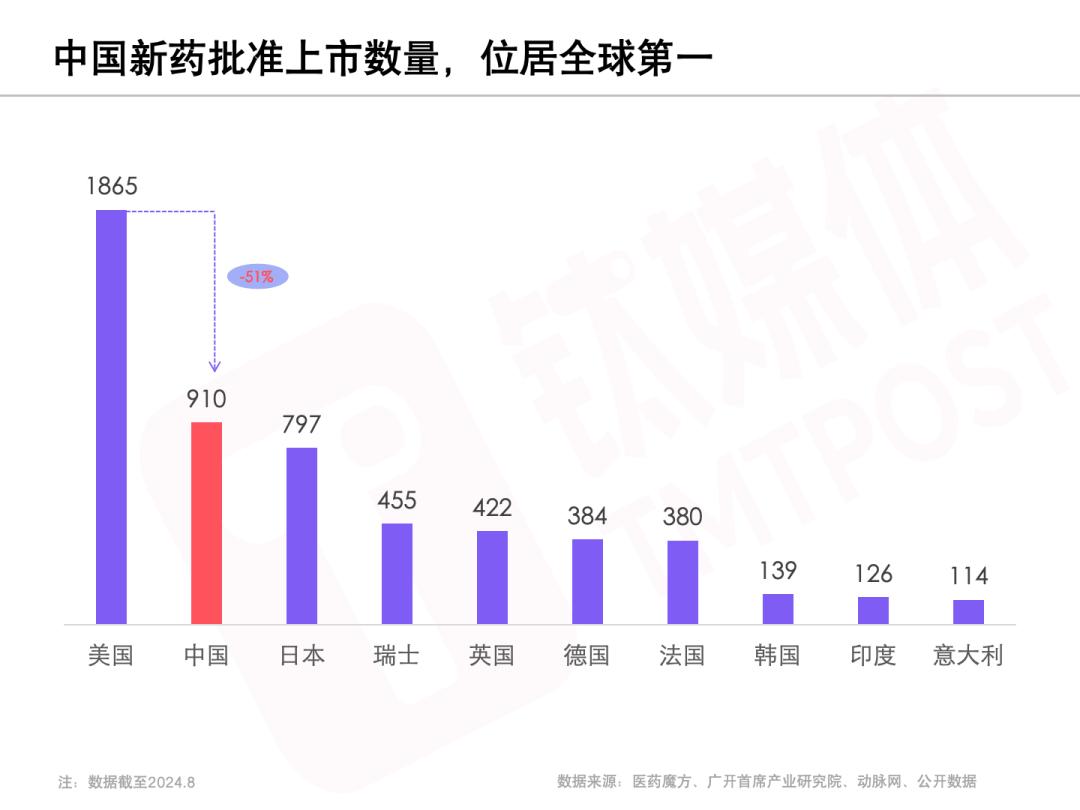
Xin Jing Bao· 2025-04-27 02:04
Core Viewpoint - 康方生物's drug Ivosidenib has shown strong positive results in head-to-head clinical trials against other leading PD-1 inhibitors, raising expectations for the company's financial recovery and market position [1][2][3]. Group 1: Clinical Trial Results - Ivosidenib (PD-1/VEGF dual antibody) demonstrated significant improvement in progression-free survival (PFS) compared to Tislelizumab in a Phase III head-to-head trial for advanced squamous non-small cell lung cancer (sq-NSCLC) [1][2]. - The trial involved 532 participants from 66 clinical research centers, with Ivosidenib showing clinically meaningful PFS benefits in both PD-L1 positive and negative populations [2]. - Ivosidenib previously outperformed Pembrolizumab (Keytruda) in a separate Phase III trial, achieving an objective response rate (ORR) of 50% compared to 38.5% for Keytruda, and a disease control rate (DCR) of 89.9% versus 70.5% [3]. Group 2: Financial Performance - 康方生物 reported a revenue of 4.526 billion yuan in 2023, achieving its first annual profit, but faced a loss of 501 million yuan in 2024 despite generating 2.124 billion yuan in revenue [4]. - The company's financial performance is closely tied to Ivosidenib's sales, which generated 103 million yuan in revenue shortly after its market approval in May 2024 [4]. Group 3: Future Prospects - Ivosidenib is currently involved in 12 ongoing Phase III clinical trials, with one indication in the final review stage for supplemental new drug application [5]. - Goldman Sachs predicts that Ivosidenib could become a leader in the PD-1/L1×VEGF dual-specific antibody market, potentially reaching peak sales of 53 billion dollars by 2041 [5]. - 康方生物 also has other products in its pipeline, including a PD-1/CTLA-4 dual antibody and a recently FDA-approved drug for nasopharyngeal carcinoma [5].
头对头试验胜过“肺癌药王” ?同源康医药临床结果引争议
BambooWorks· 2025-03-21 00:38
Core Viewpoint - The announcement of positive clinical trial results for TY-9591 by Tongyuan Kang Pharmaceutical has the potential to disrupt the existing lung cancer targeted therapy market, particularly against the backdrop of increasing competition in the pharmaceutical industry [2][4]. Summary by Sections Clinical Trial Results - Tongyuan Kang Pharmaceutical reported that TY-9591 demonstrated statistically significant and clinically meaningful improvements in intracranial objective response rate (iORR) compared to the existing drug Osimertinib in a head-to-head trial for treating EGFR-mutant lung cancer patients with brain metastases [2][3]. - The trial included 244 participants, and the company plans to submit a new drug application to the National Medical Products Administration (NMPA) soon [3][5]. Market Context - Osimertinib, known as the "lung cancer king," is projected to achieve global sales of $6.58 billion in 2024, reflecting a 16% year-on-year growth [4]. - The EGFR mutation is prevalent in about one-third of non-small cell lung cancer patients, making it a common target for therapies [4]. Stock Market Reaction - Following the announcement, Tongyuan Kang's stock price surged by 50% at one point on the first trading day, ultimately closing up 16.18%. The trading volume reached 3.39 million shares, significantly higher than the usual volume of around 200,000 shares [4][5]. - However, the stock experienced a subsequent decline of 21.23% over the next three trading days, raising questions about the sustainability of the initial market reaction [5]. Competitive Landscape - The clinical trial results have raised concerns regarding the robustness of the data, as the chosen endpoint (iORR) is not considered the industry gold standard compared to overall survival (OS) and progression-free survival (PFS) [5]. - The market for EGFR-TKIs is highly competitive, with at least six products already on the market and several others in late-stage clinical trials, including a product from Chintai Pharmaceutical that has already been approved for lung cancer brain metastases [6]. Financial Health - Tongyuan Kang, established in 2017, reported net losses of 312 million yuan, 383 million yuan, and 108 million yuan for the years 2022, 2023, and the first quarter of 2024, respectively. As of March 2024, the company had a net debt of 934 million yuan and cash reserves of 77.21 million yuan [6].