
金发姑娘时期

Search documents
超日赶德,印度宣布已成为全球第四大经济体
Xin Lang Cai Jing· 2026-01-01 10:33
Group 1 - India's economy has surpassed Japan, becoming the fourth largest globally, with a GDP of approximately $4.18 trillion, and is projected to reach about $7.3 trillion by 2030 [1] - The International Monetary Fund (IMF) predicts that India will surpass Japan by 2026, with an estimated GDP of $4.51 trillion [1] - The Indian government aims to achieve developed country status by 2047, marking the centenary of its independence [1] Group 2 - The report titled "2025, a Key Year for India's Economic Growth" indicates that India is one of the fastest-growing major economies, with a real GDP growth of 8.2% year-on-year in Q2 of FY 2025-26, up from 7.8% in the previous quarter [2] - The current economic environment is described as a "Goldilocks" period, characterized by high growth and low inflation, supported by strong corporate balance sheets and ongoing structural reforms [2] - Domestic demand, particularly strong private consumption, is the primary driver of India's economic growth, alongside a rapidly developing service sector [2] Group 3 - In response to external challenges, the Indian government has implemented significant tax reforms, including simplifying the Goods and Services Tax (GST) and introducing labor law reforms to enhance investment attractiveness [6] - The GST was streamlined from four tax brackets to two, with reductions in rates for essential goods and services, aimed at stimulating domestic demand [6] - The new labor laws consolidate 29 existing laws into four, marking the largest structural reform since India's economic liberalization in 1991 [6] Group 4 - India's export performance has improved, with merchandise exports reaching $38.13 billion in November 2025, supported by sectors like engineering, electronics, pharmaceuticals, and oil products [7] - The country is diversifying its trade partnerships, strengthening ties with nations such as the UK, Oman, and New Zealand, while also expanding trade with major economies like China and Germany [7] - Despite challenges in negotiations with the US, there is optimism about reaching a trade agreement that could lower tariffs significantly [7] Group 5 - The IMF's report highlights that India's economic growth is expected to remain robust, supported by favorable domestic conditions, with an upward revision of growth forecasts from 6.8% to 7.3% for FY 2025-26 [8] - Factors contributing to this growth include strong domestic demand, tax optimization, and a favorable monetary environment [8] - The overall inflation rate has significantly decreased, aided by stable food prices and resilient financial and corporate sectors [8] Group 6 - Despite recent improvements, challenges remain, including low per capita income and significant disparities in economic development between northern and southern India [10] - The World Bank reports that India's per capita GDP in 2024 is $2,694, significantly lower than that of developed economies like Japan and Germany [10] - The government faces the challenge of creating high-quality jobs for its large youth population, which is crucial for sustainable growth [10] Group 7 - The Indian rupee has depreciated, reaching a historical low against the US dollar, with a cumulative decline of about 5% in 2025 [11] - The stock market has underperformed, with significant foreign portfolio investment outflows, contrasting with previous inflows [11] - The manufacturing sector's contribution to GDP has decreased, falling short of the government's target of 25%, due to bureaucratic hurdles and restrictive policies [11]


对标“黄金90年代” BMO喊出标普500新目标:7000点!
贝塔投资智库· 2025-09-29 05:16
Core Viewpoint - BMO Capital Markets has raised its year-end target for the S&P 500 index to 7000 points, reflecting a bullish outlook amid strong market performance [1] Scenario Analysis - Bull Market Scenario: The S&P 500 index could reach 7300 points with earnings per share (EPS) of 290 USD, driven by resilient economic growth, relaxed tariff policies, and potential Fed rate cuts [2] - Base Case Scenario: The S&P 500 index is expected to hit 7000 points with EPS of 275 USD, assuming a stable labor market and controlled inflation [2] - Bear Market Scenario: If stagflation re-emerges and the Fed halts its easing cycle, the S&P 500 index may drop to 6000 points with EPS of 260 USD [2] Sector Allocation - BMO maintains an "overweight" stance on technology stocks (33% allocation), financials (14.5%), and consumer discretionary stocks (11%), while adopting an "underweight" strategy for healthcare and consumer staples [2] Market Environment - The current market environment is likened to the "Goldilocks" period of the mid-1990s, characterized by moderate economic growth and manageable inflation, supporting strong corporate earnings and market valuations [1]
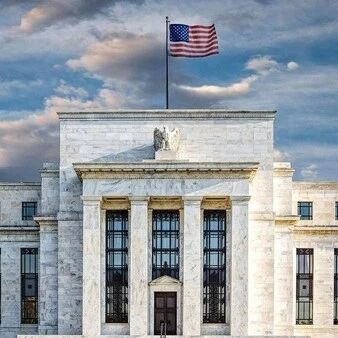
对标“黄金90年代” BMO喊出标普500新目标:7000点!
智通财经网· 2025-09-29 03:18
Core Viewpoint - BMO Capital Markets has raised its year-end target for the S&P 500 index to 7000 points, reflecting a bullish market outlook amid strong performance in U.S. equities [1][2] Group 1: Market Outlook - The chief investment strategist Brian Belski indicates that the market has shown resilience beyond mainstream macroeconomic narratives, suggesting a long-term bull market is ongoing [1] - Belski maintains a forecast of $275 earnings per share for S&P 500 constituents in 2025, which is near the upper limit of market consensus [1] - The current market environment is likened to the "Goldilocks" period of the mid-1990s, characterized by moderate economic growth and controlled inflation [1] Group 2: Scenarios and Predictions - BMO's model outlines three scenarios: - Bull Market Scenario: S&P 500 could reach 7300 points with earnings of $290 per share, driven by resilient economic growth and potential Fed rate cuts [2] - Base Case Scenario: S&P 500 is expected to hit 7000 points with earnings of $275 per share, assuming a stable labor market and manageable inflation [2] - Bear Market Scenario: If stagflation re-emerges and the Fed halts easing, the S&P 500 could drop to 6000 points with earnings of $260 per share [2] Group 3: Sector Allocation - BMO maintains an "overweight" stance on technology stocks (33% allocation), financials (14.5%), and consumer discretionary stocks (11%), while adopting an "underweight" strategy for healthcare and consumer staples [2] Group 4: Investment Philosophy - Belski emphasizes that investing is not a fixed formula but a journey requiring discipline, suggesting that while the 7000-point target may be conservative, a cautious expectation is for the market to experience a rally followed by stabilization [2]