金融便利化

Search documents
复旦大学经济学院教授沈国兵:人民币升值未必是坏事,传统“汇率贬值促进出口”已然失效
Sou Hu Cai Jing· 2026-01-05 02:40
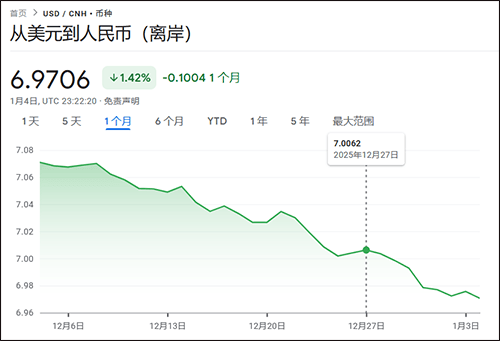
Core Viewpoint - The recent discussions on the RMB exchange rate highlight a shift in the traditional understanding of currency depreciation and its impact on exports, suggesting that the previous assumptions may no longer hold true in the current geopolitical and economic landscape [1][4][8]. Group 1: RMB Exchange Rate Dynamics - The recent appreciation of the RMB is attributed to year-end settlement demands and a weakening US dollar index, influenced by the Federal Reserve's shift towards a dual focus on employment and inflation [2][12]. - The traditional theory that currency depreciation boosts exports is being challenged, as external factors like US tariff policies impose rigid constraints on the effectiveness of such depreciation [4][8]. - The RMB's future trajectory will be influenced by multiple factors, including the interest rate differential between China and the US, tariff policies, and the fundamental economic conditions in China [2][14]. Group 2: Financial Power and RMB Internationalization - China is recognized as a "financial power," but still has a significant gap to bridge to become a "financial strong power," with limitations in RMB convertibility and international financial influence [2][16]. - The current RMB internationalization process is hindered by low gold reserves and insufficient influence in the international financial order, which are critical for establishing a strong currency [2][16][17]. - The need for structural reforms in China's financial system is emphasized to enhance the convenience of financial services and strengthen currency credibility, which are essential for achieving the status of a financial strong power [2][17][18]. Group 3: Future Outlook and Strategic Considerations - The RMB exchange rate is expected to remain volatile, with potential for appreciation in the short term, but uncertainties will increase post-October 2026 due to evolving US-China relations and tariff negotiations [14][15]. - The ongoing capital outflow and the trend of Chinese companies expanding overseas are likely to create upward pressure on the RMB, complicating its appreciation prospects [15][16]. - The discussion around RMB's role in the global financial system underscores the importance of financial liberalization and the need for China to enhance its financial market's openness to transition from a financial power to a financial strong power [17][18].