金融功能

Search documents
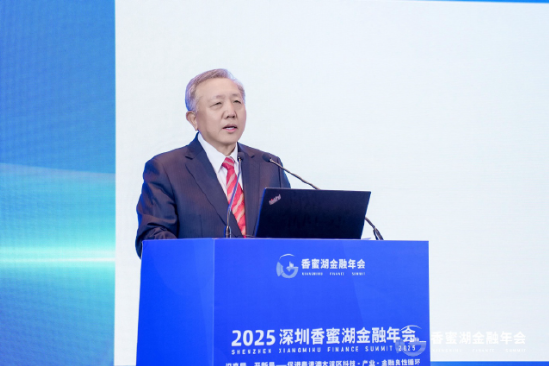
吴晓求:财政资源不只求短期盈利,更要“投资于人”
Sou Hu Cai Jing· 2025-12-23 04:19
Core Viewpoint - The speech emphasizes the importance of long-term investment in human capital and foundational research for sustainable economic development, urging a shift away from short-term profit-focused thinking [1][3]. Group 1: Economic Development - Wu Xiaoqiu highlights that sustainable economic and social development relies on foundational research and independent innovation, advocating for fiscal resources to prioritize long-term value areas like basic scientific research [1][3]. - Under the "14th Five-Year Plan," the construction of a modernized nation requires both "economic development" and "social civilization," with clear quantitative indicators for economic development, such as a per capita GDP exceeding $15,000 to be classified as a developed country [3]. Group 2: Role of Financial Systems - Wu asserts that finance plays a crucial role alongside technology in the modernization process, emphasizing that financial systems are essential for the transformation of technological innovations into new products and industries [3][4]. - He identifies two core capabilities of modern finance: value discovery, which assesses the application scenarios and development potential of technologies, and risk diversification, which mitigates risks during the technology-to-industry transition [3][4]. Group 3: Functions of Finance - The first function of finance is payment and clearing, which enhances economic and trade efficiency, exemplified by the advancements in mobile payment systems in China [4][5]. - The second function is pricing and resource allocation, where accurate pricing is essential for efficient resource utilization, facilitated through indirect and direct financing methods [4][5]. - The third function involves risk management and hedging, where financial systems must create risk-hedging tools to stabilize the investment environment and attract foreign investment [5]. - The fourth function is promoting industrial upgrades and meeting social wealth management needs, with a focus on creating a diverse range of financial assets to cater to different investor requirements [5]. - The fifth function is creating diversified liquidity, which includes both monetary and asset liquidity, essential for the normal operation of the economy and providing more options for asset allocation [5].

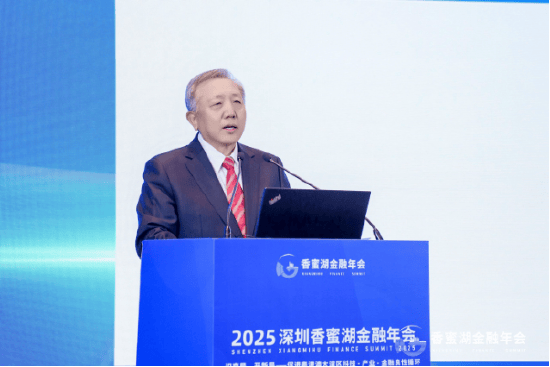
吴晓求:财政资源不能仅聚焦短期盈利项目 “投资于人” 等具有长远价值的领域同样应获资源倾斜
Xin Lang Cai Jing· 2025-12-21 07:51
Core Viewpoint - The speech by Wu Xiaoqiu emphasizes the importance of long-term investment in fundamental research and human capital for sustainable economic development, advocating for a shift away from short-term profit-focused thinking [1][7]. Group 1: Economic Development and Modernization - Wu Xiaoqiu highlights that building a modernized nation requires both "economic development" and "social civilization," with clear quantitative indicators for economic development, such as a per capita GDP exceeding $15,000 to be classified as a developed country [3][9]. - He stresses that "institutions may be more important than knowledge," as well-structured systems can define development boundaries and ensure returns, while frequent policy changes can lead to speculative behavior that hinders long-term growth [3][9]. Group 2: Role of Finance - Wu Xiaoqiu asserts that finance plays a crucial role alongside technology in the modernization process, often overlooked in its capacity to facilitate the transformation of technology into new products and industries [3][9]. - He identifies two core capabilities of modern finance: value discovery, which allows capital to assess the application and development potential of technologies, and risk diversification, which helps manage risks during the transition from technology to industry [3][9]. Group 3: Functions of Finance - The first function of finance is payment and clearing, which enhances economic and trade efficiency, exemplified by the transparency of mobile payment systems in China that have improved operational efficiency [4][10]. - The second function is pricing and resource allocation, where accurate pricing is essential for efficient resource utilization, facilitated through indirect financing via financial intermediaries and direct financing through market mechanisms [5][10]. - The third function involves risk management and hedging, where finance must create tools to manage various risks to stabilize the investment environment and attract foreign investment [6][11]. - The fourth function is to promote industrial upgrading and meet social wealth management needs by creating a diverse range of financial assets that cater to different investor profiles [6][12]. - The fifth function is to create diversified liquidity, which includes both monetary and asset liquidity, essential for the normal operation of the economy and providing more options for asset allocation [6][12].