
基础科研

Search documents
诺奖得主齐聚港大 启迪科研未来
Ren Min Wang· 2026-01-15 07:24
Group 1 - The "Nobel Heroes Forum: Leading Science and the Future" was co-hosted by the University of Hong Kong and the Lindau Nobel Laureate Meeting, featuring six Nobel laureates discussing the impact of fundamental research on future science, technology, health, and the global economy [1][3] - The forum attracted over 800 participants from academia and government, highlighting its significance as a gathering of top scientific elites [1][3] Group 2 - Notable Nobel laureates participating in the forum included Robert C. Merton (1997 Nobel Prize in Economic Sciences), Louis J. Ignarro (1998 Nobel Prize in Physiology or Medicine), Tim Hunt (2001 Nobel Prize in Physiology or Medicine), Kurt Wüthrich (2002 Nobel Prize in Chemistry), Konstantin Novoselov (2010 Nobel Prize in Physics), and Ferenc Krausz (2023 Nobel Prize in Physics) [3] - The Chief Secretary for Administration of the Hong Kong SAR, Eric Chan, emphasized Hong Kong's commitment to becoming a leading international innovation and technology hub, aiming to create a world-class ecosystem for innovation and talent development [5] - The President of the University of Hong Kong, Zhang Xiang, pointed out the importance of collaboration in achieving common goals in science, noting that foundational research often leads to significant practical technologies over time [7] Group 3 - Nikola Turner, Executive Director of the Lindau Nobel Laureate Meeting, highlighted Hong Kong's role as a crucial node in international collaboration, emphasizing the importance of sharing the personal stories of Nobel laureates to inspire young researchers [9] - The Vice President of the University of Hong Kong, Wang Yang, stated that the university aims to become a global hub for nurturing future talent and attracting top scholars, with Hong Kong serving as a vital connector for cooperation between China and the world [9]

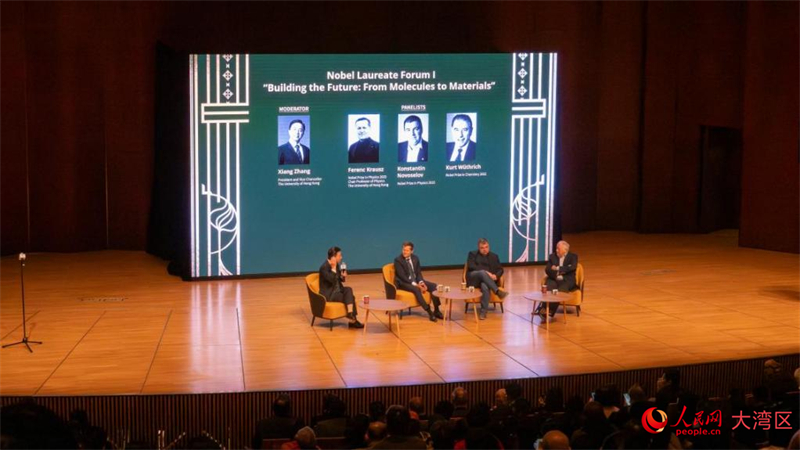
“诺贝尔英雄论坛:引领科学与未来”在香港大学举行
Xin Hua She· 2026-01-12 12:34
Group 1 - The forum "Nobel Heroes Forum: Leading Science and the Future" was held at the University of Hong Kong, focusing on how fundamental research impacts future science, technology, health, and the global economy [1] - The event featured discussions on two main themes: "Building the Future: From Molecules to Materials" and "Deconstructing Complexity: From Cells to Global Economic Regulation Systems" [1] - The President of the University of Hong Kong, Zhang Xiang, emphasized the need for technological innovation to address global challenges and promote the development of fundamental research [1] Group 2 - Niklaus Turner, Executive Director of the Lindau Nobel Laureate Meeting, expressed the hope of gathering more outstanding young scientists from Hong Kong to establish long-term partnerships and facilitate intergenerational dialogue between Nobel laureates and emerging researchers [1] - 2023 Nobel Prize in Physics winner Ferenc Krausz highlighted the importance of international collaboration in scientific development, noting Hong Kong's role as a gateway for East-West cooperation [1] - Konstantin Novoselov, 2010 Nobel Prize in Physics laureate, encouraged researchers to enjoy the process of problem-solving as much as the results, reflecting the professional spirit of scientists [2]
吴晓求:财政资源不只求短期盈利,更要“投资于人”
Sou Hu Cai Jing· 2025-12-23 04:19
Core Viewpoint - The speech emphasizes the importance of long-term investment in human capital and foundational research for sustainable economic development, urging a shift away from short-term profit-focused thinking [1][3]. Group 1: Economic Development - Wu Xiaoqiu highlights that sustainable economic and social development relies on foundational research and independent innovation, advocating for fiscal resources to prioritize long-term value areas like basic scientific research [1][3]. - Under the "14th Five-Year Plan," the construction of a modernized nation requires both "economic development" and "social civilization," with clear quantitative indicators for economic development, such as a per capita GDP exceeding $15,000 to be classified as a developed country [3]. Group 2: Role of Financial Systems - Wu asserts that finance plays a crucial role alongside technology in the modernization process, emphasizing that financial systems are essential for the transformation of technological innovations into new products and industries [3][4]. - He identifies two core capabilities of modern finance: value discovery, which assesses the application scenarios and development potential of technologies, and risk diversification, which mitigates risks during the technology-to-industry transition [3][4]. Group 3: Functions of Finance - The first function of finance is payment and clearing, which enhances economic and trade efficiency, exemplified by the advancements in mobile payment systems in China [4][5]. - The second function is pricing and resource allocation, where accurate pricing is essential for efficient resource utilization, facilitated through indirect and direct financing methods [4][5]. - The third function involves risk management and hedging, where financial systems must create risk-hedging tools to stabilize the investment environment and attract foreign investment [5]. - The fourth function is promoting industrial upgrades and meeting social wealth management needs, with a focus on creating a diverse range of financial assets to cater to different investor requirements [5]. - The fifth function is creating diversified liquidity, which includes both monetary and asset liquidity, essential for the normal operation of the economy and providing more options for asset allocation [5].
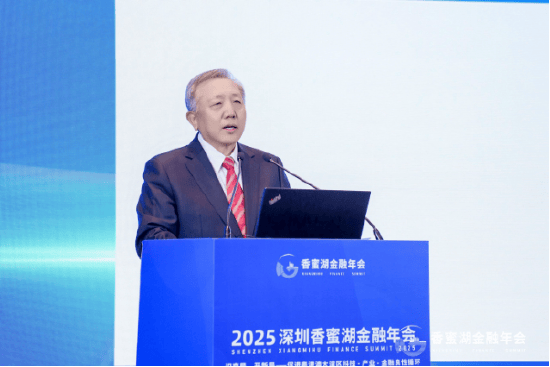
吴晓求:财政资源不能仅聚焦短期盈利项目 “投资于人” 等具有长远价值的领域同样应获资源倾斜
Xin Lang Cai Jing· 2025-12-21 07:51
Core Viewpoint - The speech by Wu Xiaoqiu emphasizes the importance of long-term investment in fundamental research and human capital for sustainable economic development, advocating for a shift away from short-term profit-focused thinking [1][7]. Group 1: Economic Development and Modernization - Wu Xiaoqiu highlights that building a modernized nation requires both "economic development" and "social civilization," with clear quantitative indicators for economic development, such as a per capita GDP exceeding $15,000 to be classified as a developed country [3][9]. - He stresses that "institutions may be more important than knowledge," as well-structured systems can define development boundaries and ensure returns, while frequent policy changes can lead to speculative behavior that hinders long-term growth [3][9]. Group 2: Role of Finance - Wu Xiaoqiu asserts that finance plays a crucial role alongside technology in the modernization process, often overlooked in its capacity to facilitate the transformation of technology into new products and industries [3][9]. - He identifies two core capabilities of modern finance: value discovery, which allows capital to assess the application and development potential of technologies, and risk diversification, which helps manage risks during the transition from technology to industry [3][9]. Group 3: Functions of Finance - The first function of finance is payment and clearing, which enhances economic and trade efficiency, exemplified by the transparency of mobile payment systems in China that have improved operational efficiency [4][10]. - The second function is pricing and resource allocation, where accurate pricing is essential for efficient resource utilization, facilitated through indirect financing via financial intermediaries and direct financing through market mechanisms [5][10]. - The third function involves risk management and hedging, where finance must create tools to manage various risks to stabilize the investment environment and attract foreign investment [6][11]. - The fourth function is to promote industrial upgrading and meet social wealth management needs by creating a diverse range of financial assets that cater to different investor profiles [6][12]. - The fifth function is to create diversified liquidity, which includes both monetary and asset liquidity, essential for the normal operation of the economy and providing more options for asset allocation [6][12].
飞鹤上半年营收91.5亿元,海外门店数增长270%
Jing Ji Wang· 2025-09-01 02:26
Core Insights - China Feihe Limited reported a revenue of 9.15 billion yuan and a net profit of 1.03 billion yuan for the first half of 2025, showcasing a robust financial structure and healthy cash flow [1][2] - The company accelerated its global expansion, with overseas business revenue reaching approximately 110 million yuan and a 270% increase in the number of overseas stores [1] - Feihe is investing in research and development, collaborating with over 20 top research institutions globally, and has launched new technologies to strengthen its competitive edge [1] Financial Performance - Revenue for the first half of 2025 was 9.15 billion yuan, with a net profit of 1.03 billion yuan [1] - Cash and cash equivalents stood at 6.48 billion yuan, indicating strong cash flow [1] Global Expansion - Overseas business revenue was about 110 million yuan, with a significant increase in overseas store count by 270% [1] - The company entered the North American market with over 1,500 supermarkets and expanded into Southeast Asia, successfully entering the Philippine market [1] Research and Development - Feihe is investing in basic scientific research and has established partnerships with prestigious institutions such as Harvard University and Tsinghua University [1] - The company launched the "Milk Protein Fresh Extraction Technology" and the first comprehensive database of HMOs in China, enhancing its technological barriers [1] Capital Market Engagement - Feihe announced a share buyback plan of 1 billion yuan and a mid-term dividend distribution of approximately 1 billion yuan, with a total expected dividend of no less than 2 billion yuan for 2025 [2] - The company initiated a 1.2 billion yuan maternity subsidy plan, aiming to benefit over 800,000 newborn families [2] Strategic Vision - The Chairman of Feihe emphasized the commitment to core business development, innovation, and high-quality product offerings to contribute to China's dairy industry [2]
“科学探索奖”公布2025年获奖名单!潘建伟:只有“从零到一”的突破,才能引领创新的发展
Xin Lang Ke Ji· 2025-08-25 03:07
Core Points - The "Scientific Exploration Award" announced its 2025 winners, recognizing 50 young scientists, and is one of the highest-funded projects for young scientific talent in China [1] - Each awardee will receive a total of 3 million RMB over five years, with the freedom to allocate the funds as they see fit [1] - Since its inception in 2018, the award has supported a total of 347 young scientists [1] Summary by Category Award Overview - The "Scientific Exploration Award" was established in 2018 by notable scientists and Tencent's founder, with Tencent contributing 10 billion RMB to the New Cornerstone Science Foundation [1] - The foundation aims to explore innovative models for long-term support of basic scientific research, emphasizing the importance of supporting foundational research as part of Tencent's sustainable social value innovation strategy [1] Award Demographics - Among the 50 awardees this year, 13 are young scientists (men aged 35 and under, women aged 38 and under), with 6 being from the "post-90s" generation, marking a significant increase from 7 young scientists last year [2] - In the information and electronics field, 6 awardees included 3 young scientists, highlighting their prominence in this area [2] - The number of female awardees reached 9 this year, up from 7 last year, representing a historical high with 18% of the total, including 3 young female scientists [2] Innovation and Future Outlook - The award aims to encourage original research and breakthroughs, moving from imitation to leading innovation, as stated by Pan Jianwei [2] - The initiative is seen as a model for supporting original work and guiding future scientific directions, contributing to national technological development [2]