
金融机构错位发展

Search documents
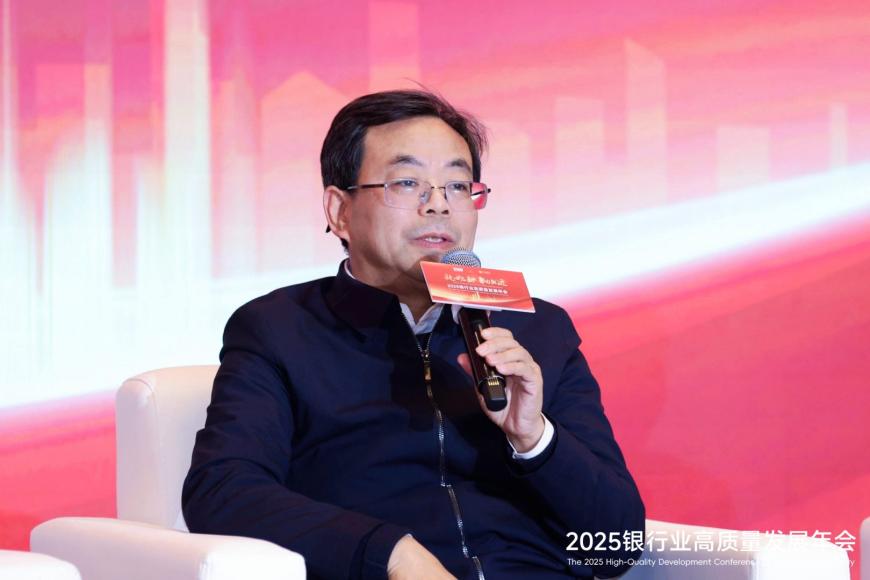
小米消金总裁曹子玮: 在金融机构错位发展中,消金公司更应作为先行先试群体
Jin Rong Jie· 2025-12-28 04:19
Core Insights - The "2025 Banking Industry High-Quality Development Conference" was successfully held in Beijing, focusing on themes such as serving the real economy, digital transformation, AI+financial innovation, and risk prevention [1] Group 1: Industry Challenges - The financial industry faces three major pain points: high institutional homogeneity leading to systemic risks, service gaps due to homogeneous competition, and the "Matthew Effect" where better borrowers receive more loans while poorer ones are neglected [3] - The need for differentiated core competitiveness among various financial entities is highlighted as a crucial industry challenge [3] Group 2: Xiaomi Consumer Finance's Unique Approach - Xiaomi Consumer Finance has developed a unique path of differentiated development over its five years of operation, focusing on five key differentiators [3] - The first differentiator is its integration within the Xiaomi ecosystem, providing tailored consumer credit services that address the immediate credit needs of users [4] - The second differentiator involves leveraging digital technology to reduce credit costs and barriers, enhancing efficiency and accessibility for everyday consumers [4] - The third differentiator focuses on customized product design for specific user groups, particularly those overlooked by larger financial institutions, thereby addressing their financial needs [4] - The fourth differentiator emphasizes a green orientation, offering preferential loan rates for green-marked products to facilitate policy implementation and consumer benefits [5] - The fifth differentiator points to the evolving role of consumer finance companies in fulfilling social responsibilities and addressing the needs of underserved populations [5]

"十五五"规划建议提出推动各类金融机构错位发展 娄飞鹏:中小银行应聚焦区域或特定领域客户进行深耕细作
Mei Ri Jing Ji Xin Wen· 2025-11-07 00:46
Core Viewpoint - The recent "15th Five-Year Plan" emphasizes the acceleration of building a strong financial nation, focusing on optimizing the financial institution system and enhancing the governance of various financial entities [1][2]. Group 1: Development Path for Small and Medium-sized Banks - Small and medium-sized banks should leverage their organizational structure advantages, which allow for quick and flexible market responses, by focusing on specific regional or niche customer segments to provide tailored financial services [2][4]. - The financial demand in China is not only expanding in total volume but also changing structurally, necessitating a multi-tiered and diversified financial service offering from the banking sector [2][3]. Group 2: Financial System Reform and Risk Management - The financial system has seen significant reform achievements, with state-owned large commercial banks successfully raising 520 billion yuan to supplement their capital [4][5]. - The focus on risk management for small financial institutions includes measures such as mergers, market exits, and early risk correction mechanisms to ensure stability and prevent systemic risks [4][6]. - The "14th Five-Year Plan" period has prioritized the prevention and resolution of financial risks, with a strong emphasis on managing risks associated with small financial institutions [5][6]. Group 3: Regulatory Enhancements - The "15th Five-Year Plan" suggests strengthening financial regulation, enhancing collaboration between central and local regulators, and enriching risk disposal resources and methods to ensure stable financial operations [6].
“十五五”规划建议提出推动各类金融机构错位发展 娄飞鹏:中小银行应聚焦区域或特定领域客户进行深耕细作
Mei Ri Jing Ji Xin Wen· 2025-11-06 15:22
Core Viewpoint - The recent "15th Five-Year Plan" emphasizes the acceleration of building a strong financial nation, focusing on optimizing the financial institution system and enhancing the governance of various financial institutions [1][2]. Group 1: Development Path for Small and Medium-sized Banks - Small and medium-sized banks should leverage their organizational structure advantages, which allow for quick and flexible market responses, by focusing on specific regional or niche customer segments to provide tailored financial services [2][4]. - The financial demand in China is not only expanding in total volume but also changing in structure, necessitating a multi-layered and diversified financial service offering from the banking sector [2][3]. Group 2: Financial System Reform and Risk Management - The financial system has shown resilience and adaptability in the face of complex domestic and international environments, with significant achievements in reforming and managing risks within small financial institutions [4][5]. - The report indicates that the banking and insurance sectors' total assets have surpassed 500 trillion yuan, highlighting the growing importance of large institutions while also recognizing the effective local service and specialized development of smaller institutions [3][4]. Group 3: Future Directions and Regulatory Enhancements - The "15th Five-Year Plan" suggests a comprehensive strengthening of financial regulation, enhancing collaboration between central and local regulatory bodies, and improving risk management resources and methods to ensure stable financial operations [6][7]. - The focus will continue on reforming and managing risks in small financial institutions, with a commitment to preventing systemic risks through various strategies, including mergers, market exits, and early risk correction mechanisms [4][5][6].