
钍基熔盐堆核能系统

Search documents
上海建工:前期,公司已完成钍基熔盐实验堆(2MW)系统建设、安装合同任务,并移交
Mei Ri Jing Ji Xin Wen· 2025-11-11 11:09
Core Viewpoint - Shanghai Construction Group has established a strategic partnership with the Shanghai Institute of Applied Physics under the Chinese Academy of Sciences since 2015 to advance the research and construction of thorium-based molten salt reactor nuclear energy systems [2] Group 1: Project Overview - The project is part of the Chinese Academy of Sciences' strategic initiative "Future Advanced Nuclear Fission Energy - Thorium Molten Salt Reactor System (TMSR)" [2] - The company has participated in the construction of the thorium molten salt simulation reactor, experimental reactor, and supporting engineering projects [2] - A strategic cooperation agreement was signed in 2015 to establish a long-term partnership focused on the development and industrial chain layout of TMSR [2] Group 2: Technical Achievements - The company has completed the construction and installation contract tasks for the thorium molten salt experimental reactor (2MW) and has handed it over [2] - The project has achieved thorium-uranium conversion within the reactor [2] - Further progress can be referenced in a report by China News Network dated November 1, 2025, highlighting that China has built the world's first and only thorium molten salt experimental reactor [2]


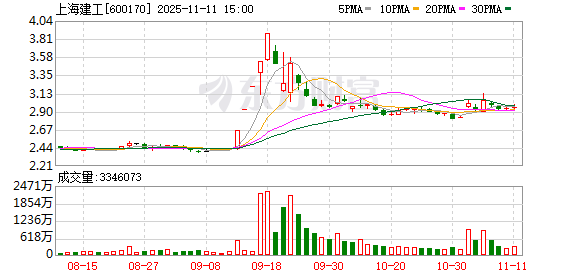
上海建工:公司参与建设钍基熔盐仿真堆、实验堆及配套工程项目
Xin Lang Cai Jing· 2025-11-11 08:05
Core Viewpoint - The company is actively involved in the construction of thorium-based molten salt reactor projects, collaborating with the Chinese Academy of Sciences to advance nuclear energy technology [1] Group 1: Strategic Partnerships - The company established a strategic partnership with the Shanghai Institute of Applied Physics, Chinese Academy of Sciences in 2015 to promote the development of thorium-based molten salt reactor (TMSR) technology [1] - The partnership focuses on long-term collaboration in areas such as technology research and development, engineering design, construction, project management, and talent development related to TMSR [1] Group 2: Project Developments - The company has participated in the construction of the world's first liquid fuel thorium-based molten salt experimental reactor located in Gansu, Wuwei [1] - The company has completed the construction and installation tasks for the thorium-based molten salt experimental reactor (2MW) system and has handed it over [1] - The project has achieved thorium-uranium conversion within the reactor [1]
宝色股份澄清:未涉及媒体报道的2MWt液态燃料钍基熔盐实验堆(TMSR-LF1)项目业务
Zheng Quan Shi Bao Wang· 2025-11-04 13:46
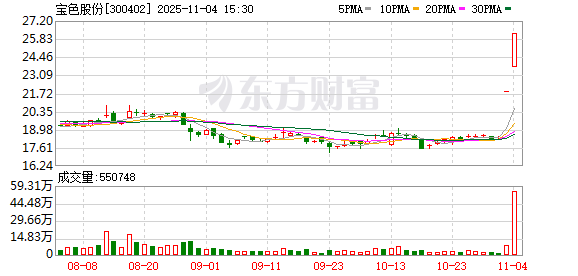
Core Viewpoint - Baose Co., Ltd. clarifies that it is not involved in the 2MWt liquid fuel thorium molten salt experimental reactor (TMSR-LF1) project, which has been the subject of recent media reports [1][2] Group 1: Company Clarification - Baose Co., Ltd. issued a clarification announcement on November 4, stating that it has no involvement in the TMSR-LF1 project, despite media speculation [1] - The company confirmed that it only undertook a contract for the main container equipment of the TMSR-SF0 project, which was delivered in 2018 for a total amount of 2.5585 million yuan [2] - The stock price of Baose Co., Ltd. surged over 30% in two consecutive trading days, attributed to its classification as a thorium molten salt concept stock [1][2] Group 2: Industry Context - The recent surge in thorium molten salt concept stocks is driven by the successful completion of thorium-uranium fuel conversion by the Chinese Academy of Sciences, marking a significant milestone in the field [2] - The director of the Shanghai Institute of Applied Physics stated the goal of establishing a 100-megawatt thorium molten salt reactor demonstration project by 2035, aiming to accelerate technological upgrades and engineering applications [3] - Baose Co., Ltd. aims to align its future development with national industrial policies and market trends, focusing on domestic and foreign markets, as well as marine engineering equipment [3]

20CM两连板宝色股份:未涉及媒体报道的2MWt液态燃料钍基熔盐实验堆(TMSR-LF1)项目业务
Ge Long Hui A P P· 2025-11-04 12:32
Core Viewpoint - The company, Baose Co., Ltd. (300402.SZ), has clarified its involvement in the thorium molten salt reactor projects following inquiries from investors and discussions on various internet platforms, stating that it only participated in a specific contract related to the project and has no involvement in other related projects [1] Group 1: Company Involvement - In 2011, the Chinese Academy of Sciences initiated a strategic project on "Future Advanced Nuclear Fission Energy - Thorium Molten Salt Reactor Nuclear Energy System," with the Shanghai Institute of Applied Physics responsible for the project [1] - The company undertook the contract for the main container equipment of the "Thorium Molten Salt Reactor Comprehensive Simulation Experiment Platform Project" (TMSR-SF0) in 2017, which was delivered in 2018, with a total contract value of 2.5585 million yuan [1] - The company has not undertaken any other equipment contracts related to the "2MWt Liquid Fuel Thorium Molten Salt Experimental Reactor" (TMSR-LF1) project [1]
20CM两连板宝色股份:未涉及媒体报道的2MWt液态燃料钍基熔盐实验堆(TMSR-LF1)项目业务
Mei Ri Jing Ji Xin Wen· 2025-11-04 12:10
Core Viewpoint - The company, Baose Co., Ltd. (300402.SZ), has clarified its involvement in the thorium molten salt reactor projects following inquiries from investors and media speculation, stating that it only participated in a specific contract related to a simulation platform project and has no involvement in the larger experimental reactor project [2]. Summary by Relevant Sections - **Company Involvement** - In 2011, the Chinese Academy of Sciences initiated a strategic project on thorium molten salt reactor systems, with the Shanghai Institute of Applied Physics responsible for it [2]. - The company was contracted in 2017 for the processing of equipment related to the "Thorium Molten Salt Reactor Comprehensive Simulation Experiment Platform Project" and delivered the equipment in 2018, with a total contract value of 2.5585 million yuan [2]. - The company has not undertaken any other equipment contracts related to the thorium molten salt reactor projects [2]. - **Project Details** - The thorium molten salt reactor simulation platform project includes the TMSR-SF0, which serves as a pre-research device for the 2MWt liquid fuel thorium molten salt experimental reactor (TMSR-LF1) [2]. - The company has clarified that it is not involved in the TMSR-LF1 project, which has been the subject of media reports [2].
A股上演“绝地反击” 向上趋势不变
Chang Sha Wan Bao· 2025-11-03 12:38
Market Performance - A-shares experienced a collective rise on November 3, with the Shanghai Composite Index up 0.55% closing at 3976.52 points, the Shenzhen Component Index up 0.19% at 13404.06 points, and the ChiNext Index up 0.29% at 3196.87 points [1] - The total trading volume in the Shanghai and Shenzhen markets was 210.71 billion yuan, a decrease of 21.07 billion yuan from the previous trading day [1] - A total of 3535 stocks rose, with 90 hitting the daily limit up, while 1801 stocks fell, with 11 hitting the daily limit down [1] Sector Performance - Most industry sectors saw gains, with notable increases in shipbuilding, gaming, cultural media, coal, photovoltaic equipment, power equipment, oil, mining, and airport sectors [1] - The AI application sector showed strong performance, particularly in short drama games and paid knowledge segments, driven by the increase in mobile and PC active users [2] - The molten salt energy storage concept stocks surged following the successful operation of a thorium-based molten salt experimental reactor, marking a significant advancement in China's nuclear energy capabilities [2] Company Highlights - Huibo Pu, a notable player in oil and gas engineering and services, saw its stock hit the daily limit up, with a reported net profit of 10.53 million yuan for Q3 2025, reflecting a year-on-year growth rate of 113.73% [3] - The company focuses on carbon capture, utilization, and storage (CCUS) and is set to launch a natural gas terminal project in June 2024, which is part of a major gas field development [3] - Huibo Pu is also establishing a high-end energy equipment manufacturing base in Tianjin, expected to begin operations in early 2026, enhancing its full industry chain delivery capabilities [3]
一核能科技有了新进展,但距商用还有较长时间
Di Yi Cai Jing· 2025-11-03 11:02
Core Insights - The thorium molten salt reactor has made significant progress, marking a step forward in utilizing thorium resources for nuclear energy, which is crucial given the scarcity of traditional uranium resources [1][2] Group 1: Technological Developments - The Shanghai Institute of Applied Physics has successfully achieved thorium-uranium fuel conversion in a 2 MW thorium molten salt experimental reactor, making it the only operational molten salt reactor utilizing thorium globally [1] - The basic principle of the thorium molten salt reactor involves dissolving thorium-232 in high-temperature liquid fluoride salt, which allows for the conversion to uranium-233 during nuclear reactions, creating a sustainable nuclear fuel supply [2] Group 2: Industry Context - The nuclear power industry is facing a challenge with the diminishing availability of uranium, making the efficient use of thorium, which is more abundant, a pressing issue [1] - The thorium molten salt experimental reactor is currently a small-scale experimental setup, and significant engineering validation is required before commercial deployment can occur [2] Group 3: Historical Background - The United States previously constructed thorium molten salt reactors in the last century, but these projects were eventually shelved for various reasons [3]
【新华社】燃料从“铀”到“钍”!我国实现钍基熔盐堆研发突破
Xin Hua She· 2025-11-03 03:16
Core Insights - The establishment of a 2 MW liquid fuel thorium molten salt experimental reactor marks a significant advancement in nuclear fuel diversification from uranium to thorium, making it the only operational molten salt reactor globally that incorporates thorium fuel [2][3] Group 1: Technological Advancements - The thorium molten salt reactor utilizes thorium as fuel and high-temperature molten salt as a coolant, offering advantages such as no water cooling, operation at atmospheric pressure, and high-temperature output [2][3] - The project began in 2011 under the Chinese Academy of Sciences, focusing on advanced nuclear fission energy systems, with a collaborative team overcoming numerous technical challenges to transition from laboratory research to engineering validation [3] Group 2: Future Goals - The team aims to establish a 100 MW thorium molten salt reactor demonstration project by 2035, accelerating technology iteration and engineering transformation to provide a safe and reliable thorium-based energy generation pathway for the country [4]
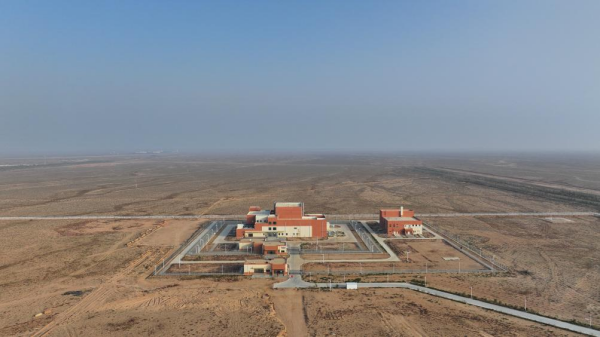
新华鲜报|燃料从“铀”到“钍”!我国实现钍基熔盐堆研发突破
Xin Hua She· 2025-10-31 23:16
Core Insights - The successful construction of a new experimental reactor has enabled the diversification of nuclear fuel from "uranium" to "thorium" [1] - The thorium-based molten salt reactor has achieved the world's first thorium-uranium fuel conversion and has become the only operational molten salt reactor utilizing thorium [1] - This technology aligns with China's abundant thorium resources and can integrate with renewable energy sources, creating a low-carbon composite energy system [1] Group 1 - The thorium molten salt reactor operates at high temperatures using liquid salt as a coolant, eliminating the need for high-pressure vessels and large amounts of water for cooling, making it safer and more efficient [1] - The project began in 2011 under the Chinese Academy of Sciences, focusing on advanced nuclear fission energy systems, with a collaborative team overcoming numerous technical challenges [2] - The experimental reactor construction started in January 2020, with plans for full power operation by June 2024 and the completion of the world's first thorium addition to a molten salt reactor by October 2024 [2] Group 2 - The research team aims to establish a 100-megawatt thorium molten salt reactor demonstration project by 2035, accelerating technology iteration and engineering transformation [2] - The project has involved nearly a hundred domestic research institutions, universities, and industrial groups, marking a significant leap from laboratory research to engineering validation [2]