银屑病药物市场

Search documents
新股消息 | 益方生物(688382.SH)递表港交所 深耕肿瘤、自身免疫性疾病及代谢性疾病等领域
智通财经网· 2026-01-02 02:38
Company Overview - Yifang Biotechnology (Shanghai) Co., Ltd. is a research-driven biopharmaceutical company based in China, focusing on significant unmet medical needs in oncology, autoimmune diseases, and metabolic disorders [5] - The company has established a comprehensive and differentiated product pipeline, including two commercialized products (BPI-D0316 and D-1553), two core clinical-stage products (D-2570 and D-0502), one clinical-stage candidate (D-0120), and three preclinical candidates (YF087, YF550, and YF057) [5][6] - BPI-D0316, a third-generation EGFR inhibitor, and D-1553, a KRAS G12C inhibitor, have been approved for marketing in China and included in the National Reimbursement Drug List (NRDL) [5][6] Financial Performance - For the fiscal year ending December 31, 2024, the company reported revenues of approximately RMB 168.79 million, with a gross profit of RMB 164.77 million [8][9] - The company recorded a net loss of approximately RMB 240.20 million for the same period [10] - As of September 30, 2025, the company achieved revenues of approximately RMB 30.89 million, with a gross profit of RMB 26.74 million, and a net loss of approximately RMB 181.39 million [8][10] Customer Dependency - The company has a high customer dependency, with revenues from its largest customer accounting for 90.3% and 73.6% of total revenues for the fiscal years ending December 31, 2024, and September 30, 2025, respectively [7] Industry Overview - The global oncology drug market is projected to grow from USD 143.5 billion in 2019 to USD 253.3 billion by 2024, with a compound annual growth rate (CAGR) of 12.0%, and expected to reach USD 702.7 billion by 2035 [12] - The Chinese oncology drug market is expected to grow from USD 26.5 billion in 2019 to USD 35.9 billion by 2024, with a CAGR of 6.3%, and projected to reach USD 145 billion by 2035 [12] - The global targeted oncology drug market is anticipated to grow from USD 85.5 billion in 2019 to USD 154 billion by 2024, with a CAGR of 12.5%, and expected to reach USD 320.5 billion by 2035 [14] - The Chinese targeted oncology drug market is expected to grow from USD 6.2 billion in 2019 to USD 16.6 billion by 2024, with a CAGR of 21.8%, and projected to reach USD 61.6 billion by 2035 [14]


烧钱23年零产品,和美药业赴港IPO求生
Bei Jing Shang Bao· 2025-12-03 11:56
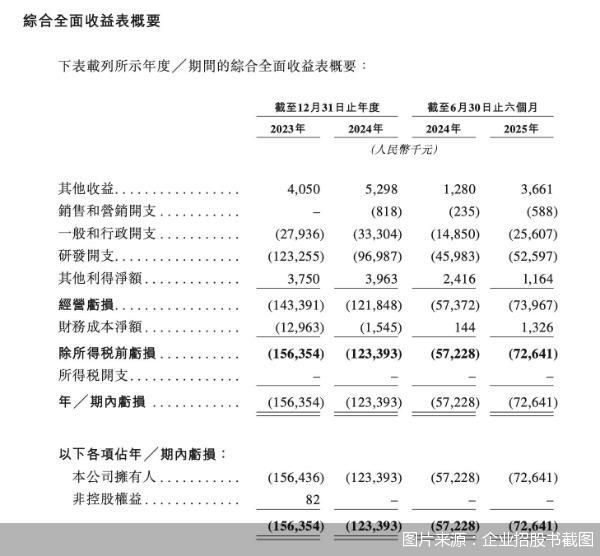
Core Viewpoint - He Mei Pharmaceutical is urgently seeking an IPO after 23 years of product development, with its first drug Mufemilast recently approved, amidst a highly competitive market for psoriasis treatments [1][6]. Company Overview - Founded in 2002, He Mei Pharmaceutical has raised over 1.2 billion RMB and incurred losses exceeding 1.1 billion RMB, achieving a valuation of 3.9 billion RMB despite having no products on the market [1][5]. - The company has been heavily reliant on external financing, completing six rounds of funding from 2021 to the end of 2024, with a post-investment valuation reaching 3.9 billion RMB after the E round [5]. Product Development - The development of Mufemilast has taken 16 years, starting from preclinical research in 2009 to receiving approval for treating moderate to severe plaque psoriasis in September 2025 [3]. - Research and development expenses for Mufemilast accounted for 60% of the total R&D costs, with losses reported at 156.4 million RMB for 2023 and projected losses of 123.4 million RMB for 2024 [3][4]. Market Competition - The psoriasis drug market in China is projected to grow from 18.2 billion RMB in 2024 to 48.3 billion RMB by 2028, with 18 approved targeted therapies already available, including 13 biologics [6][7]. - He Mei Pharmaceutical faces intense competition from established players like Novartis and Eli Lilly, which have already captured significant market shares with their products [6][7]. Pricing Strategy - He Mei Pharmaceutical plans to price Mufemilast between 52,700 RMB and 119,900 RMB annually, positioning it above some small molecule competitors but below the price of established biologics [8]. - The higher pricing strategy may hinder Mufemilast's competitiveness in a market where patients are sensitive to treatment costs, especially for chronic conditions requiring long-term medication [8][9]. Commercialization Challenges - The commercialization of Mufemilast is expected to be slow due to the need for long-term academic promotion and building trust among healthcare professionals [9]. - Even with successful market entry, Mufemilast is unlikely to generate significant revenue quickly, making it difficult for He Mei Pharmaceutical to reverse its overall loss situation [9].