
依奇珠单抗

Search documents
礼来最新研究公布
Xin Lang Cai Jing· 2026-02-19 08:48
Core Viewpoint - Eli Lilly's weight loss drug tirzepatide shows potential in treating obesity with comorbid autoimmune diseases, particularly psoriasis, as demonstrated in a recent study [2][7]. Group 1: Study Results - A late-stage study involving 274 psoriasis patients indicated that the combination of tirzepatide and the existing biologic drug, etanercept, outperformed etanercept alone in efficacy [2][7]. - Approximately 27.1% of patients receiving the combination therapy achieved complete clearance of psoriasis and a 10% weight reduction after 36 weeks, compared to only 5.8% in the etanercept-only group [4][9]. Group 2: Market Competition - Eli Lilly and its main competitor, Novo Nordisk, are engaged in intense competition across multiple markets for new indications of weight loss therapies, which could expand the patient base [4][9]. - Recently, tirzepatide received approval from the National Medical Products Administration in China for use as a monotherapy for adult patients with type 2 diabetes (T2DM) [4][9]. Group 3: Inventory and Approvals - Eli Lilly is preparing for the launch of its oral weight loss drug, with pre-launch inventory reaching $1.5 billion, a significant increase from $550 million the previous year [5][9]. - In Europe, Novo Nordisk's weight loss drug semaglutide 7.2mg received approval, providing more treatment options for doctors and patients [5][9].


礼来最新研究公布 医药巨头角逐减重药新高地
Di Yi Cai Jing· 2026-02-19 06:58
Group 1 - The core point of the article highlights the competitive landscape between Eli Lilly and its main competitor Novo Nordisk in the development of new weight loss therapies, particularly focusing on the potential of Eli Lilly's drug tirzepatide for treating obesity in patients with autoimmune diseases [1] - A late-stage study involving 274 psoriasis patients showed that the combination of tirzepatide and the existing biologic drug, etanercept, resulted in better outcomes than etanercept alone, with approximately 27.1% of patients achieving complete psoriasis clearance and a 10% weight reduction after 36 weeks [1] - The study indicates the potential of weight loss drugs in treating obesity-related comorbidities, as most obese patients have at least one weight-related comorbidity [1] Group 2 - The expansion of new indications for tirzepatide means a broader patient base, as it recently received approval from the National Medical Products Administration in China for use in adult patients with type 2 diabetes (T2DM) as a monotherapy [2] - In the European market, Novo Nordisk's weight loss drug semaglutide at a higher dosage of 7.2mg has also received approval, providing more treatment options for doctors and patients [2] - Eli Lilly is preparing for competition in the oral weight loss drug market, with pre-launch inventory for its oral weight loss medication reaching $1.5 billion, a significant increase from $550 million in the same period last year [2]
烧钱23年却无产品上市 和美药业赴港IPO求生
Bei Jing Shang Bao· 2025-12-03 16:01
Core Viewpoint - He Mei Pharmaceutical is urgently seeking an IPO after 23 years of product development, with its first drug Mufemilast recently approved, amidst a highly competitive market for psoriasis treatments [1][4]. Company Overview - Founded in 2002, He Mei Pharmaceutical has raised over 1.2 billion yuan and incurred losses exceeding 1.1 billion yuan, achieving a valuation of 3.9 billion yuan without any products on the market [1][3]. - The company has been in a continuous state of high cash burn, with significant R&D expenditures primarily focused on Mufemilast, which has taken over 16 years to develop [2][3]. Product Development - Mufemilast's development timeline began in 2009, with clinical trials starting in 2012, and it received approval for treating moderate to severe plaque psoriasis in September 2025 [2]. - The R&D costs for Mufemilast accounted for 60% of the total R&D expenses from 2023 to mid-2025, reflecting the heavy investment required for its development [2]. Market Competition - The psoriasis drug market in China is highly competitive, with 18 approved targeted therapies, including 5 small molecules and 13 biologics, leading to a fierce price war [4][5]. - Major competitors include established products from international pharmaceutical giants, which have already captured significant market shares [4][5]. Pricing Strategy - He Mei Pharmaceutical plans to set Mufemilast's initial annual treatment cost between 52,700 and 119,900 yuan, positioning it above some small molecule competitors but below the price of leading biologics [7]. - The relatively high pricing strategy may hinder Mufemilast's competitiveness, especially among price-sensitive patients requiring long-term treatment [7][8]. Commercialization Challenges - The commercialization of Mufemilast is expected to be slow due to the nature of psoriasis as a chronic disease, which requires extensive academic promotion and trust-building among healthcare professionals [8]. - Even if Mufemilast successfully launches, it may not generate significant revenue quickly enough to offset the company's ongoing losses [8].
烧钱23年零产品,和美药业赴港IPO求生
Bei Jing Shang Bao· 2025-12-03 11:56
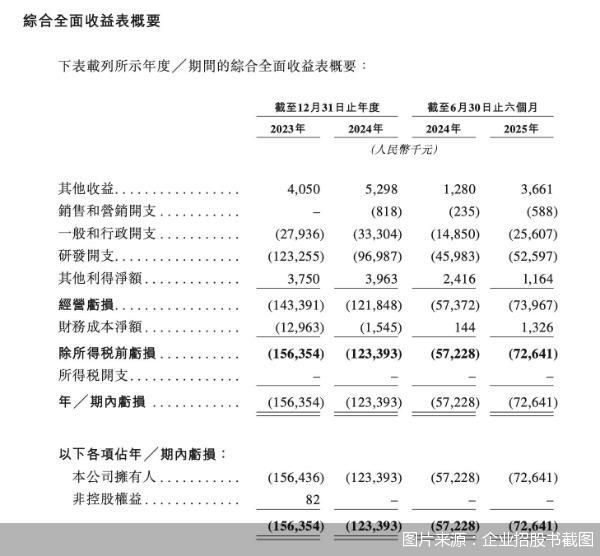
Core Viewpoint - He Mei Pharmaceutical is urgently seeking an IPO after 23 years of product development, with its first drug Mufemilast recently approved, amidst a highly competitive market for psoriasis treatments [1][6]. Company Overview - Founded in 2002, He Mei Pharmaceutical has raised over 1.2 billion RMB and incurred losses exceeding 1.1 billion RMB, achieving a valuation of 3.9 billion RMB despite having no products on the market [1][5]. - The company has been heavily reliant on external financing, completing six rounds of funding from 2021 to the end of 2024, with a post-investment valuation reaching 3.9 billion RMB after the E round [5]. Product Development - The development of Mufemilast has taken 16 years, starting from preclinical research in 2009 to receiving approval for treating moderate to severe plaque psoriasis in September 2025 [3]. - Research and development expenses for Mufemilast accounted for 60% of the total R&D costs, with losses reported at 156.4 million RMB for 2023 and projected losses of 123.4 million RMB for 2024 [3][4]. Market Competition - The psoriasis drug market in China is projected to grow from 18.2 billion RMB in 2024 to 48.3 billion RMB by 2028, with 18 approved targeted therapies already available, including 13 biologics [6][7]. - He Mei Pharmaceutical faces intense competition from established players like Novartis and Eli Lilly, which have already captured significant market shares with their products [6][7]. Pricing Strategy - He Mei Pharmaceutical plans to price Mufemilast between 52,700 RMB and 119,900 RMB annually, positioning it above some small molecule competitors but below the price of established biologics [8]. - The higher pricing strategy may hinder Mufemilast's competitiveness in a market where patients are sensitive to treatment costs, especially for chronic conditions requiring long-term medication [8][9]. Commercialization Challenges - The commercialization of Mufemilast is expected to be slow due to the need for long-term academic promotion and building trust among healthcare professionals [9]. - Even with successful market entry, Mufemilast is unlikely to generate significant revenue quickly, making it difficult for He Mei Pharmaceutical to reverse its overall loss situation [9].
第三季度亏损大幅收窄 智翔金泰业绩回暖待盈利
Xin Lang Cai Jing· 2025-11-28 11:29
Core Viewpoint - The company Zhixiang Jintai (688443.SH) is gaining attention as it progresses towards commercializing its core product, the Sairiqi monoclonal antibody injection, despite its initial poor stock performance and ongoing losses. Investors are keen to understand when the company will achieve profitability as it moves into a phase of revenue realization [1][4]. Financial Performance - In the third quarter, Zhixiang Jintai reported a revenue of 162.16 million yuan, a year-on-year increase of 1199.88%, while the net profit attributable to shareholders was a loss of 53.28 million yuan, significantly narrowing from a loss of 187 million yuan in the same period last year [3][4]. - For the first three quarters, the company achieved a total revenue of 208 million yuan, reflecting a year-on-year increase of 1562.05%, with the net loss narrowing from 550 million yuan to 370 million yuan, a reduction of 32.73% [4]. Product Development and Market Position - Zhixiang Jintai focuses on the development of monoclonal and bispecific antibodies for autoimmune, infectious diseases, and oncology. Currently, only one product has been approved for sale, and the company has incurred a cumulative net loss of 2.869 billion yuan from 2020 to 2024 [5][7]. - The Sairiqi monoclonal antibody injection has been approved for two indications and is expected to contribute significantly to revenue, having generated 45.38 million yuan in sales in the first half of the year [7][8]. - The company is facing competition from multiple IL-17A targeted drugs, including Novartis's Secukinumab, which has established a strong market presence with sales reaching 2.08 billion yuan in 2022 and increasing to 2.75 billion yuan in 2023 [8][9]. Research and Development - Zhixiang Jintai has over ten products in its research pipeline, with three currently under review for approval. The company has invested heavily in R&D, with expenditures of 4.54 billion yuan, 6.20 billion yuan, and 6.10 billion yuan over the last three years, totaling 16.85 billion yuan [10][11]. - Recent collaborations have provided short-term financial relief, including a partnership with Cullinan Therapeutics that brought in a $20 million upfront payment and potential milestone payments totaling $692 million [12][13]. Future Outlook - The company aims to enhance its product pipeline and market presence through innovative drug discovery technologies and expanding its therapeutic targets. However, long-term sustainability will depend on the success of its proprietary products in generating consistent revenue [13].



上半年业绩承压 创新平台持续亏损 华海药业连续三日股价异动
Xin Jing Bao· 2025-09-03 09:30
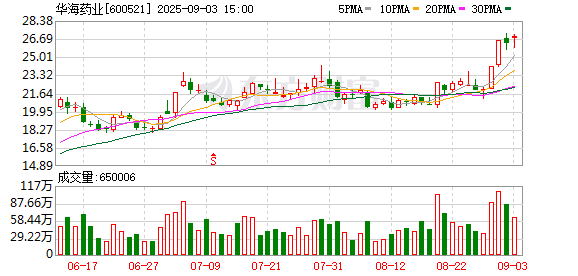
Core Viewpoint - Zhejiang Huahai Pharmaceutical Co., Ltd. has experienced significant stock price fluctuations despite facing substantial operational and financial challenges, including a 45.30% year-on-year decline in net profit for the first half of 2025 [2][3]. Financial Performance - For the first half of 2025, the company reported a revenue of 4.516 billion yuan, a decrease of 11.93% year-on-year, and a net profit attributable to shareholders of 2.409 billion yuan, marking the largest decline in net profit over the past decade [3]. - The decline in net profit is attributed to intensified domestic procurement policies, increased competition in the raw material drug industry, and the impact of US-China tariffs, despite an increase in market share [3]. R&D Progress and Challenges - Huahai Pharmaceutical's innovation platform, Shanghai Huatai Biopharmaceutical Co., Ltd., has not successfully launched any products in over a decade, with cumulative losses exceeding 1 billion yuan from 2022 to 2024 [4]. - The company is facing competition from earlier approved products in the market, particularly in the treatment of generalized pustular psoriasis and other indications [5][6]. - The HB0034 project, aimed at treating generalized pustular psoriasis, is nearing commercialization, with a formal application expected soon [4][6]. Market Competition - The competitive landscape is challenging, with other companies like Novartis and Eli Lilly having already launched similar products, which may affect the commercial prospects of Huahai's pipeline [6]. - The company is also advancing its HB0025 project for cancer treatment, which is entering critical clinical trial phases [6]. Future Outlook - The company has acknowledged the long and uncertain nature of the drug development process, highlighting the need for strategic adjustments in pricing and product structure in response to market conditions [7]. - There are questions regarding the company's plans to mitigate risks associated with its R&D pipeline and whether it will focus on niche therapeutic areas to reduce competition [7].

上半年业绩承压,创新平台持续亏损,华海药业连续三日股价异动
Xin Jing Bao· 2025-09-02 14:13
Core Viewpoint - Zhejiang Huahai Pharmaceutical Co., Ltd. has experienced significant stock price fluctuations despite facing substantial operational and financial challenges, including a 45.30% decline in net profit in the first half of 2025 compared to the previous year [1][2]. Financial Performance - In the first half of 2025, the company reported a revenue of 4.516 billion yuan, a decrease of 11.93% year-on-year, and a net profit attributable to shareholders of 2.409 billion yuan, marking the largest decline in net profit over the past decade [2]. - The decline in net profit is attributed to intensified domestic procurement policies, increased competition in the raw material drug industry, and the impact of US-China tariffs, despite an increase in market share for major products [2]. R&D Progress and Challenges - Huahai Pharmaceutical has established a subsidiary, Shanghai Huatai Biopharmaceutical Co., Ltd., focused on innovative drug development, particularly in oncology and autoimmune diseases, but has yet to successfully launch any products [3]. - The subsidiary has reported cumulative losses exceeding 1 billion yuan from 2022 to 2024, with a net asset value of approximately -1.175 billion yuan as of the end of 2024 [3]. - The most advanced project, HB0034, for treating generalized pustular psoriasis, is expected to submit a formal application for market approval soon, with potential approval in the second quarter of 2026 [3][4]. Competitive Landscape - The competitive landscape for Huahai Pharmaceutical's products is challenging, with competitors like Boehringer Ingelheim and Novartis having already launched similar products, which may affect the commercial prospects of Huahai's pipeline [4][5]. - The company is also developing HB0025, a dual-target antibody for advanced or recurrent endometrial cancer, which is entering critical clinical trial phases [5]. Strategic Considerations - The company has indicated the need for potential adjustments in product pricing strategies and product structure optimization in response to declining revenues despite increased market share [6]. - There are questions regarding the company's risk management measures for its R&D pipeline and whether it will focus on more niche therapeutic areas to mitigate competition risks [6].
丽珠集团(000513):LZM012的III期临床达到主要终点
Xin Lang Cai Jing· 2025-07-24 08:33
Core Viewpoint - LZM012, a humanized monoclonal antibody injection targeting IL-17A/F developed by the company, has successfully met its primary endpoint in Phase III clinical trials for moderate to severe plaque psoriasis, showing non-inferiority and superiority compared to Secukinumab [1][2] Group 1: Clinical Trial Results - The primary endpoint of the Phase III trial was the proportion of subjects achieving PASI 100 at week 12, with LZM012 showing a PASI 100 response rate of 49.5% compared to 40.2% for Secukinumab [2] - The secondary endpoint at week 4 showed a PASI 75 response rate of 65.7% for LZM012 versus 50.3% for Secukinumab, indicating a faster onset of action and good safety profile for LZM012 [2] Group 2: Market Landscape - The IL-17 market remains competitive, with only three IL-17 inhibitors approved overseas: Novartis' Secukinumab, Eli Lilly's Efalizumab, and UCB's Bimekizumab [1] - In 2024, projected sales for these drugs are $6.14 billion for Secukinumab, $3.26 billion for Efalizumab, and $630 million for Bimekizumab [1] Group 3: Future Prospects - The company has submitted a pre-application for marketing authorization to the CDE, with expectations for continued growth as its pipeline products enter the market [1] - Profit forecasts indicate net profits of 2.2 billion, 2.5 billion, and 2.8 billion yuan for 2025-2027, reflecting an optimistic outlook on business structure optimization and accelerating growth [2]
近千亿银屑病市场“变天”?丽珠医药炸场,但真正对手却不是诺华?
Tai Mei Ti A P P· 2025-07-24 02:14
Core Viewpoint - The path of domestic innovative drugs in China is becoming clearer, with companies like Livzon Pharmaceutical demonstrating the potential to lead in the market through differentiated treatment mechanisms and successful clinical trials [1][4]. Group 1: Clinical Trial Success - Livzon Pharmaceutical's LZM012, a recombinant anti-IL-17A/F humanized monoclonal antibody, achieved its primary endpoint in a Phase III clinical trial for moderate to severe plaque psoriasis, outperforming Novartis's Cosentyx (secukinumab) [1][3]. - The trial results showed a PASI 100 response rate of 49.5% for LZM012 compared to 40.2% for the control group (secukinumab) at week 12, indicating superior efficacy [3]. - LZM012 also demonstrated faster onset of action with a PASI 75 response rate of 65.7% at week 4, compared to 50.3% for secukinumab [3]. Group 2: Market Potential - The psoriasis drug market in China reached 13.9 billion yuan in 2023 and is projected to grow to 89.4 billion yuan by 2032, with a compound annual growth rate of 59.1% [5]. - The impending patent expiration of secukinumab presents an opportunity for LZM012 to capture market share [5][6]. Group 3: Competitive Landscape - LZM012 faces competition from several other IL-17 targeted therapies already approved in China, including Eli Lilly's etanercept and others, which may impact its market entry [5][6]. - The competitive landscape is further complicated by the aggressive pricing strategies of established products like secukinumab, which has seen significant price reductions since its launch [6]. Group 4: Company Performance - Livzon Pharmaceutical reported a revenue decline of 4.97% in 2024, with net profit increasing by 5.5%, indicating challenges in core business growth despite cost-cutting measures [7]. - The company has successfully reduced sales, management, and R&D expenses, leading to improved net profit margins [7]. Group 5: Strategic Challenges - The success of innovative drugs like LZM012 hinges not only on clinical efficacy but also on navigating the complexities of commercialization, including market competition and pricing strategies [9]. - Livzon Pharmaceutical must maintain strategic focus to effectively respond to market dynamics and ensure the successful launch of its new products [9].