
银行公司治理

Search documents
万亿长沙银行首位女行长张曼辞任,谁将接棒?
Nan Fang Du Shi Bao· 2026-02-26 15:05
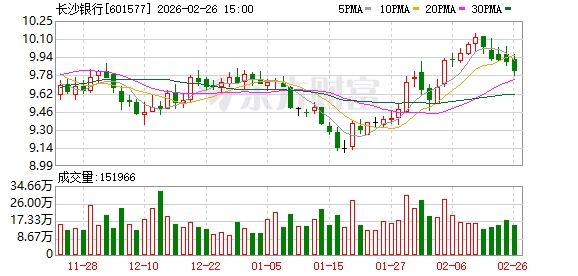
Core Viewpoint - Changsha Bank's president Zhang Man has resigned from her position, effective February 24, 2026, while continuing to serve as the chairman and other roles within the bank, indicating a transition in leadership amidst regulatory compliance and governance standards [1][2][6]. Group 1: Leadership Transition - Zhang Man's resignation comes approximately two years earlier than her original term, which was set to end on May 21, 2028, aligning with regulatory requirements for the separation of the roles of chairman and president [2]. - After her resignation, Zhang will maintain her position as chairman and continue to fulfill the president's duties until a new president is appointed and approved by regulators [1][9]. Group 2: Company Performance and Strategy - Changsha Bank, established in 1997 and listed on the Shanghai Stock Exchange in 2018, has faced declining revenue growth since 2021, with growth rates dropping to 9.6% in 2022 and 8.5% in 2023, and projected to further decline to 4.6% in 2024 [7]. - As of the third quarter of 2025, the bank reported total assets of 1.24 trillion yuan, an 8.45% year-on-year increase, with operating income of 19.721 billion yuan, a 1.29% increase, and net profit of 6.557 billion yuan, a 6% increase [7]. - In response to competitive pressures and regulatory changes, the bank has announced a new ten-year strategy aiming for assets of 4 trillion yuan, revenue of 100 billion yuan, and total profit of 40 billion yuan by 2033, focusing on industrial finance, retail finance, and county finance [8]. Group 3: Market Reaction and Future Outlook - The appointment of a new president is a focal point for the market, as it may significantly impact the execution of the bank's future strategies [9][10]. - Following the announcement of Zhang's resignation, Changsha Bank's stock experienced a slight decline, closing at 9.81 yuan, down 0.81% with a turnover rate of 0.38% and a total market capitalization of 39.451 billion yuan [10].


万亿长沙银行首位女行长张曼辞任 谁将接棒?
Nan Fang Du Shi Bao· 2026-02-26 15:04
Group 1 - The core point of the news is the resignation of Zhang Man as the president of Changsha Bank, effective February 24, 2026, while she will continue to serve as the chairman and other committee roles [2][8][11] - Zhang Man's resignation comes approximately two years before her original term was set to end on May 21, 2028, aligning with regulatory requirements for corporate governance in banks [8][12] - Changsha Bank has been experiencing a decline in revenue growth since 2021, with revenue growth rates dropping to 9.6% in 2022 and 8.5% in 2023, and projected to further decrease to 4.6% in 2024 [12][13] Group 2 - The bank's total assets reached 1.24 trillion yuan, with a year-on-year growth of 8.45%, and the bank reported a revenue of 19.721 billion yuan for the first three quarters of 2025, a 1.29% increase [12][14] - The new president's appointment is crucial for the bank's strategic execution in the coming years, with expectations for a candidate who understands the local market and has extensive banking management experience [14] - Following the announcement, Changsha Bank's stock price experienced a slight decline, closing at 9.81 yuan, down 0.81%, with a total market capitalization of 39.451 billion yuan [14]
42家A股银行全部撤销监事会
21世纪经济报道· 2026-01-09 11:06
Core Viewpoint - The supervisory board system, a standard for corporate governance in Chinese commercial banks for nearly three decades, is quietly coming to an end across the industry as banks transition to a new governance structure under the revised Company Law effective in 2024 [1][4]. Group 1: Background and Historical Context - The establishment and subsequent exit of the supervisory board system reflect the entire process of market-oriented reform and modern corporate governance in China's banking sector, rooted in the historical context of state-owned financial institution supervision [2]. - The supervisory board was first mandated by the 1995 Commercial Banking Law to enhance the oversight of state assets, evolving over nearly thirty years into a distinctive "dual-layer" governance structure alongside the board of directors and senior management [2]. Group 2: Legislative Changes and Implementation - The new Company Law effective in July 2024 allows banks to establish an audit committee under the board of directors instead of maintaining a supervisory board, providing legal space for diverse governance models [4]. - Following the implementation of this law, major state-owned banks, including ICBC, ABC, and others, completed amendments to their articles of association by September 2025, officially abolishing the supervisory board [5]. Group 3: Trends and Observations - By January 1, 2026, all 42 A-share listed banks had publicly announced the abolition of their supervisory boards, with many smaller banks also advancing similar plans [5][6]. - The exit of the supervisory board is seen as a trend driven by both regulatory changes and the inherent challenges faced by the supervisory board in its long-term practice [8]. Group 4: Challenges and Future Directions - The transition to an audit committee assumes greater responsibility for oversight, with experts noting both opportunities and challenges in this new structure [12]. - The audit committee is expected to enhance its supervisory role, but its effectiveness will depend on clear regulations regarding member selection and independence [13]. - The banking industry is exploring various strategies to optimize the audit committee's functioning, including clarifying responsibilities and ensuring a diverse and professional member composition [14].

内缺董事长,外接连环罚单,徽商银行能否圆梦A股?
Xin Lang Cai Jing· 2026-01-07 08:04
Core Insights - Huishang Bank, celebrating its 20th anniversary, faces significant regulatory fines and a vacant chairman position for over five months [2][6][30] Regulatory Penalties - In December 2025, Huishang Bank received three fines totaling 8.8 million yuan, with two fines directed at the head office amounting to 8.15 million yuan [2][28] - The bank has been penalized multiple times in 2025 for various violations, accumulating over 15 million yuan in fines [5][19][28] - Specific violations include improper loan issuance, inadequate post-loan management, and issues in credit card and financial advisory services [4][19][28] Governance Issues - The chairman position has been vacant since July 31, 2025, following the resignation of Yan Chen, which may impact strategic decision-making and risk management [6][21] - The current temporary arrangements for leadership roles are insufficient to replace the formal chairman's leadership [21] Financial Performance - For the first half of 2025, Huishang Bank reported a net interest income of 14.53 billion yuan, a decrease of 1.06% year-on-year, indicating challenges in traditional lending growth [22][29] - The bank's total assets reached 2.25 trillion yuan, an increase of 11.82% from the beginning of the year, while net profit rose by 3.81% to 9.33 billion yuan [29] - The net interest margin and net interest yield decreased by 20 and 25 basis points, respectively, reflecting weakened profitability in traditional interest-based operations [22] Asset Quality Concerns - As of June 2025, the non-performing loan balance in the real estate sector surged by 190% to 1.156 billion yuan, raising concerns about asset quality [9][24][29] - The overall non-performing loan rate remains at 0.98%, but structural risks are evident, particularly in the personal loan sector [10][24] Capital Adequacy Pressure - The core Tier 1 capital adequacy ratio fell to 9.53% by June 2025, down from 9.83% at the end of 2024, indicating capital pressure amid rapid asset growth [11][25][26] - Despite remaining above regulatory minimums, the bank's capital ratios are below industry averages, which could pose challenges for future growth [26] Listing Challenges - Huishang Bank's efforts to return to A-share listing have faced delays since 2019, with ongoing disputes over shareholding and governance issues hindering progress [12][27] - The bank's board has not completed its renewal process, and historical employee shareholding issues remain unresolved, complicating its governance structure [27]

中信银行: 中信银行股份有限公司2025年第二次临时股东大会、2025年第三次A股类别股东会及2025年第三次H股类别股东会会议资料
Zheng Quan Zhi Xing· 2025-08-05 16:20
Core Viewpoint - CITIC Bank is proposing several resolutions for its upcoming shareholder meeting, including the election of a new non-executive director, changes to its registered capital, and amendments to its articles of association. Group 1: Election of Non-Executive Director - The board of CITIC Bank has nominated Mr. Wei Qiang as a candidate for the seventh board of directors as a non-executive director [1][2] - Mr. Wei Qiang has a background in human resources and has held various positions within CITIC Group, including general manager of the human resources department [1][2] Group 2: Changes to Registered Capital - CITIC Bank plans to increase its registered capital from RMB 48,934,796,573 to RMB 55,645,162,264 to align with the actual situation following the conversion of convertible bonds [7][8] - The increase in registered capital is due to the conversion of approximately 6,710,365,691 shares from convertible bonds that matured on March 3, 2025 [7][8] Group 3: Amendments to Articles of Association - The bank intends to revise its articles of association, shareholder meeting rules, and board meeting rules to reflect the changes in governance structure, including the removal of the supervisory board [6][10] - The proposed amendments will be submitted for approval at the shareholder meeting and will take effect upon regulatory approval [6][10] Group 4: Director Remuneration Policy - The remuneration policy for the seventh board of directors has been adjusted, stating that executive directors will not receive any director allowances, while non-executive directors will also not receive allowances [4][5] - Independent non-executive directors will receive a remuneration package that includes a basic salary and performance-related pay, with specific amounts outlined for committee roles [4][5]

中小银行打造现代公司治理体系路径探索
Zheng Quan Ri Bao· 2025-06-15 14:14
Core Viewpoint - The article emphasizes the importance of improving corporate governance in small and medium-sized banks in China to ensure their sustainable development and enhance their role in supporting local economies and small enterprises [1]. Summary by Sections Importance of Improving Corporate Governance - Enhancing decision-making quality and efficiency is crucial for local banks, which benefit from shorter and more frequent decision cycles. A robust governance structure can strengthen this advantage [2]. - Effective corporate governance helps in risk prevention by regulating shareholder behavior and managing related transactions, thereby reducing regional financial risks [2]. - Improved governance leads to greater transparency in information disclosure, which can attract quality strategic investors and expand capital sources for banks [2]. Issues in Corporate Governance - Problems with shareholder structure and management include issues like hidden affiliations and inadequate scrutiny of shareholder qualifications, leading to potential violations in related lending [3]. - Governance bodies often fail to perform their duties effectively due to concentrated or dispersed ownership, ineffective independent director systems, and limited supervisory roles of the supervisory board [3]. - Insufficient information disclosure practices hinder investors' understanding of banks' true operational conditions, while external supervision mechanisms are inadequate [3]. Relationship with Local Governments - Local governments play a significant role in the establishment and business expansion of small banks, but over-reliance can lead to deviations from market principles and increased credit risks [4]. - There is a lack of sustained support from local governments, and communication gaps exist between banks and local authorities, affecting cooperation and understanding of economic needs [4]. Measures to Improve Corporate Governance - Optimizing the shareholder structure by diversifying ownership and introducing strategic investors can create a balanced governance ecosystem [5]. - Strengthening the responsibilities of the board of directors and supervisory board is essential for effective governance, ensuring independent oversight and accountability [6]. - Establishing a standardized information disclosure framework and enhancing digital capabilities can improve the effectiveness of disclosures and build market trust [7]. Managing Relationships with Local Governments - Small banks should support local economic development while maintaining independent governance structures to avoid excessive administrative interference [8]. - Establishing regular communication with local governments can help banks align their strategies with regional development plans, ensuring mutual benefits [8].