
锂电池应用

Search documents
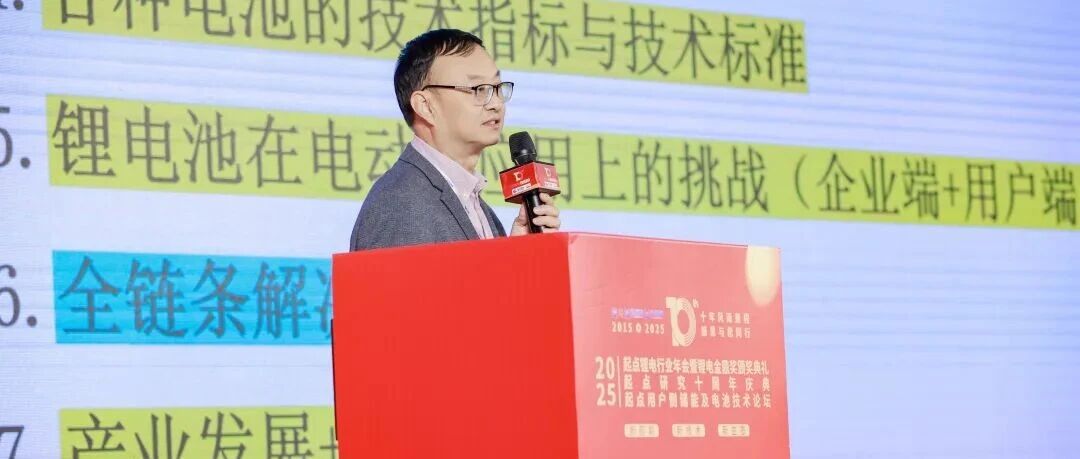
新日股份 副总经理/总工程师 雷宝荣:新国标执行后不同场景两轮车锂电池的应用与技术要求
起点锂电· 2025-12-18 07:31
Core Viewpoint - The article discusses the impact of the new national standards on the electric vehicle (EV) industry, particularly focusing on two-wheeled electric vehicles and the implications for battery technology and safety requirements [2][4][5]. Group 1: Industry Overview - The new national standards for electric vehicles were implemented on December 1, 2023, leading to significant changes in the industry [4]. - The electric vehicle market in China has grown to over 420 million units, with two-wheeled electric motorcycles alone exceeding 380 million [4][5]. - The standards aim to enhance safety and performance in the electric vehicle sector, addressing issues that have arisen from the rapid growth of the industry [6][10]. Group 2: Safety and Technical Requirements - Safety is the primary concern under the new standards, which include requirements for electrical and mechanical safety [10]. - The standards necessitate the use of lithium batteries, with a focus on safety features such as Battery Management Systems (BMS) and temperature performance [7][10]. - Key battery types include lithium iron phosphate batteries as the preferred choice, while ternary lithium batteries are gradually being phased out [7][10]. Group 3: Application Scenarios - The article outlines various application scenarios for electric vehicles, including commuting, logistics, and shared mobility, each with specific requirements for battery performance and safety [7][8]. - In logistics, the demands on battery performance are higher due to more rigorous usage conditions compared to personal use [8]. - The standards also emphasize the need for intelligent systems in electric vehicles, such as remote monitoring and safety alarms [10]. Group 4: Industry Challenges and Future Directions - The industry faces challenges such as cost pressures, temperature performance issues, and the need for integration and innovation in battery technology [12][13]. - Collaboration between battery manufacturers and vehicle producers is essential for addressing safety, reliability, and durability in various application scenarios [12][13]. - The future direction of the industry will focus on policy guidance, integration of supply chains, and the development of sustainable business models [13].


蔚蓝锂芯:公司生产圆柱锂电池产品,主要应用于电动工具、清洁电器、电动摩托车、机器人/狗,BBU等领域
Mei Ri Jing Ji Xin Wen· 2025-09-24 00:40
Core Viewpoint - The company primarily produces cylindrical lithium batteries, which are mainly used in various applications such as power tools, cleaning appliances, electric motorcycles, robots/dogs, and BBU [1] Group 1 - The company confirmed that it manufactures cylindrical lithium battery products [1] - Key application areas for the company's products include electric tools, cleaning appliances, electric motorcycles, robots/dogs, and BBU [1] - The company was asked about the revenue proportion from energy storage battery cells, but no specific percentage was provided in the response [1]
