电动轻便摩托车

Search documents
电动两轮车创新实践手册
亚马逊云科技· 2026-03-25 11:21
Investment Rating - The report indicates a positive investment outlook for the electric two-wheeler industry, highlighting significant growth potential driven by technological advancements and increasing consumer demand for sustainable transportation solutions [3][19]. Core Insights - The electric two-wheeler industry is experiencing unprecedented growth opportunities due to the global shift towards green mobility and sustainable development. The sector is evolving towards smart and high-end products, with new national standards promoting innovation and safety [3][19]. - By 2030, the global electric two-wheeler market is projected to reach $118.657 billion, with a compound annual growth rate (CAGR) of 10.5%. This growth reflects the increasing adoption of electric two-wheelers as a viable green transportation solution [19][20]. - The report emphasizes the importance of digital transformation in the industry, leveraging cloud computing, big data, and AI technologies to enhance operational efficiency and market competitiveness [4][54]. Summary by Sections 1. Definition and Product Classification - The report covers various products within the electric two-wheeler category, including electric bicycles, electric scooters, and electric motorcycles, catering to short-distance transportation and innovative recreational experiences [13][11]. 2. Global Market Trends - The electric two-wheeler market is rapidly expanding across regions, with North America expected to grow from $3.24 billion in 2023 to $7.47 billion by 2029. Europe leads the market, with a projected increase from $3.14 billion in 2021 to $7 billion by 2029. In China, sales reached 58.8 million units in 2023, marking a 4.8% year-on-year growth [24][25]. - Southeast Asia is identified as a fast-growing market, with electric motorcycle sales reaching 300,000 units in 2023, driven by policies promoting the transition from gasoline to electric [25][22]. 3. Opportunities and Challenges in the Industry - The report identifies opportunities in the market, such as the shift towards high-end and personalized electric two-wheelers, with consumers increasingly seeking stylish and functional designs [30][31]. - The rise of shared electric bikes is highlighted as a new growth avenue, with significant increases in deployment from 150,000 units in 2017 to 4.95 million in 2022 in China [35][37]. - Challenges include the need for rapid product iteration to meet evolving consumer demands, the stability and reliability of smart features, and the integration of smart manufacturing processes to enhance efficiency [39][42][45]. 4. Amazon Cloud Technology Solutions for the Industry - Amazon Cloud Technology aims to empower the electric two-wheeler industry through a comprehensive smart platform that supports vehicle connectivity, real-time data analysis, and remote control functionalities [50][54]. - The platform enhances product design efficiency and operational management, enabling companies to respond quickly to market demands and improve customer experiences [60][63]. 5. Sustainability and Regulatory Compliance - The report emphasizes the importance of sustainability in the electric two-wheeler sector, with regulations like the EU Battery Regulation and Carbon Border Adjustment Mechanism driving the need for reduced carbon footprints [97][98]. - Amazon Cloud Technology provides solutions to help companies track and manage sustainability data, contributing to their environmental goals [97][98].
电动化、智能化、全球化电动两轮车创新实践手册
亚马逊云科技· 2026-03-25 10:24
Investment Rating - The report indicates a positive investment outlook for the electric two-wheeler industry, highlighting significant growth potential driven by technological advancements and increasing consumer demand for sustainable transportation solutions [3][19]. Core Insights - The electric two-wheeler industry is experiencing unprecedented growth opportunities due to the global shift towards green transportation and sustainability. The sector is evolving towards smart and high-end products, with new national standards promoting innovation and safety [3][19]. - By 2030, the global electric two-wheeler market is projected to reach $118.657 billion, with a compound annual growth rate (CAGR) of 10.5%. This growth reflects the increasing adoption of electric two-wheelers as a viable green transportation solution [19][20]. - The report emphasizes the importance of digital transformation in the industry, leveraging cloud computing, big data, and AI technologies to enhance operational efficiency and customer experience [4][54]. Summary by Sections 1. Definition and Product Classification - The report covers various products within the electric two-wheeler category, including electric bicycles, electric scooters, and electric motorcycles, catering to short-distance transportation and innovative recreational experiences [13][11]. 2. Global Market Trends - The electric two-wheeler market is rapidly expanding across regions, with North America expected to grow from $3.24 billion in 2023 to $7.47 billion by 2029. Europe leads the market, with a projected increase from $3.14 billion in 2021 to $7 billion by 2029 [24]. - In China, sales reached 58.8 million units in 2023, marking a 4.8% year-on-year increase, driven by the implementation of new national standards and strong export growth [24][25]. 3. Opportunities and Challenges - The industry faces opportunities in high-end and personalized products, with consumers seeking stylish and functional electric two-wheelers. The rise of shared electric bikes is also transforming urban mobility, with significant growth in China [30][35]. - Challenges include rapid market changes, the need for faster product iterations, and the integration of smart technologies. Companies must enhance their data analysis capabilities to better understand consumer trends [39][42]. 4. Amazon Cloud Technology Solutions - Amazon Cloud Technology aims to empower the electric two-wheeler industry through a comprehensive digital platform that supports vehicle connectivity, real-time data analysis, and remote control features [50][54]. - The platform enhances product design efficiency and enables smart manufacturing processes, contributing to the industry's digital transformation [60][93]. 5. Sustainability Initiatives - The report highlights the importance of sustainability in the electric two-wheeler sector, with regulations on battery emissions and carbon footprints driving the need for eco-friendly practices [97][98].
《淄博市电动自行车消防安全管理办法》3月1日起施行
Qi Lu Wan Bao· 2026-02-10 10:33
Core Viewpoint - The introduction of the "Zibo City Electric Bicycle Fire Safety Management Measures" aims to enhance fire safety regulations for electric bicycles, addressing the increasing fire hazards associated with their use in Zibo City [1][2]. Legislative Background - The Zibo City government has developed the "Measures" based on extensive research and public consultation, ensuring that the legislation aligns with practical needs and has broad consensus [2]. Key Provisions of the Measures - The Measures consist of 23 articles, emphasizing a people-centered approach and a comprehensive fire safety responsibility system applicable throughout the city [3]. - Responsibilities are clearly defined for various government levels and departments, ensuring effective management and coordination in fire safety efforts [3]. - Quality management standards for electric bicycles and their components are established, prohibiting illegal modifications and ensuring compliance with national product quality laws [3]. Infrastructure and Charging Facilities - Regulations are set for the construction of centralized parking and charging facilities to address issues related to parking and charging difficulties [4]. - A transparent fee management system for centralized charging facilities is introduced to enhance affordability and utilization [4]. Fire Safety Management Measures - The Measures outline specific responsibilities for electric bicycle owners and users regarding safe parking and charging practices [5]. - Property management companies are tasked with enforcing compliance and preventing violations related to improper parking and charging [5]. Broader Scope of Management - The Measures extend to the management of electric bicycles used for commercial purposes, such as delivery services, ensuring comprehensive fire safety oversight [6]. - A regulatory mechanism is established to enhance coordination among various departments for effective enforcement of fire safety regulations [6]. Legal Accountability - The Measures incorporate a framework for legal accountability, focusing on educational approaches and minimal penalties for non-compliance, while adhering to existing laws for other violations [6].
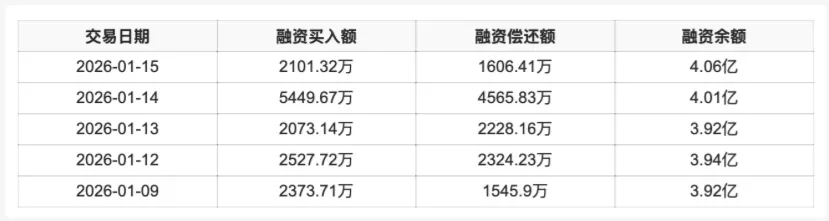
爱玛科技1月15日获融资买入2101.32万元
Cai Jing Wang· 2026-01-17 13:30
Core Viewpoint - Aima Technology is experiencing a mixed performance with ongoing challenges in international expansion and increased competition in the electric two-wheeler market, while also undergoing internal adjustments such as layoffs in certain departments [3][9][10]. Financing and Market Activity - On January 15, Aima Technology's stock rose by 0.33% with a trading volume of 152 million yuan. The financing data shows a net buying amount of 4.9491 million yuan for that day [1][2]. - As of January 15, the total financing and margin trading balance for Aima Technology reached 409 million yuan [2]. Business Operations and Layoffs - Aima Technology has confirmed that it is not undergoing significant layoffs exceeding 50%, but is optimizing its workforce to align with business needs. Departments affected include the international division and the high-end brand "Zero" [3][9]. - The company’s international business has not shown significant growth, with revenue from international operations remaining around 1% of total revenue from 2022 to 2024 [3][10]. Financial Performance - For the first half of 2025, Aima reported revenue of 13.031 billion yuan, a year-on-year increase of 23.04%, and a net profit of 1.212 billion yuan, up 26.14% [9][10]. - However, Aima's growth is lagging behind competitors like Yadea and Ninebot, which reported higher revenue and profit growth rates during the same period [9][10]. Market Competition - Aima faces intense competition from leading brands like Yadea and emerging players in the electric two-wheeler market. The company’s revenue heavily relies on electric two-wheeler sales, which account for over 95% of total revenue [10][11]. - The introduction of new national standards for electric bicycles is expected to increase production costs and potentially suppress market demand, further intensifying competition [11][14]. Product Development - Aima launched its high-end electric motorcycle brand "Zero" in July 2025, with plans to release its first model in the first quarter of 2026 [4][5][7]. - The "Zero" brand aims to create a new growth trajectory for Aima, although it faces stiff competition in the high-end market segment [7][9].


立马车业加强自主研发提升智能化水平——用户体验没有上限
Xin Lang Cai Jing· 2026-01-16 23:10
Core Viewpoint - The company, Hebei Limama Vehicle Technology Co., Ltd., is experiencing growth in electric bicycle production and sales, driven by technological advancements and automation in manufacturing processes [1][2]. Group 1: Company Overview - Hebei Limama is located in Langfang City, Hebei Province, and integrates research, manufacturing, and sales of electric bicycles [1]. - From January to November 2025, the company sold over 660,000 units, generating more than 600 million yuan in revenue, reflecting a year-on-year increase of 6.7% [1]. Group 2: Technological Advancements - The company invests over 10 million yuan annually in R&D for new product development and iterations of existing products, holding more than 60 national patents [1]. - The production process is fully automated, with an automation rate exceeding 92%, and includes 17 production lines such as assembly, welding, and storage [1][2]. Group 3: Product Safety and Compliance - Following the introduction of the new national standard for electric bicycles, the company has upgraded its testing capabilities with six new devices to enhance product safety and stability [2]. - The company has addressed safety concerns by upgrading materials, such as converting magnesium and aluminum components to sheet metal, which reduces costs and improves yield rates [2]. Group 4: Product Development and Market Strategy - The company focuses on stylish and youthful product designs, with smart upgrades that include features like traction control and intelligent positioning [3]. - In 2026, the company plans to invest 12 million yuan in developing 16 new models of electric bicycles, 7 electric lightweight motorcycles, and 14 electric leisure tricycles, with the first products expected to launch in March [3].
爱玛科技:主营业务为电动自行车、电动轻便摩托车、电动摩托车等的研发、生产及销售
Zheng Quan Ri Bao· 2026-01-13 12:13
Group 1 - The core business of the company includes the research, production, and sales of electric bicycles, electric lightweight motorcycles, and electric motorcycles [2]
减员超50%?爱玛科技回应
2 1 Shi Ji Jing Ji Bao Dao· 2026-01-08 06:18
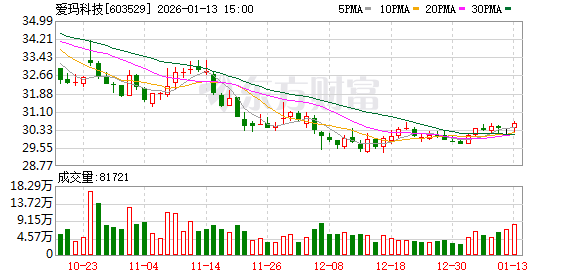
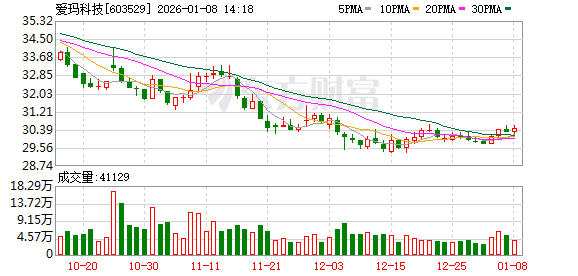
Group 1 - The core message of the article indicates that there are rumors about Aima Technology (603529.SH) facing significant layoffs, with claims of over 50% staff reduction, particularly affecting the high-end brand "Lingji" and the international division [2] - Aima Technology's representative denied the rumors, stating that the company is undergoing normal personnel optimization to align with its operational needs, and confirmed that the mentioned departments are functioning normally [2] - The company reported a revenue of 21.093 billion yuan for the first three quarters of 2025, representing a year-on-year growth of 20.78%, and a net profit attributable to shareholders of 1.907 billion yuan, up 22.78% year-on-year [2] Group 2 - As of 13:41, Aima Technology's stock price increased by 0.89%, reaching 30.55 yuan per share, with a total market capitalization of 26.6 billion yuan [3]
新日股份涨2.00%,成交额2030.49万元,主力资金净流入7.29万元
Xin Lang Cai Jing· 2025-12-31 02:55
Core Viewpoint - Xinri Co., Ltd. has shown a significant increase in stock price and positive financial performance indicators, indicating potential growth and investor interest in the electric vehicle sector [2][3]. Group 1: Stock Performance - As of December 31, Xinri's stock price increased by 2.00% to 13.25 CNY per share, with a market capitalization of 3.049 billion CNY [1]. - Year-to-date, Xinri's stock price has risen by 29.65%, with a recent 5-day increase of 0.45% and a 20-day decline of 5.76% [2]. - The company has appeared on the stock market's "龙虎榜" (top trading list) four times this year, with the latest appearance on October 27, where it recorded a net buy of 37.797 million CNY [2]. Group 2: Financial Performance - For the period from January to September 2025, Xinri achieved a revenue of 3.574 billion CNY, reflecting a year-on-year growth of 26.27% [3]. - The net profit attributable to shareholders for the same period was 116 million CNY, marking a year-on-year increase of 39.52% [3]. Group 3: Shareholder and Dividend Information - Xinri has distributed a total of 355 million CNY in dividends since its A-share listing, with 194 million CNY distributed over the past three years [4]. - As of September 30, 2025, the number of shareholders decreased by 22.09% to 16,000, while the average number of shares held per shareholder increased by 28.35% to 14,342 shares [3][4]. - Notable institutional shareholders include 招商量化精选股票发起式A (holding 1.7137 million shares) and 招商中证2000指数增强A (newly entered with 797,100 shares) [4].

新日股份5.65亿元合同纠纷二审发回 重审结果待判
Xi Niu Cai Jing· 2025-12-23 05:26
Core Viewpoint - Jiangsu Xinri Electric Vehicle Co., Ltd. is involved in a legal dispute with Nandu Power regarding a contract worth 565 million yuan, with the Jiangsu High Court ordering a retrial due to procedural issues in the initial ruling [2][4] Group 1: Legal Dispute Details - The dispute originated from a lithium battery procurement contract signed in 2019, where Xinri claimed that Nandu delivered batteries with significant quality issues [4] - Xinri filed a lawsuit in February 2023, seeking to terminate the contract, recover the batteries, and claim damages totaling 565 million yuan [4] - Nandu Power denied the quality issues, with third-party inspections confirming product compliance [4] Group 2: Court Rulings and Implications - The first-instance ruling by Wuxi Intermediate Court in December 2024 terminated the contract and ordered Nandu to pay 100 million yuan in damages, but both parties appealed the decision [4] - The Jiangsu High Court's decision to send the case back for retrial resulted in the full refund of the appellate court fees paid by both parties [4] Group 3: Business Impact - The affected batteries were used in customized models for B-end customers, and Xinri indicated that any losses incurred would be compensated to these customers based on the lawsuit's outcome [4] - Xinri's main business includes the research, production, and sales of electric bicycles, electric light motorcycles, and electric motorcycles, utilizing various sales channels including distribution, direct sales, and overseas operations [4]
新日股份 副总经理/总工程师 雷宝荣:新国标执行后不同场景两轮车锂电池的应用与技术要求
起点锂电· 2025-12-18 07:31
Core Viewpoint - The article discusses the impact of the new national standards on the electric vehicle (EV) industry, particularly focusing on two-wheeled electric vehicles and the implications for battery technology and safety requirements [2][4][5]. Group 1: Industry Overview - The new national standards for electric vehicles were implemented on December 1, 2023, leading to significant changes in the industry [4]. - The electric vehicle market in China has grown to over 420 million units, with two-wheeled electric motorcycles alone exceeding 380 million [4][5]. - The standards aim to enhance safety and performance in the electric vehicle sector, addressing issues that have arisen from the rapid growth of the industry [6][10]. Group 2: Safety and Technical Requirements - Safety is the primary concern under the new standards, which include requirements for electrical and mechanical safety [10]. - The standards necessitate the use of lithium batteries, with a focus on safety features such as Battery Management Systems (BMS) and temperature performance [7][10]. - Key battery types include lithium iron phosphate batteries as the preferred choice, while ternary lithium batteries are gradually being phased out [7][10]. Group 3: Application Scenarios - The article outlines various application scenarios for electric vehicles, including commuting, logistics, and shared mobility, each with specific requirements for battery performance and safety [7][8]. - In logistics, the demands on battery performance are higher due to more rigorous usage conditions compared to personal use [8]. - The standards also emphasize the need for intelligent systems in electric vehicles, such as remote monitoring and safety alarms [10]. Group 4: Industry Challenges and Future Directions - The industry faces challenges such as cost pressures, temperature performance issues, and the need for integration and innovation in battery technology [12][13]. - Collaboration between battery manufacturers and vehicle producers is essential for addressing safety, reliability, and durability in various application scenarios [12][13]. - The future direction of the industry will focus on policy guidance, integration of supply chains, and the development of sustainable business models [13].