长期战略

Search documents
Insulet Corporation (PODD) Analyst/Investor Day Transcript
Seeking Alpha· 2025-11-21 01:13
Core Insights - Insulet is hosting its 2025 Investor Day to present its long-term strategy, innovation roadmap, and financial outlook for the years 2025 to 2028 [1][2]. Group 1 - The leadership team will share insights on the company's strategic actions and anticipated impacts on financial performance [2]. - The presentation includes forward-looking statements that involve risks and uncertainties related to financial outlook and macroeconomic factors [2].



Alamo (ALG) - 2025 Q3 - Earnings Call Transcript
2025-11-07 16:00
Financial Data and Key Metrics Changes - Net sales for Q3 2025 were $420 million, up 5% from Q3 2024, with organic growth of 3.4% [6][8] - Adjusted net income was $28 million, down 3% compared to $29 million in Q3 2024 [6][10] - Adjusted EBITDA was $55 million, or 13% of net sales, compared to 14% in Q3 2024 [6][8] - Gross profit was $101.7 million, up 0.8%, with a gross margin of 24.2%, down 90 basis points from the previous year [8][9] - Operating cash flow for the nine months ended September 30, 2025, was $102 million, or 116% of net income [7][13] Business Line Data and Key Metrics Changes - Industrial Equipment Division net sales were $247 million, up 17% with 14.5% organic growth [11] - Vegetation Management Division net sales were $173.1 million, down 9% due to weakness in end markets and production challenges [11][12] - Adjusted EBITDA as a percentage of net sales for the Industrial Equipment Division was 15.5%, while for the Vegetation Management Division it was 9.7% [11][12] Market Data and Key Metrics Changes - The company noted strong performance in municipal and contractor spending on infrastructure maintenance, with state and local spending growing at a compound annual rate of approximately 5% over the past 20 quarters [16] - The early order pattern in the fourth quarter for the Industrial Equipment Division started off reasonably, with a healthy backlog [18][22] Company Strategy and Development Direction - The company focuses on four strategic pillars: people and culture, commercial excellence, operational excellence, and acquisitions [23] - Emphasis on product innovation and catering to customer needs, with a focus on higher-margin profit pools such as parts and service [24] - The company aims for long-term financial targets including sales growth of over 10%, adjusted operating income margins around 15%, and adjusted EBITDA margins of 18-20% [26] Management's Comments on Operating Environment and Future Outlook - Management expressed optimism about future performance despite mixed results in Q3, particularly in the Industrial Equipment Division [6][7] - The Vegetation Management Division is expected to improve as production efficiencies are realized and end markets stabilize [22][29] - The company anticipates a slight decline in sales moving from Q3 to Q4, typical for seasonal trends, with expectations for margin improvements in the long term [50][54] Other Important Information - The company has a strong financial position with total assets of $1,595 million and $244.8 million in cash as of September 30, 2025 [12][14] - A quarterly dividend of $0.30 per share was approved, reflecting the company's commitment to delivering long-term value to shareholders [14][25] Q&A Session Summary Question: Can you get back above 10% operating margins on vegetation without meaningful revenue growth? - Management believes they can achieve adjusted operating margins of 15% and adjusted EBITDA margins of 20% through improved production efficiencies and volume leverage as markets stabilize [29] Question: Are there specific areas within the industrial segment that are more challenged? - Management noted that while industrial orders are generally up year-to-date, there are some lumpy order patterns, particularly in excavators and vacuum trucks, with some cooling in end markets expected [31][33] Question: How do inventory levels sit in the vegetation management segment? - Inventory levels are reasonable, with order cancellations in line with historic averages, but there is some softness in tree care and government mowing segments [35] Question: What are the primary drivers behind the decline in margin on the industrial side of the business? - The decline in margins is primarily attributed to tariffs, which have increased in Q3, and management is working to pass these costs along to customers [36][37] Question: How long might it take to achieve the 18% EBITDA target? - Management expects to return vegetation division margins to previous levels within one or two quarters, with additional improvements from procurement savings and operational efficiencies [39][40] Question: What are the levers within control to sustain demand in the industrial segment? - Management highlighted the importance of product innovation and M&A as key drivers for sustaining demand, particularly in attractive end markets [61][62]

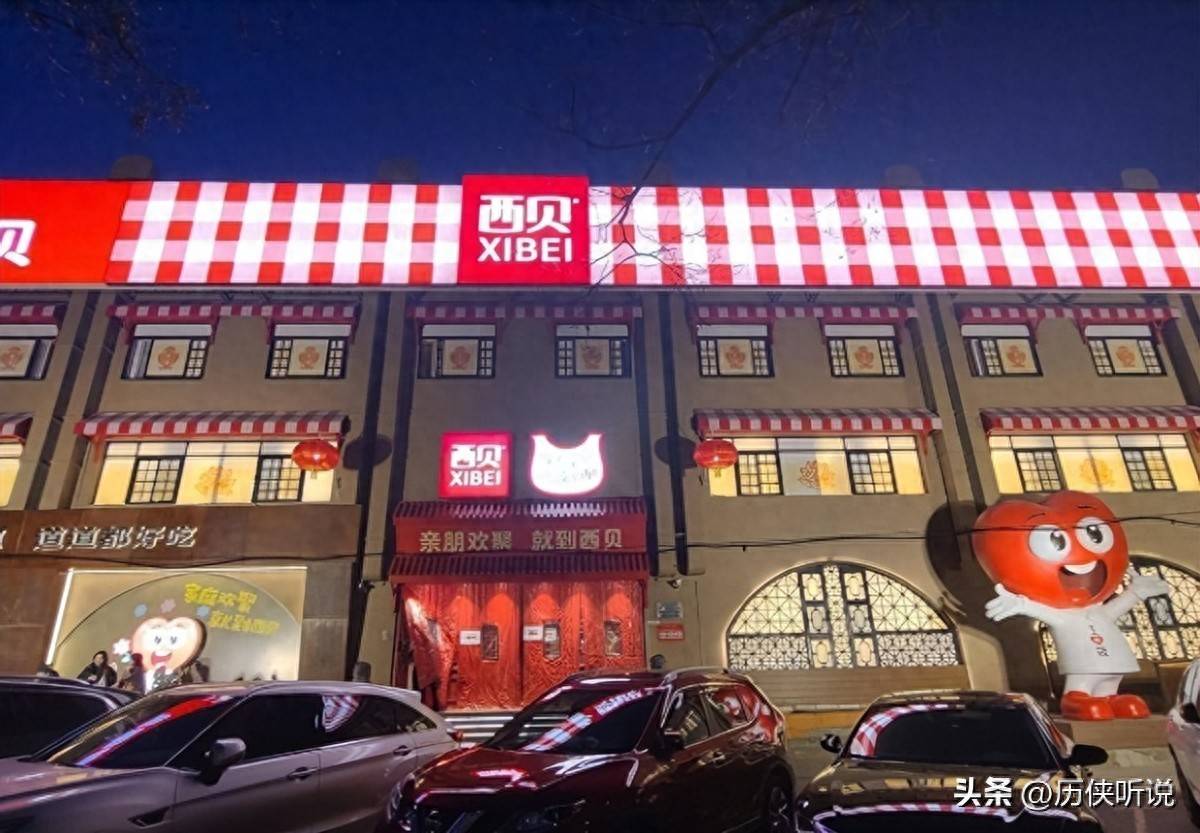
从营收62亿,到如今日亏百万,哪怕是降价认怂,也救不了西贝!
Sou Hu Cai Jing· 2025-10-28 09:13
Core Insights - Xibei, once a thriving brand with 6.2 billion in revenue, is now facing an unprecedented crisis due to a public relations incident in September 2024, leading to a sharp decline in stock price and brand reputation [1] - The founder's confrontational approach and emotional public relations strategies failed to resolve the issue, resulting in a significant drop in revenue and daily losses of one million [1][22] Group 1: Crisis Origin and Management - The crisis began with a minor complaint about the price of pre-made dishes, which unexpectedly garnered national attention [3] - Xibei's response deviated from standard public relations practices, as the founder perceived the complaint as an attack and mobilized 18,000 employees for a company-wide meeting, escalating the situation [3][20] - The company's misunderstanding of internet dynamics led to a perception of online observers as adversaries, exacerbating the crisis [5] Group 2: Public Relations Missteps - Emotional appeals and unusual compensation strategies, such as offering vouchers and even houses, failed to mitigate negative sentiment and instead invited ridicule [7] - The core issue was not the public sentiment itself but the company's inadequate response, which lacked substantial reforms and failed to address consumer concerns [7][9] - Xibei's eventual corrective measures, such as offering freshly made children's meals and transparent kitchen practices, were implemented too late, highlighting the need for practical solutions in public relations [9] Group 3: Financial Implications - Following the crisis, Xibei adopted a strategy of widespread price reductions and voucher distribution, which temporarily boosted sales but severely impacted brand value [11] - Sixty percent of new customers utilized vouchers, leading to a significant drop in average transaction value, indicating a loss of brand premium that took years to build [11][13] - The brand's positioning shifted from mid-to-high-end dining to competing with fast-food outlets, a strategic misstep that undermined its market position [11][13] Group 4: Strategic Failures - Xibei's failure to address its core competitive advantages, such as understanding family dining needs, contributed to the decline in brand perception [13] - The company launched nine sub-brands from 2016 to 2023, all of which failed due to misalignment with market demand and poor pricing strategies [15] - The lack of learning from past failures and the absence of a coherent strategy led to resource wastage and intensified the public relations crisis [16] Group 5: Lessons and Future Directions - Post-crisis, the founder expressed intentions to learn from successful brands like Haidilao, but the execution fell short due to mismatched employee treatment and service quality [18] - Xibei's superficial imitation of successful strategies without understanding their underlying logic resulted in limited corrective outcomes [20] - The experience serves as a stark warning for the restaurant industry, emphasizing the importance of long-term strategy, consumer communication, and effective crisis management [26]
Cyanotech(CYAN) - 2026 Q1 - Earnings Call Transcript
2025-08-08 01:00
Financial Data and Key Metrics Changes - In Q1 2026, net sales decreased by 1.3% to $5.8 million compared to $5.9 million in the same period last year, a decline of $78,000 [5] - Gross profit increased by 20% to $1.8 million, with a gross profit margin of 30.5%, up from 25% in the prior year, reflecting improved production efficiencies [5][6] - The operating loss was reduced to $753,000 from $1 million in the previous year, while the net loss improved to $926,000 or $0.13 per diluted share, compared to a net loss of $1.2 million or $0.17 per diluted share in the prior year [6] Business Line Data and Key Metrics Changes - Bulk spirulina and bulk azathiothin sales saw significant increases of 484% and 849% respectively, indicating a renewed demand for US-sourced materials in the ingredients channel [3][4] - Packaged product sales, however, declined by 12%, impacting overall sales performance [4] Market Data and Key Metrics Changes - The company reported a shift in sales mix, with a notable increase in bulk ingredient sales, while packaged products faced a decline [3][4] Company Strategy and Development Direction - The company remains focused on long-term strategies, including enhancing brand value through storytelling, strengthening relationships in e-commerce and bulk ingredient markets, and prioritizing sustainable cash flows [4] Management's Comments on Operating Environment and Future Outlook - Management expressed confidence in the team's resilience amid ongoing macroeconomic challenges and highlighted progress in executing the company's strategies [4] Other Important Information - The company reported cash of $383,000 and negative working capital of $255,000, compared to $257,000 and $302,000 respectively in the prior year [6] Q&A Session Summary - No questions were received during the call [7]