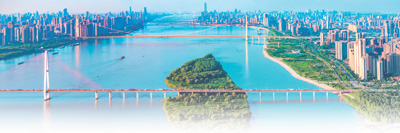
长江文化保护传承弘扬

Search documents
国家发展改革委:长江经济带十年来地区生产总值占全国比重从42.2%提升到47.3%
Xin Hua Cai Jing· 2026-01-05 06:59
Core Viewpoint - The Yangtze River Economic Belt has achieved significant ecological and economic progress over the past decade, with a focus on ecological priority and green development, leading to improved water quality and increased GDP contribution to the national economy [1] Group 1: Ecological Progress - The proportion of good water quality in the Yangtze River Economic Belt has increased from 67% to 96.5% over the past ten years [1] - The GDP of the region has more than doubled, rising from 42.2% to 47.3% of the national total [1] - The concept of "big protection, not big development" has been effectively implemented, leading to significant pollution control in key areas such as industrial and agricultural sectors [1] Group 2: Technological and Industrial Innovation - The integration of technological and industrial innovation in the Yangtze River Economic Belt has accelerated, with a focus on fostering emerging and future industries [2] - The length of high-level navigable waterways has increased from 8,000 kilometers to 11,000 kilometers, and cargo throughput at mainline ports has grown by 71% to reach 4.2 billion tons [2] - The establishment of international technology innovation centers in Shanghai, Wuhan, and Chengdu-Chongqing regions has led to the emergence of competitive innovative enterprises [2] Group 3: Cultural Heritage and Community Well-being - The cultural heritage along the Yangtze River has been preserved and promoted, with significant archaeological discoveries and the establishment of the Yangtze National Cultural Park [3] - The flood control and disaster reduction system in the Yangtze River basin has been improved, protecting lives and property [3] - The per capita disposable income of residents has increased from 23,000 yuan to 44,000 yuan, representing a growth of 91% [3]
守护一江碧水 传承城市文脉
Ren Min Ri Bao· 2025-10-15 22:22
Core Insights - The "Great River Dialogue" event held in Wuhan gathered experts from over 20 countries to discuss river governance and sustainable development, highlighting Wuhan's innovative practices in ecological conservation and urban development [5][6][12] Environmental and Ecological Developments - The presence of the "smiling angel" Yangtze River dolphin indicates the improving health of the Yangtze River ecosystem, with the dolphin population in the Newzhou Shuangliu section increasing from a few to nearly 20 [7][8] - Wuhan has implemented the "Yangtze Dolphin Return to the City" plan, focusing on habitat construction and ecological monitoring, contributing to the stable water quality in the Yangtze River, which has reached Class II standards [7][8] - The city aims for a 100% good water quality rate in the Yangtze River section by 2024, with the number of lakes meeting good water quality standards increasing from 24 to 51 [8][10] Urban Development and Cultural Heritage - The transformation of industrial sites into recreational spaces, such as the Wuchang Bay 1956 Park, showcases the integration of historical industrial culture into modern urban life [9][10] - Wuhan's ecological corridor construction has resulted in 82.89 kilometers of continuous ecological shoreline and 8.4186 million square meters of waterfront space, enhancing urban livability [10] - The city is actively promoting cultural heritage through exhibitions and events, such as the "Treasures of Ancient Civilizations along the Yangtze River" exhibition, which features artifacts from various historical periods [12][13] Tourism Growth - Wuhan has become a popular tourist destination, receiving 34.63 million visitors during the recent holidays, a 12.06% increase year-on-year, with total tourism revenue reaching 21.704 billion yuan, up 16.35% [13]