
防沙治沙

Search documents
新疆今年计划完成“三北”工程任务超千万亩
Xin Lang Cai Jing· 2026-02-13 19:33
Group 1 - The core focus is on consolidating the achievements of the Tarim Desert's edge-locking project, with plans to complete the expansion of 9.38 million acres by 2025 and over 10 million acres for the "Three-North" project by 2026 [1] - Xinjiang is implementing a multi-faceted strategy for desert management, including "South Locking, East Expansion, North Increase, West Protection, and Central Blocking" to combat desertification [1] - The region emphasizes the importance of technology and expert collaboration, having established 234 local ecological construction standards and achieved 283 technological results [1] Group 2 - The initiative involves diverse stakeholders, including state-owned enterprises, private companies, NGOs, and local farmers, to enhance desert management efforts [1] - Specific measures, referred to as the "Nine Sand Measures," have been introduced to strengthen water, land, and electricity guarantees, alongside increased utilization of brackish water [1] - The project aims to create a comprehensive protective network against desertification, integrating efforts across regions and sectors [1][2]
外媒:中国“绿色长城”创造治沙奇迹
Huan Qiu Wang· 2026-02-11 13:26
Core Insights - The article highlights China's significant achievements in desertification control and ecological restoration over the past four decades, particularly through the "Three-North Shelter Forest Program" [5]. Group 1: Achievements in Ecological Restoration - The "Three-North Shelter Forest Program" is noted as the world's largest and longest-running ecological restoration initiative, making China the first country to achieve zero growth in land degradation, with 53% of desertifiable land effectively managed [5]. - The Ordos Ecological Demonstration Zone is presented as a case study, showcasing the transformation of previously barren land into a thriving ecosystem where over 300 types of fruits and vegetables are cultivated and sold to cities like Shenzhen and Hong Kong [3]. Group 2: Renewable Energy and Ecological Synergy - The construction of the "Solar Great Wall" photovoltaic base across 400 kilometers of sand dunes in Ordos exemplifies the dual benefits of ecological restoration and clean energy development, with an expected annual electricity generation of 20 billion kilowatt-hours by 2030, sufficient to meet the needs of 400,000 people [6]. Group 3: Long-term Commitment and Future Outlook - The article emphasizes the significant improvement in the ecological landscape of northern China, with forest coverage increasing from 5% to 14%, a reduction in degraded grassland, and a noticeable decrease in dust storm frequency [7]. - It stresses that desertification control remains a long-term endeavor requiring ongoing investment and innovation, with a hopeful outlook for future generations to witness a greener landscape [7].

一号文件聚焦草种科技 蒙草生态承接政策机遇提升治沙效能
Quan Jing Wang· 2026-02-10 10:41
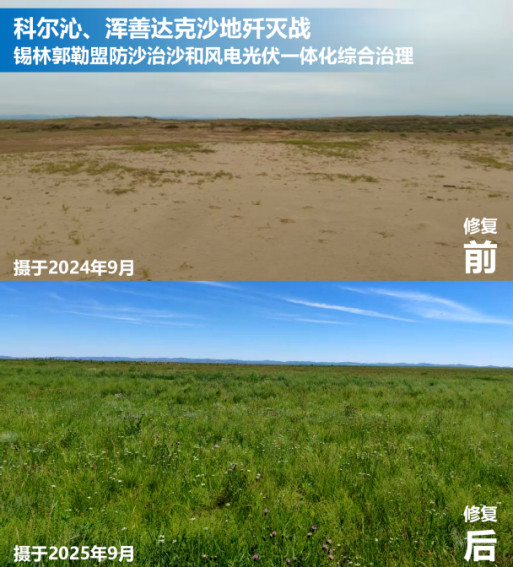
Group 1 - The 2026 Central Document No. 1 emphasizes the revitalization of the seed industry, promotion of forestry and grass machinery, and the construction of the "Three-North" project, providing clear policy direction for ecological restoration and grass industry development [1][9] - Mongolian Grass Ecology (300355) is identified as a key market player that aligns with policy directives, focusing on grass seed technology and sustainable desertification control, thus poised to benefit from the policy dividends [1][3] - The company has undertaken over 40 projects related to the "Three-North" initiative, covering a total area of 5 million acres, and has achieved revenue and net profit growth in the first three quarters of 2025 while fulfilling its ecological governance responsibilities [3][9] Group 2 - The "Three-North" project aims to consolidate and expand desertification control achievements, with Mongolian Grass Ecology collaborating with several renewable energy companies to innovate a multi-layer photovoltaic desertification control model [7][9] - This model has led to increased local income, with project participants earning between 8,000 to 10,000 yuan, and achieving an average benefit of over 1,200 yuan per mu from planting specific plants under photovoltaic panels [7][9] - The company has developed 111 high-quality domestic grass seed varieties with independent intellectual property rights and has created ecological governance products such as seed packages and seed ropes, demonstrating significant effectiveness in long-term desertification control [9][11] Group 3 - Mongolian Grass Ecology is establishing a one-stop ecological service guarantee center in key desertification control areas, creating a comprehensive technical service system to enhance the quality and efficiency of the "Three-North" project [11] - The company aims to support the integration of ecological restoration and grass industry development through a standardized, technology-driven service approach [11]

新春走基层 | “银线”穿“金路”
Zhong Guo Jing Ying Bao· 2026-02-10 08:05
Core Insights - The opening of the Huo-Ruo Railway (from Hotan to Ruoqiang) on June 16, 2022, marks the completion of the world's first desert railway loop, significantly enhancing transportation for local communities and resource development, while also contributing to national unity and border defense [1] Group 1: Infrastructure and Operations - The Huo-Ruo Railway's electric power supply line is crucial for the operation of railway equipment and local facilities, with over 1,000 kilometers of power line maintenance completed in 2023 [2] - The maintenance team, led by Lei Hao, has not experienced any equipment failures due to maintenance quality over the past three years, indicating a significant improvement in the quality of railway power supply equipment [2] - The team is actively training younger workers, such as 25-year-old Shi Fengyi, in essential maintenance skills, ensuring operational safety during peak travel seasons [2] Group 2: Maintenance Challenges - The railway signal machines are exposed to harsh environmental conditions, requiring meticulous inspections to ensure functionality, especially during the Spring Festival travel rush [3] - The maintenance team at the Pishan Comprehensive Maintenance Work Area is responsible for 100 kilometers of track, with 95 kilometers located in sandstorm-prone areas, making sand clearance a critical task [3] - The team has developed methods to combat sand damage, including the construction of ecological barriers using drought-resistant plants, emphasizing the importance of long-term sand prevention efforts [4]
一根种子绳,适配多样防沙治沙场景
Xin Lang Cai Jing· 2026-02-09 12:03
Core Viewpoint - The article discusses the innovative seed rope technology developed by Mongolian Grass Ecological Environment Group, which aims to improve the efficiency of desertification control and ecological restoration in arid regions. Group 1: Technology and Innovation - The seed rope technology allows for precise planting of seeds in sandy areas, addressing issues such as seed drift and uneven distribution, resulting in a 60% reduction in seed usage and a 15% to 20% increase in survival rates [2][3] - The company has established numerous pilot bases in various desert regions to test and optimize seed combinations and planting depths, enhancing the adaptability of the seed rope technology to different environments [2][3] Group 2: Application and Impact - The seed rope and other products have been applied across 5 million acres in regions like the Kubuqi Desert and Horqin Sandy Land, contributing to ecological restoration efforts [3] - The company has developed a big data platform for ecological restoration, which generates tailored seed combinations based on real-time environmental data, akin to a "prescription" for ecological recovery [3] Group 3: Government Support and Funding - The Inner Mongolia government is investing 106 million yuan in 2024 for technological advancements in desertification control, supporting 15 innovation projects and promoting over 60 advanced technologies [3] - The mechanical application of desertification control technologies has reached a coverage rate of 54%, indicating significant progress in the industry [3]
一根种子绳,适配多样防沙治沙场景(经济新方位·新场景新动能)
Ren Min Ri Bao· 2026-02-09 11:15
Core Insights - The article discusses the innovative seed rope technology developed by Mongolian Grass Ecological Environment Group, which aims to improve the efficiency of desertification control and afforestation efforts in arid regions [1][2][3] Group 1: Technology and Innovation - The seed rope technology allows for precise planting of seeds, reducing seed drift and ensuring better nutrient availability, leading to a 60% reduction in seed usage and a 15% to 20% increase in survival rates [2] - The company has established numerous pilot testing sites in various desert regions to optimize seed combinations and planting depths, enhancing the adaptability of the seed rope technology to different environmental conditions [2][3] Group 2: Application and Impact - The seed rope and related products have been applied across 5 million acres in regions such as the Kubuqi Desert and Horqin Sandy Land, contributing to ecological restoration efforts [3] - The company has developed a big data platform for ecological restoration, which generates tailored seed combinations based on real-time environmental data, akin to a prescription for ecological recovery [3] Group 3: Government Support and Future Plans - The Inner Mongolia government is investing 106 million yuan in 2024 for technological advancements in desertification control, supporting 15 innovative projects and promoting over 60 advanced technologies [3] - The mechanical application of desertification control techniques has reached a coverage rate of 54%, indicating a significant shift in the industry towards mechanized solutions [3]
让更多新技术显身手(编辑手记)
Ren Min Ri Bao· 2026-02-09 11:15
Core Viewpoint - The article highlights the significant progress made in desertification control in China, particularly through the example of the Kubuqi Desert, showcasing the transition from "desert encroachment" to "greening the desert" through innovative technologies and persistent efforts in sand control [1] Group 1: Desertification Control Efforts - The Kubuqi Desert serves as a representative case of China's efforts in combating desertification, illustrating the evolution from traditional methods to advanced technologies like drones and robotic tree planters [1] - The article emphasizes the importance of systematic and scientific approaches to desertification control, advocating for the continuation and enhancement of valuable experiences and spirit in sand control [1] Group 2: Technological Advancements - The Kubuqi Desert has become a crucial experimental ground for new technologies in desertification control, facilitating the transition of innovations from laboratories to practical applications in the field [1] - The article notes that the advancements in technology are essential for promoting effective sand control measures and expanding their application to various desertification scenarios [1]
种子用量节省六成,成活率提高近两成 一根种子绳,适配多样防沙治沙场景
Ren Min Ri Bao· 2026-02-09 03:09
Core Insights - The article discusses the innovative seed rope technology developed by Mongolian Grass Ecological Environment Group, which aims to improve the efficiency of desertification control and vegetation restoration in arid regions [1][2][3] Group 1: Technology and Innovation - The seed rope technology allows for precise planting of seeds, reducing seed drift and ensuring better nutrient availability, leading to a 60% reduction in seed usage and a 15% to 20% increase in survival rates [2] - The company has established numerous pilot bases in various desert regions to test and optimize seed combinations and planting depths, enhancing the adaptability of the seed rope technology to different environments [2][3] Group 2: Application and Impact - The seed rope and related products have been applied across 5 million acres in regions such as the Kubuqi Desert and Horqin Sandy Land, contributing to ecological restoration efforts [3] - The company has developed a big data platform for ecological restoration, which generates tailored seed combinations based on real-time environmental data, akin to a prescription for ecological recovery [3] Group 3: Government Support and Future Prospects - The Inner Mongolia government is investing 106 million yuan in 2024 for technological advancements in desertification control, supporting 15 innovative projects and promoting over 60 applicable technologies [3] - The mechanical application of desertification control techniques has reached a coverage rate of 54%, indicating a significant shift in the industry towards more effective and technology-driven solutions [3]
青海省海西州五年增绿225.88万亩
Xin Lang Cai Jing· 2026-02-07 13:34
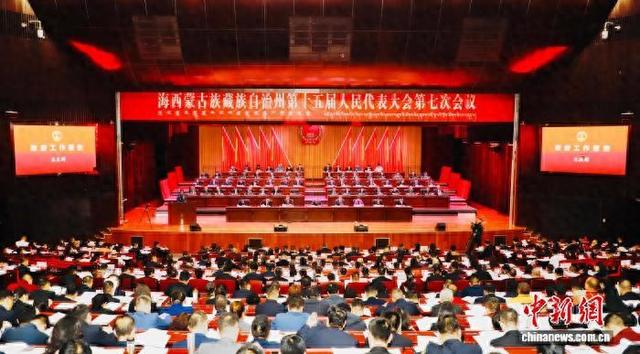
Group 1 - The core viewpoint of the article highlights the significant ecological improvements in Haixi Prefecture, Qinghai Province, with an increase of 2.2588 million acres in land greening during the 14th Five-Year Plan period [1] - Haixi Prefecture is located in the Qaidam Basin, characterized by a typical arid climate, extensive deserts, and significant issues related to wind and sand erosion, making it a key area for desertification control in China [3] - The local government has reported a steady increase in the snow leopard population and the first sighting of the endangered species, the Asiatic wild dog, indicating positive ecological changes [3] Group 2 - By 2025, Haixi Prefecture aims to complete afforestation of 733,900 acres, restore 1,030,100 acres of degraded grassland, and manage 2,346,900 acres of desertified land [3] - All 13 monitored surface water quality sections in the region are expected to meet or exceed Class III standards, while energy consumption per unit of industrial added value is projected to decrease by 7.3% year-on-year [3]
新春走基层|沙漠里来了个女研究生
Zhong Guo Jing Ying Bao· 2026-02-05 12:30
Core Viewpoint - The article highlights the significant role of the Linze Railway in China's Belt and Road Initiative, emphasizing the efforts of workers like Zhao Qi in combating desertification and ensuring railway safety in harsh environments [1][4]. Group 1: Project Overview - The Linze Railway spans 768 kilometers, connecting key regions and serving as a vital transportation route for coal and goods, with over 60 trains operating daily [1]. - Approximately 80% of the railway's route is in extremely arid areas and desert fringes, with 65% of the line affected by sand hazards, making it crucial for economic development and national security [1]. Group 2: Worker Contributions - Zhao Qi, a graduate in soil conservation and desertification prevention, chose to work in the harsh conditions of the desert to apply her knowledge and contribute to environmental protection [2][3]. - Despite initial skepticism from peers regarding her decision to work in such a challenging environment, Zhao Qi believes in using scientific methods to address sand hazards effectively [3]. Group 3: Innovative Solutions - After facing challenges such as flash floods damaging vegetation and sand barriers, Zhao Qi joined a research group to develop a comprehensive sand control model, which included building diversion dams and selecting drought-resistant plant species [4]. - The implementation of her strategies led to significant improvements in controlling sand hazards, showcasing the effectiveness of combining academic knowledge with practical applications in the field [4].