
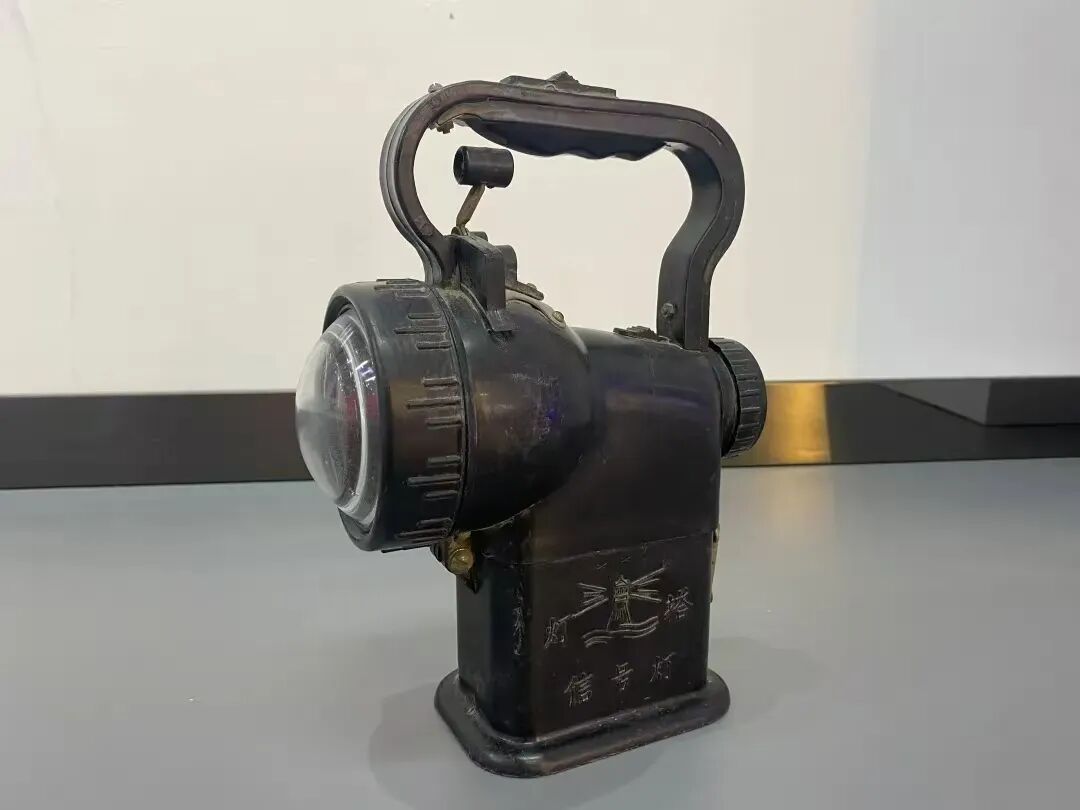
信号灯

Search documents
新春走基层 | “银线”穿“金路”
Zhong Guo Jing Ying Bao· 2026-02-10 08:05
Core Insights - The opening of the Huo-Ruo Railway (from Hotan to Ruoqiang) on June 16, 2022, marks the completion of the world's first desert railway loop, significantly enhancing transportation for local communities and resource development, while also contributing to national unity and border defense [1] Group 1: Infrastructure and Operations - The Huo-Ruo Railway's electric power supply line is crucial for the operation of railway equipment and local facilities, with over 1,000 kilometers of power line maintenance completed in 2023 [2] - The maintenance team, led by Lei Hao, has not experienced any equipment failures due to maintenance quality over the past three years, indicating a significant improvement in the quality of railway power supply equipment [2] - The team is actively training younger workers, such as 25-year-old Shi Fengyi, in essential maintenance skills, ensuring operational safety during peak travel seasons [2] Group 2: Maintenance Challenges - The railway signal machines are exposed to harsh environmental conditions, requiring meticulous inspections to ensure functionality, especially during the Spring Festival travel rush [3] - The maintenance team at the Pishan Comprehensive Maintenance Work Area is responsible for 100 kilometers of track, with 95 kilometers located in sandstorm-prone areas, making sand clearance a critical task [3] - The team has developed methods to combat sand damage, including the construction of ecological barriers using drought-resistant plants, emphasizing the importance of long-term sand prevention efforts [4]
夜读 | 灯亮着,人就在
Xin Lang Cai Jing· 2026-01-10 13:17
Core Insights - The article reflects on the significance of an old railway signal lamp, symbolizing safety and vigilance in the railway industry, particularly during night operations [1][5]. Group 1: Historical Context - The signal lamp described is a tool used by railway connection workers during night shunting operations, which has become less common due to technological advancements [1][3]. - The author recalls being assigned to a large steel company's transportation department in 1974, where each worker received a new signal lamp and was trained in its use [3][4]. Group 2: Operational Importance - Connection workers play a crucial role in linking and directing railway vehicles, ensuring the smooth flow of materials like coke and iron ore in steel production [3][4]. - The work schedule for connection workers typically involves 12-hour shifts followed by 24 hours off, highlighting the demanding nature of the job [3][4]. Group 3: Safety and Communication - The signal lamp serves as a vital communication tool at night, indicating the presence of workers and facilitating safe operations in low visibility conditions [4][9]. - An anecdote illustrates the importance of the signal lamp in preventing accidents, where a worker was saved from a potential disaster due to the quick actions of a colleague using a signal lamp [4][9]. Group 4: Reflection and Legacy - The author expresses nostalgia for the past, emphasizing the enduring lessons of vigilance and responsibility learned during their time in the railway industry [5][6]. - The old signal lamp, despite its age, continues to symbolize the commitment to safety and the shared experiences of workers in the industry [5][6].

易方达重磅出手!又一热潮来了?
中国基金报· 2025-09-14 12:15
Core Viewpoint - The rise of public fund mini-programs in China is expected to lead to a stratified development pattern, enhancing user service and reducing reliance on traditional distribution channels [2] Group 1: Mini-Program Features and Trends - The popularity of fund mini-programs is increasing, with companies like E Fund launching features that support comprehensive operations for index products, linking various sales channels [4] - The current trend in the industry shows a focus on more segmented positioning and enhanced trading functionalities to simplify the investment process for users [4][5] - Numerous fund companies have launched mini-programs to meet the diverse financial needs within the WeChat ecosystem, with services ranging from investment advice to real-time market updates [5] Group 2: Pilot Programs for Fund Sales - Several fund companies have received pilot qualifications to conduct fund sales through mini-programs, marking a significant step in the practical implementation of "selling funds via mini-programs" [7] - This development is seen as a way to reduce dependence on distribution channels and lower transaction costs for investors, as they can now purchase funds directly through mini-programs without incurring distribution fees [8] Group 3: Complementarity of Mini-Programs and Apps - The operational costs of developing and maintaining mini-programs are significantly lower than those of traditional apps, making them a more attractive option for fund companies [10] - For most fund companies, especially smaller ones, mini-programs represent a cost-effective solution, while larger firms may adopt a dual approach, using both mini-programs for light engagement and apps for deeper service [10][11] - Mini-programs are viewed as complementary to existing apps, providing quick access and transaction capabilities, while apps offer more comprehensive features and services [11]

易方达重磅出手!又一热潮来了?
Zhong Guo Ji Jin Bao· 2025-09-14 12:15
Core Insights - The rise of public fund mini-programs is reshaping the industry, with a focus on reaching more investors and providing diverse service scenarios [1][3] - Several fund companies have received pilot qualifications to conduct fund trading through mini-programs, marking a significant step in exploring new sales channels [5][6] Group 1: Mini-Program Development - Mini-programs are becoming a crucial platform for fund companies to serve users, allowing for reduced reliance on distribution channels and lower transaction costs for investors [1][6] - The number of fund companies launching mini-programs has reached dozens, catering to various user needs across different scenarios [3][4] Group 2: Features and Trends - The mini-programs launched by fund companies exhibit two core trends: more focused positioning in specific areas and enhanced trading functionalities to simplify the investment process [3][5] - Fund companies are actively exploring user service paths through mini-programs, aiming to improve user experience [3][4] Group 3: Pilot Qualifications and Implications - Fund companies like Chuangjin Hexin, Qianhai Kaiyuan, and Pengyang have obtained pilot qualifications to sell funds via mini-programs, which is seen as a key breakthrough for the industry [6][5] - The new regulations from the China Securities Regulatory Commission (CSRC) will allow investors to purchase funds through mini-programs without incurring subscription fees, further lowering transaction costs [6][5] Group 4: Comparison with Apps - The operational costs of developing mini-programs are significantly lower than those of apps, making them a more attractive option for most fund companies, especially smaller ones [8][9] - Large fund companies may adopt a dual approach, using apps for in-depth services and high-end client management while utilizing mini-programs for lightweight interactions [9][8] Group 5: Security Considerations - As mini-programs develop, fund companies must prioritize information security, particularly in user account and transaction processes [10]
趋势研判!2025年中国路口自动信号装置行业发展历程、产业链、市场规模、重点企业及未来前景展望:市场规模达149亿元,智能化升级推动行业持续增长[图]
Chan Ye Xin Xi Wang· 2025-09-02 01:23
Core Insights - The traditional traffic management methods are facing significant challenges due to the rapid growth of urbanization and vehicle ownership, leading to the widespread adoption of intelligent and automated intersection signal control devices [1][9] - The market size of China's intersection automatic signal device industry is projected to grow from 11 billion yuan in 2019 to 14.9 billion yuan in 2024, with a compound annual growth rate (CAGR) of 6.26% [1][9] - Future developments in the industry will focus on smarter and more networked solutions, driven by technological innovations and the deepening of new urbanization [1][9] Industry Overview - Intersection automatic signal devices are designed to control traffic lights based on real-time traffic flow and road conditions, enhancing traffic efficiency and safety [3] - The devices can be categorized into timed signal machines, semi-sensing signal machines, and fully sensing signal machines [3] Industry Development History - The industry has evolved from manual traffic control by police to mechanical signal lights, and then to electronic signal lights, which are now being replaced by intelligent systems that optimize signal management [3][4] Industry Chain - The upstream of the industry includes raw materials and core components such as sensors and controllers, while the downstream applications are primarily in traffic management and smart city systems [5][6] Sensor Market Growth - The sensor market, crucial for real-time traffic monitoring, is expected to grow from 169.08 billion yuan in 2017 to 406.12 billion yuan in 2024, with a CAGR of 13.34% [7][8] Smart Traffic System - The smart traffic system, a key application area for intersection automatic signal devices, is projected to grow from 151.3 billion yuan in 2019 to 262.82 billion yuan in 2024, with a CAGR of 11.68% [8][9] Competitive Landscape - The industry exhibits a layered competitive structure, with leading companies dominating the high-end market while many small and medium enterprises focus on regional services and price competition [10] - Key players include Hikvision, Sainojie Technology, and several others, each leveraging technology and innovation to gain market share [10][11] Future Trends - The industry is moving towards intelligent upgrades, networked collaboration, and integrated design, enhancing the capabilities of intersection automatic signal devices [12][13][14]


鸿利智汇(300219) - 2024年度网上业绩说明会投资者关系活动记录表
2025-05-19 11:30
Dividend Plan - The profit distribution plan for 2024 proposes a cash dividend of RMB 0.15 per 10 shares, totaling approximately RMB 10,619,152.59 (before tax) based on a total share capital of 707,943,506 shares, pending approval at the annual shareholders' meeting on May 20, 2025 [1] R&D Investment - R&D expenses for 2024 increased by 4.53% year-on-year, focusing on high-power, miniaturized, and multi-chip integrated products, particularly in high-end sectors such as LED high-power products and automotive lighting [2] Main Products - The company operates in two main segments: LED semiconductor packaging and automotive lighting. Key products include Mini/Micro LED, white light LED, automotive-grade LED, UV LED, and various automotive lighting solutions [3] Market Acceptance of New Products - New high-pressure series products (PCT three-in-one, four-in-one, five-in-one) have gained recognition in the market, particularly in mid-to-high-end sectors, achieving a significant market share [4] Profit Decline Reasons - The decline in net profit for 2024 was attributed to intensified market competition, falling product prices, and rising costs of precious metals, leading to a decrease in gross margin. The company aims to enhance operational efficiency and promote high-margin products to improve profitability [5][6] Future Development Strategy - The company plans to strengthen its "one body, two wings" strategy, focusing on semiconductor packaging as a foundation while leveraging automotive lighting and Mini/Micro LED as growth engines. It aims to enhance market share and industry influence through technological breakthroughs and global expansion [6]
