
阿尔茨海默病预防

Search documents
科普书单·新书|从建造金字塔到探索无穷大
Xin Lang Cai Jing· 2025-09-24 03:08
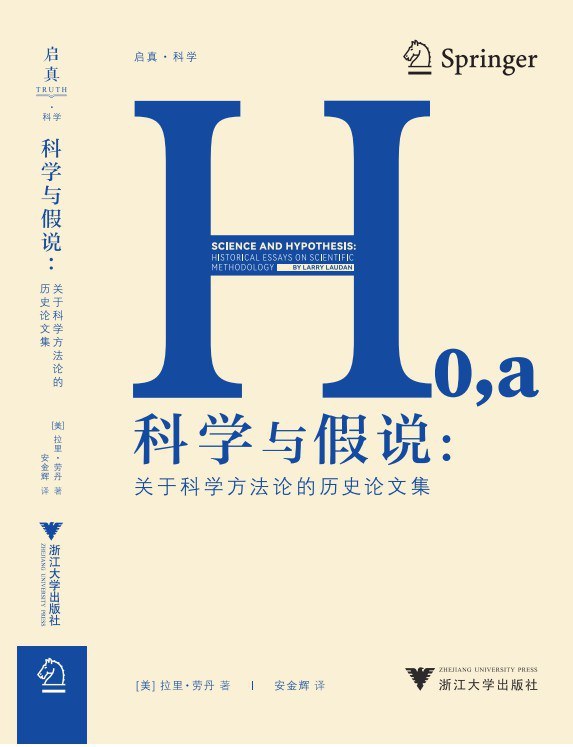
Group 1 - The book "Science and Hypothesis: A Historical Collection on Scientific Methodology" by Larry Laudan discusses the evolution of the hypothesis method in science, highlighting its initial lack of prominence in the 17th century and its eventual establishment as a core tool in 20th-century scientific exploration [2] - The collection includes important papers by Laudan that analyze key historical moments and recurring thought patterns, providing significant insights into the evolution of modern scientific methodology [2] Group 2 - "The Light of the Netherlands: The Huygens Family and the Formation of European Science" by Hugh Aldersey-Williams focuses on the life and scientific achievements of Christian Huygens during the Dutch Golden Age, detailing his contributions in astronomy, optics, mechanics, and mathematics [4] - The book also explores Huygens' interactions with contemporaries like Newton, Descartes, and Leibniz, illustrating the academic atmosphere and social context of the scientific revolution [4] Group 3 - "Harvard University Science General Course: Exploring the Universe, Earth, and Life" by Irwin Shapiro investigates major scientific discoveries that have transformed human life and expanded our understanding of nature, structured into three parts: looking up at the universe, down at the Earth, and inward at life [6] - The author employs an accessible writing style to address fundamental questions about the nature of science, encouraging readers to observe, understand, analyze, and judge the world through a scientific lens [6] Group 4 - "Mathematical Philosophy Lectures" by Joy David Hamkins presents a unique approach to understanding mathematical philosophy through the lens of mathematical exploration and practice, discussing significant achievements in mathematical logic [8] - The book balances deep mathematical concepts with philosophical inquiry, covering various philosophical positions such as Platonism, realism, and formalism [8] Group 5 - "What is a Vector" by Robin Arianhod demonstrates how vectors and tensors provide an elegant language for expressing behaviors in space and time, showcasing the contributions of notable physicists and mathematicians [11] - The book explains the significance of vectors and tensors in representing physical quantities and dimensions, as well as their applications in modern technology [11] Group 6 - "The History of Mathematics: From Building Pyramids to Exploring Infinity" by Anne Rooney offers engaging insights into the development of mathematics, covering topics from the origins of numbers to calculus [14] - The book is structured into nine chapters, each focusing on different aspects of mathematics and its historical figures, making it accessible to a broad audience [14] Group 7 - "The Exploration History of Earth" by Yeshan presents a narrative of human understanding of Earth from the Roman Empire to the colonial era, highlighting significant geological studies and their impacts [20][21] - The book combines historical anecdotes with scientific developments in various branches of Earth sciences, providing a comprehensive overview of humanity's relationship with the planet [20][21] Group 8 - "The World is Unequal: Geography and Human Destiny" by Harlm de Blij argues that despite increasing globalization, geographical and cultural environments continue to shape individual and group destinies, leading to persistent inequalities [23] - The author categorizes global populations into internationalized, localized, and globalized groups, analyzing how factors like language, religion, and disaster response capabilities differ across regions [23] Group 9 - "The Shining Water Ring" by Gavin Maxwell recounts the author's solitary life in the Scottish Highlands post-World War II, exploring themes of nature and solitude through his interactions with wildlife [27] - The narrative captures the beauty and challenges of the natural environment, emphasizing the transformative power of nature on human experience [27] Group 10 - "Life-Saving Animals: Health Lessons from Nature" by Matt Morgan explores how various animal traits can inform human health practices, linking evolutionary biology to modern medical challenges [29] - The book presents a journey through different ecosystems, showcasing how animal adaptations can provide insights into human health and survival [29] Group 11 - "Marine Biology: Oxford General Readings" by Philip V. Mladenov offers a comprehensive overview of marine ecosystems, emphasizing their role in climate regulation and biodiversity [31] - The book systematically organizes information across various marine environments, helping readers understand the intricate balance of oceanic life [31] Group 12 - "Global Food Systems: Industrialized Britain, Food Systems, and World Ecology" by Chris Otter traces the origins of modern dietary habits in late 18th-century Britain, highlighting the shift from local to global food sources [33] - The author discusses the health implications of energy-dense diets and the increasing reliance on global resources for food production [33] Group 13 - "Plant Life: The Metaphysics of Mixtures" by Emanuele Coccia redefines the relationship between plants and the world, proposing a philosophical perspective on life and existence [35] - The book integrates discussions of the microscopic and macroscopic, offering a fresh interpretation of humanity's place within the life sciences [35] Group 14 - "The Orchid Phenomenon" by Jim Endersby examines the cultural significance of orchids throughout history, exploring their representation in literature and art [37] - The author investigates how cultural perceptions of orchids have evolved and influenced scientific understanding, providing a historical context for their allure [37] Group 15 - "My Mother is a Computer: Digital Subjects and Literary Texts" by N. Katherine Hayles analyzes the impact of algorithms on human identity and literature in the digital age [40] - The book explores the complex relationship between humans and intelligent machines, offering a conceptual guide for navigating the challenges of a digitally driven culture [40] Group 16 - "Eating Right for Three Meals a Day to Avoid Alzheimer's Disease" by Kazuhiko Yamagane presents dietary strategies based on the ReCODE method to prevent and improve Alzheimer's disease [42] - The author emphasizes the importance of diet in managing the accumulation of beta-amyloid protein in the brain, which is linked to Alzheimer's development [42]

爆火全球的司美格鲁肽,至高降低阿尔茨海默病患病风险67%!
GLP1减重宝典· 2025-08-01 08:32
Core Viewpoint - The latest research indicates that GLP-1 receptor agonists, used for treating type 2 diabetes, may be superior to metformin in preventing dementia, potentially influencing future treatment guidelines to prioritize drugs with both glycemic control and neuroprotective effects [2][4][6]. Group 1: Research Findings - The study analyzed anonymous electronic health records from 2004 to 2024, involving 87,229 patients each on GLP-1 receptor agonists and metformin, with an average age of 58 years, all having taken the medication for at least six months [4]. - Results showed that while both drug classes had similar effects on vascular dementia, GLP-1 receptor agonists had a lower overall dementia diagnosis rate: approximately 2.5% (2,130 individuals) in the GLP-1 group versus nearly 5% (4,215 individuals) in the metformin group, indicating a relative risk reduction of about 10% [4][6]. - Specifically, the risk of Alzheimer's disease was reduced by 12% and the risk of non-vascular dementia was reduced by 25% among GLP-1 users [4][6]. Group 2: Demographic Insights - The protective effects of GLP-1 receptor agonists were consistent across all age groups but were most pronounced in individuals over 60, women, and white patients [6]. - The mortality rate during the study was about 5% for GLP-1 users compared to nearly 9% for metformin users [6]. Group 3: Mechanisms of Action - The neuroprotective effects of these drugs may stem from various mechanisms, including reducing neuroinflammation, enhancing insulin sensitivity, and improving cerebral vascular function. GLP-1 receptor agonists can cross the blood-brain barrier, directly affecting the central nervous system, unlike metformin, whose effects are primarily systemic [6][8]. - The study emphasizes the complexity of vascular dementia's pathogenesis, which includes small vessel disease and white matter lesions, making treatment through metabolic or neurodegenerative pathways challenging [8]. Group 4: Implications for Treatment - The findings suggest that GLP-1 receptor agonists could become a first-line treatment option for type 2 diabetes, considering the significant societal, familial, and economic burdens associated with diabetes-related dementia [8][9]. - The research indicates a potential paradigm shift in diabetes treatment, focusing more on preventing cognitive complications [8][9]. Group 5: Additional Research - A separate study found that semaglutide could reduce the risk of Alzheimer's disease by 40-70% among older patients with type 2 diabetes and other comorbidities [12][18]. - The study utilized a large cohort of 1,094,761 new users of anti-diabetic medications, with semaglutide users showing significantly lower rates of Alzheimer's diagnosis compared to those on other diabetes medications [12][14]. Group 6: Limitations and Future Directions - The study acknowledges limitations, including its observational design, which may not account for overdiagnosis, underdiagnosis, or unmeasured confounding factors [22]. - Further research is needed to clarify the mechanisms by which semaglutide reduces the risk of Alzheimer's disease [21][22].

礼来公司CEO:开展阿尔茨海默病预防及其他脑部疾病的研究
news flash· 2025-04-18 11:19
Core Viewpoint - The CEO of Eli Lilly announced the company's focus on research for Alzheimer's disease prevention and other brain disorders [1] Group 1 - Eli Lilly is actively engaging in research aimed at preventing Alzheimer's disease [1] - The company is expanding its research efforts to include other brain-related diseases [1]
