
地球科学

Search documents
王赤院士:我国空间科学正在驶入快车道
Xin Lang Cai Jing· 2026-01-28 09:28
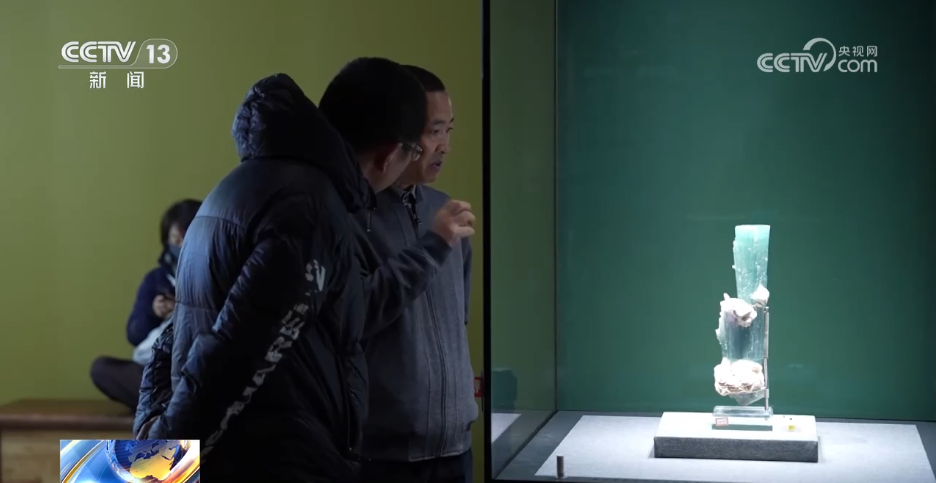
Group 1: Conference Overview - The sixth China Geodesy and Geophysics Academic Conference (CCGG) opened in Shanghai on January 24, focusing on "Earth Science and Climate Change" with topics covering eight major fields including the cryosphere, atmospheric science, and seismology [1] - Scholars from various fields gathered to discuss interdisciplinary integration to address societal needs such as resource detection, disaster reduction, environmental protection, and sustainable economic development [1] Group 2: Space Science Impact - Space science is an interdisciplinary field that has significantly advanced multiple disciplines over the past few decades, particularly benefiting astronomy by enabling observations beyond the limitations of the Earth's atmosphere [2] - The unique experimental environment of space has important implications for fundamental research in physics, chemistry, and biology, with practical applications in weather forecasting and disaster management through satellite technology [3] Group 3: Search for Extraterrestrial Life - Current understanding suggests that Earth is the only planet in the solar system with life, but Mars and certain moons of gas giants are considered important targets for potential signs of life [4] - The search for habitable exoplanets involves using remote sensing techniques, with ongoing efforts from both the U.S. and China, including China's "Earth 2.0" satellite project aimed at identifying Earth-like planets [5] Group 4: Challenges in Space Governance - The increasing number of satellites raises concerns about space debris and its impact on space operations and ground-based astronomical observations, necessitating urgent governance and monitoring solutions [7] - Current international consensus on space governance is lacking, and existing plans are not yet mature or scalable, highlighting the need for global cooperation [7] Group 5: Future of China's Space Science - China's space science development is gaining global attention, with a high starting point despite a late start compared to Western countries, and is expected to enter a rapid growth phase [8] - The National Space Science Medium- and Long-term Development Plan (2024-2050) is set to guide future advancements in space science at the national level [8] Group 6: Major Projects and Initiatives - During the 14th Five-Year Plan period, China plans to launch four scientific satellites focusing on major frontier issues such as the origins of the universe and life [9] - Upcoming missions include the Chang'e 7 lunar exploration and the Tianwen-3 Mars sample return mission, aimed at investigating the Moon's south pole and searching for signs of life on Mars [10] Group 7: Meridian Project - The Meridian Project is China's first major scientific infrastructure for monitoring space weather and environment, providing safety for satellite operations and communications [11] - The project has expanded to include new monitoring stations and capabilities for comprehensive observation of solar and space weather phenomena [12] Group 8: International Collaboration - The International Meridian Circle Science Plan aims to establish a global monitoring network, enhancing international cooperation in space science [14] - The initiative has garnered support from nearly 30 international research institutions and over 20 organizations, facilitating collaborative monitoring and data sharing [14]
国家自然博物馆上新!300多件珍贵岩石矿物标本展出
Yang Shi Wang· 2025-11-23 16:13
Core Viewpoint - The National Museum of Nature has launched a new exhibition titled "Stone and Sea: A Fine Mineral Exhibition," featuring over 300 precious rock and mineral specimens that showcase the wonders of nature and the geological history of the Earth [1] Exhibition Overview - The exhibition is divided into four sections: "Crystal Wonders," "Rock and Star Languages," "Stone Fire Civilization," and "Mineral Selections" [3] - Two particular mineral specimens stand out in the exhibition [3] Featured Specimens - The centerpiece of the exhibition is a tourmaline mineral specimen resembling a traditional Chinese "huabiao," symbolizing both geological beauty and cultural significance [4] - Tourmaline is celebrated for its diverse color range, from colorless to black, and is a popular "colored gemstone" in China [4] - The "Butterfly Twin Crystals" are another highlight, consisting of twelve paired mineral specimens that resemble butterfly wings, with notable examples found in Brazil and Hunan, China [6][8] Interactive Experience - The exhibition includes an interactive experience area and multimedia presentations, allowing visitors to appreciate the beauty of nature and the depth of Earth sciences [9] - An interactive zone features fossilized creatures from 420 million years ago, allowing visitors to engage with ancient life forms [9] Geological Education - Unlike traditional mineral exhibitions, this event features a "Earth Evolution Theater" that illustrates the unique "identity codes" of mineral specimens shaped by various geological processes [11] - The exhibition showcases rock slices from different countries, highlighting the intricate textures and colors of ancient rocks [11][12] - The display emphasizes the physical properties of rocks, showcasing nature's extraordinary creativity [12]

GeoGPT治理委员会联席主席:AI正改变地球科学研究方式
Zhong Guo Xin Wen Wang· 2025-11-22 07:46
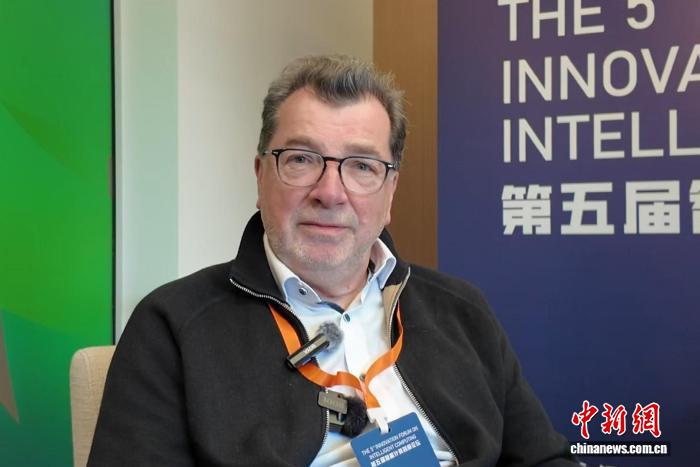
Group 1 - The core viewpoint is that AI is fundamentally transforming the way Earth sciences are researched by integrating vast amounts of data and creating models [1][2] - The GeoGPT model is inspired by the Deep Time Digital Earth (DDE) international scientific initiative and is designed to combine extensive geological data with intelligent algorithms, offering capabilities such as literature analysis, data extraction, knowledge graph construction, geological map recognition, and research idea generation [2] - China is actively promoting open AI systems to allow broader access for the public and scientific communities, which enhances the AI ecosystem [2] Group 2 - The GeoGPT Governance Committee, established in 2024, aims to ensure the project adheres to ethical, legal, and operational standards while promoting transparency and collaboration with international entities [2] - The committee operates independently from GeoGPT and is committed to objective and fair oversight of the model [5] - AI's application in fields such as earthquake data collection and interpretation has already shown significant value, with rapid expansion into other areas [5]
科普书单·新书|从建造金字塔到探索无穷大
Xin Lang Cai Jing· 2025-09-24 03:08
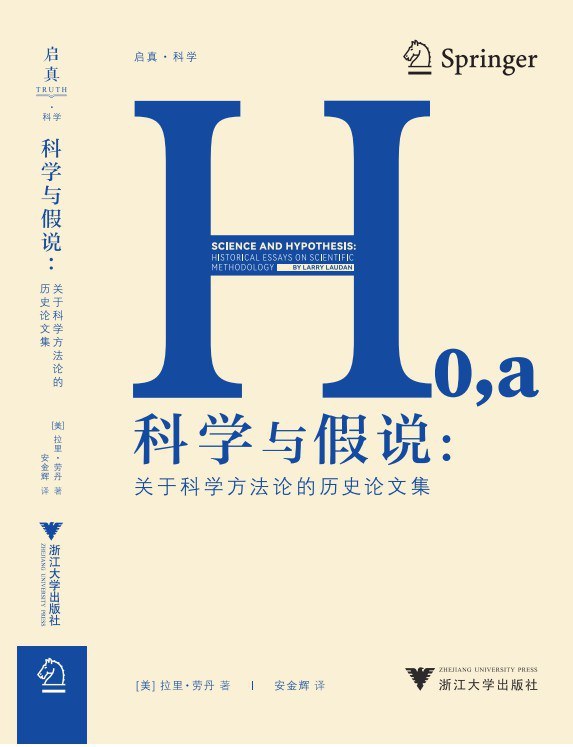
Group 1 - The book "Science and Hypothesis: A Historical Collection on Scientific Methodology" by Larry Laudan discusses the evolution of the hypothesis method in science, highlighting its initial lack of prominence in the 17th century and its eventual establishment as a core tool in 20th-century scientific exploration [2] - The collection includes important papers by Laudan that analyze key historical moments and recurring thought patterns, providing significant insights into the evolution of modern scientific methodology [2] Group 2 - "The Light of the Netherlands: The Huygens Family and the Formation of European Science" by Hugh Aldersey-Williams focuses on the life and scientific achievements of Christian Huygens during the Dutch Golden Age, detailing his contributions in astronomy, optics, mechanics, and mathematics [4] - The book also explores Huygens' interactions with contemporaries like Newton, Descartes, and Leibniz, illustrating the academic atmosphere and social context of the scientific revolution [4] Group 3 - "Harvard University Science General Course: Exploring the Universe, Earth, and Life" by Irwin Shapiro investigates major scientific discoveries that have transformed human life and expanded our understanding of nature, structured into three parts: looking up at the universe, down at the Earth, and inward at life [6] - The author employs an accessible writing style to address fundamental questions about the nature of science, encouraging readers to observe, understand, analyze, and judge the world through a scientific lens [6] Group 4 - "Mathematical Philosophy Lectures" by Joy David Hamkins presents a unique approach to understanding mathematical philosophy through the lens of mathematical exploration and practice, discussing significant achievements in mathematical logic [8] - The book balances deep mathematical concepts with philosophical inquiry, covering various philosophical positions such as Platonism, realism, and formalism [8] Group 5 - "What is a Vector" by Robin Arianhod demonstrates how vectors and tensors provide an elegant language for expressing behaviors in space and time, showcasing the contributions of notable physicists and mathematicians [11] - The book explains the significance of vectors and tensors in representing physical quantities and dimensions, as well as their applications in modern technology [11] Group 6 - "The History of Mathematics: From Building Pyramids to Exploring Infinity" by Anne Rooney offers engaging insights into the development of mathematics, covering topics from the origins of numbers to calculus [14] - The book is structured into nine chapters, each focusing on different aspects of mathematics and its historical figures, making it accessible to a broad audience [14] Group 7 - "The Exploration History of Earth" by Yeshan presents a narrative of human understanding of Earth from the Roman Empire to the colonial era, highlighting significant geological studies and their impacts [20][21] - The book combines historical anecdotes with scientific developments in various branches of Earth sciences, providing a comprehensive overview of humanity's relationship with the planet [20][21] Group 8 - "The World is Unequal: Geography and Human Destiny" by Harlm de Blij argues that despite increasing globalization, geographical and cultural environments continue to shape individual and group destinies, leading to persistent inequalities [23] - The author categorizes global populations into internationalized, localized, and globalized groups, analyzing how factors like language, religion, and disaster response capabilities differ across regions [23] Group 9 - "The Shining Water Ring" by Gavin Maxwell recounts the author's solitary life in the Scottish Highlands post-World War II, exploring themes of nature and solitude through his interactions with wildlife [27] - The narrative captures the beauty and challenges of the natural environment, emphasizing the transformative power of nature on human experience [27] Group 10 - "Life-Saving Animals: Health Lessons from Nature" by Matt Morgan explores how various animal traits can inform human health practices, linking evolutionary biology to modern medical challenges [29] - The book presents a journey through different ecosystems, showcasing how animal adaptations can provide insights into human health and survival [29] Group 11 - "Marine Biology: Oxford General Readings" by Philip V. Mladenov offers a comprehensive overview of marine ecosystems, emphasizing their role in climate regulation and biodiversity [31] - The book systematically organizes information across various marine environments, helping readers understand the intricate balance of oceanic life [31] Group 12 - "Global Food Systems: Industrialized Britain, Food Systems, and World Ecology" by Chris Otter traces the origins of modern dietary habits in late 18th-century Britain, highlighting the shift from local to global food sources [33] - The author discusses the health implications of energy-dense diets and the increasing reliance on global resources for food production [33] Group 13 - "Plant Life: The Metaphysics of Mixtures" by Emanuele Coccia redefines the relationship between plants and the world, proposing a philosophical perspective on life and existence [35] - The book integrates discussions of the microscopic and macroscopic, offering a fresh interpretation of humanity's place within the life sciences [35] Group 14 - "The Orchid Phenomenon" by Jim Endersby examines the cultural significance of orchids throughout history, exploring their representation in literature and art [37] - The author investigates how cultural perceptions of orchids have evolved and influenced scientific understanding, providing a historical context for their allure [37] Group 15 - "My Mother is a Computer: Digital Subjects and Literary Texts" by N. Katherine Hayles analyzes the impact of algorithms on human identity and literature in the digital age [40] - The book explores the complex relationship between humans and intelligent machines, offering a conceptual guide for navigating the challenges of a digitally driven culture [40] Group 16 - "Eating Right for Three Meals a Day to Avoid Alzheimer's Disease" by Kazuhiko Yamagane presents dietary strategies based on the ReCODE method to prevent and improve Alzheimer's disease [42] - The author emphasizes the importance of diet in managing the accumulation of beta-amyloid protein in the brain, which is linked to Alzheimer's development [42]
“科技力”玩出来!广州执信教育集团举办科技游园
Nan Fang Du Shi Bao· 2025-05-15 01:42
Group 1 - The core theme of the technology festival is "Experience Inspires Scientific Intelligence, Innovation Leads to Future" focusing on enhancing students' scientific and engineering literacy while broadening their technological horizons [1][2] - The event features three main sections: a technology fair, academic competitions, and a Nobel Prize exhibition, showcasing a total of 27 booths from various universities, research institutes, and companies [1][2] - The technology fair is highlighted by participation from 20 universities, research institutions, and high-tech enterprises, allowing students to engage with cutting-edge technologies and hands-on experiences [2] Group 2 - The chemistry and biology competitions are particularly notable, with events like the "Homemade Chemical Battery - New Energy Car Racing" and the "Genetic Engineering Experiment Skills Competition" designed to integrate theoretical knowledge with practical application [2] - The school aims to cultivate innovative talents through diverse activities that align with national talent development plans, achieving significant educational outcomes in science and technology [3] - The school has been recognized as one of the first "Demonstration Schools for Science Education" in Guangdong Province, reflecting its commitment to innovative educational practices [3]