
阿尔茨海默症治疗

Search documents
万邦德在研阿尔茨海默症治疗创新药完成100例受试者入组
Jing Ji Guan Cha Wang· 2026-02-02 04:12
Core Viewpoint - Wanbangde announced the completion of enrollment of 100 subjects for the Phase II/III pivotal registration clinical trial of its Class 2 new drug, Huperzine A controlled-release tablets, for the treatment of mild to moderate Alzheimer's disease [1] Group 1: Drug Development - Huperzine A is a cholinesterase inhibitor aimed at improving cognitive function [1] - Preclinical studies have shown potential in delaying the progression of Alzheimer's disease, with broad benefits including reduction of beta-amyloid protein, anti-inflammatory effects, antioxidant stress response, and neuroprotection [1] - The drug is expected to become a broad-spectrum treatment for Alzheimer's disease dementia [1]

机械设备行业:超声波“重启”阿尔茨海默大脑 临床试验点亮治疗新希望
Xin Lang Cai Jing· 2026-01-25 06:33
Core Insights - A breakthrough in Alzheimer's treatment was observed when a focused ultrasound surgery unexpectedly improved the cognitive function of a patient suffering from both Alzheimer's and muscle tension disorder, challenging the traditional belief that Alzheimer's is irreversible [1] - The global prevalence of Alzheimer's is high, with nearly 17 million patients in China alone, leading to significant caregiving pressures on families [1] Group 1: Innovative Approaches - The research team led by Professor Sun Bomin is exploring a new pathway for Alzheimer's treatment by using high-energy ultrasound to directly stimulate brain neural circuits, moving away from conventional low-energy ultrasound-assisted drug therapies [2] - After a year of preparation, clinical trials were initiated, showing an average cognitive improvement rate of approximately 50% among the first seven moderate to severe patients treated, with some patients regaining household skills and emotional connections [2] Group 2: Market Potential - The global brain-computer interface (BCI) market is projected to grow from approximately $2.62 billion in 2024 to $2.94 billion in 2025, and is expected to reach $12.4 billion by 2034, with a compound annual growth rate of 17.35% over the next decade [2] - In China, the BCI market is anticipated to grow from 3.2 billion yuan in 2024 to 6.14 billion yuan by 2028, supported by national strategies aimed at fostering high-tech industries [2] Group 3: Companies to Watch - Companies such as Rock Mountain Technology, Hanwei Technology, Sanbo Brain Science, Innovation Medical, Dongfang Zhongke, Xiangyu Medical, Entropy Technology, Chengyitong, Weisi Medical, Microland, Aipeng Medical, and Beiyikang are suggested for attention in this emerging field [3]

超声波重启阿尔茨海默大脑,临床试验点亮治疗新希望:机械设备
Huafu Securities· 2026-01-25 05:28
Investment Rating - The industry rating is "Outperform the Market," indicating that the overall return of the industry is expected to exceed the market benchmark index by more than 5% over the next 6 months [14]. Core Insights - A breakthrough in Alzheimer's treatment was observed when a focused ultrasound surgery unexpectedly improved the cognitive function of a patient, challenging the traditional belief that Alzheimer's is irreversible. This condition affects nearly 17 million patients in China, leading to significant caregiving burdens [4][5]. - The research team led by Professor Sun Bomin is exploring a new approach using high-energy ultrasound to directly stimulate brain neural circuits, with initial clinical trials showing an average improvement rate of about 50% among seven moderate to severe patients [5]. - The global brain-computer interface (BCI) market is projected to grow rapidly, with an estimated size of approximately $2.62 billion in 2024, reaching $2.94 billion in 2025, and potentially growing to $12.4 billion by 2034, reflecting a compound annual growth rate of 17.35% over the next decade [6]. Summary by Sections Industry Overview - The report highlights the significant unmet medical need in Alzheimer's treatment and the potential for innovative therapies to emerge from recent clinical findings [4][5]. Market Potential - The brain-computer interface market is expected to see substantial growth, with specific projections for both global and Chinese markets, indicating a strategic focus on high-tech industries as outlined in national economic plans [6]. Investment Recommendations - The report suggests monitoring companies such as Yanshan Technology, Hanwei Technology, Sanbo Brain Science, and others, which are positioned to benefit from advancements in the BCI and related technologies [6].





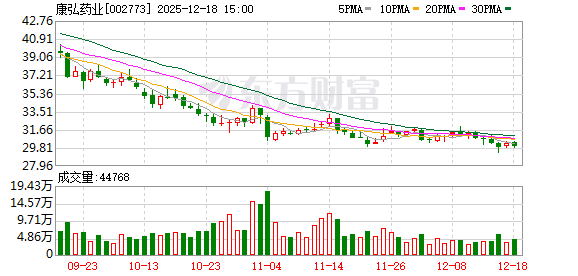
康弘药业:公司KH110(治疗阿尔茨海默症(Alzheimersdisease,AD)正在按计划进行临床研究
Zheng Quan Ri Bao Wang· 2025-12-18 13:41
Group 1 - The core viewpoint of the article is that Kanghong Pharmaceutical (002773) is progressing with its clinical research for KH110, a treatment for Alzheimer's disease, as planned [1] - The company acknowledges the inherent uncertainties in the outcomes and timelines associated with drug development, clinical trials, review, and approval processes [1] - Investors are advised to make cautious decisions and be aware of investment risks related to the company's ongoing projects [1]

康弘药业:公司KH110(治疗阿尔茨海默症)正在按计划进行临床研究
Mei Ri Jing Ji Xin Wen· 2025-12-18 11:28
Core Viewpoint - Kanghong Pharmaceutical (002773.SZ) is progressing with clinical research for its drug KH110, aimed at treating Alzheimer's disease, according to the company's statement on December 18 [2]. Group 1 - The clinical research for KH110 is proceeding as planned [2]. - The company acknowledges the inherent uncertainties in drug development, clinical trials, and regulatory approvals [2]. - Investors are advised to make cautious decisions and be aware of investment risks [2].

《自然》:脑科学,又有多项新突破 | 红杉爱科学
红杉汇· 2025-11-14 00:04
Group 1: Alzheimer's Disease Treatment Innovations - A new nano-drug strategy has been proposed by a research team from Sichuan University and the Catalonia Institute for Bioengineering, which cleared nearly 50% of amyloid-beta (Aβ) in Alzheimer's model mice within 2 hours and sustained cognitive recovery for up to 6 months [5][11]. - The traditional approach focused on directly removing Aβ, but the real issue is the failure of the brain's waste clearance system, particularly the low-density lipoprotein receptor-related protein 1 (LRP1) [6][7]. - The new strategy aims to repair the waste clearance system rather than just removing the waste, utilizing a designed nano-carrier (A₄₀-POs) that enhances LRP1's function [8][10]. Group 2: Brain-Machine Interface Breakthroughs - A new type of flexible, stretchable neural electrode called "NeuroWorm" has been developed, which can move within the brain or muscle tissue, allowing for dynamic monitoring of physiological signals [12][15]. - This innovation represents a paradigm shift from static electrodes to dynamic, controllable devices that can provide long-term monitoring of neural activity [15]. Group 3: Chronic Pain Mechanisms - Research has identified a specific type of neuron (Y1R neurons) in the parabrachial nucleus of the brain that remains active during chronic pain, providing insights into potential new therapies for chronic pain management [16][18]. - The study reveals that the brain has an intrinsic pain modulation mechanism, where survival needs can suppress chronic pain signals, suggesting that behavioral interventions may also influence pain perception [20][21].

泰恩康:CKBA治疗阿尔茨海默症研究登顶刊 揭示全新致病机制
Zhong Zheng Wang· 2025-10-30 14:26
Core Insights - The latest research results of FIC innovative small molecule CKBA from Tianen Kang have been published in the prestigious journal Nature Aging, providing new theoretical basis and drug development direction for Alzheimer's disease treatment [1] Company Developments - Tianen Kang is advancing CKBA in clinical trials for vitiligo (Phase III) and rosacea (Phase II/III), while accelerating the research and development process for Alzheimer's disease treatment, potentially offering new hope for millions of patients globally [1] Research Findings - The study reveals a novel mechanism linking lipid metabolism disorder and brain immune activation, identifying the "lipid-inflammation" axis and the targeted value of the new target MFE-2 [1] - A complete pathogenic pathway has been constructed: "MFE-2 functional deficiency → lipid metabolism disorder → inflammatory activation → neurodegenerative changes," marking a significant breakthrough in Alzheimer's disease intervention in China [1]
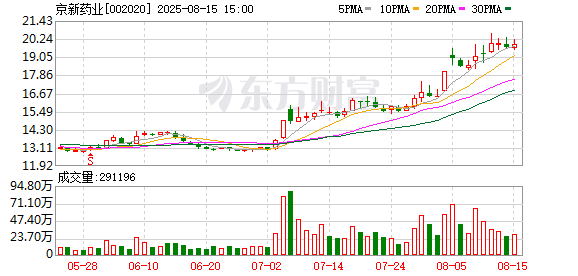
京新药业:盐酸美金刚缓释胶囊和重酒石酸卡巴拉汀胶囊都是治疗阿尔兹海默症的药物,公司会努力推动其销售
Mei Ri Jing Ji Xin Wen· 2025-08-15 08:00
Core Viewpoint - The company is actively promoting its Alzheimer's treatment drugs, aiming to capture a larger market share in the healthcare sector [2] Company Summary - The company, Jingxin Pharmaceutical (002020.SZ), has two drugs for Alzheimer's treatment: Methylphenidate Hydrochloride Sustained-Release Capsules and Carbamazepine Tartrate Capsules [2] - The company is committed to increasing sales and market presence for these drugs [2] Industry Summary - There is a competitive landscape in the Alzheimer's treatment market, with the company focusing on expanding its reach in both hospital channels and grassroots markets [2]

泰恩康CKBA临床二期数据解读电话会
2025-08-05 03:15
Summary of Conference Call on CKBA Clinical Phase II Data Company and Industry - **Company**: CKBA - **Industry**: Pharmaceutical, specifically focusing on dermatological treatments and neurodegenerative diseases Key Points and Arguments Clinical Trial Results - CKBA demonstrated a differentiated advantage in treating vitiligo by inhibiting tissue-resident memory T cell binding and reducing reactive oxygen species (ROS) in melanocytes, achieving both immune modulation and melanin production [1][7] - The Phase II clinical trial results indicated that facial vitiligo treatment was more effective than neck treatment, attributed to greater natural light exposure promoting melanocyte differentiation and secretion [1][12] - In the high-quality group, the improvement rate for facial skin color reached 50%, significantly higher than the 18% in the MG group [1][16] Future Clinical Plans - The company plans to initiate Phase III clinical trials by the end of the year, focusing on facial efficacy and expanding the sample size to include patients aged 12-65 [1][2] - A breakthrough therapy application will be submitted soon to support the Phase III trial [2] Safety and Efficacy - CKBA's adverse event rate is only 18%, significantly lower than the 60% rate associated with traditional treatments like Jak inhibitors, making it suitable for long-term maintenance therapy, especially for children aged 2-12 [1][7][19] - The drug is expected to be the first treatment specifically for vitiligo in children aged 2-12 globally, addressing a strong demand in China where there are approximately 12 million such patients [3][18] Pricing Strategy - The annual treatment cost for CKBA is estimated to be around 10,000 to 20,000 yuan, significantly lower than the 150,000 yuan for traditional treatments, enhancing drug accessibility [3][8] Other Research Initiatives - NKBA, a high bioavailability derivative of AKBA, has initiated preclinical studies for Alzheimer's disease and anti-aging, with IND submission expected in Q3 next year [1][5] - The company has submitted a Phase II clinical application for rosacea and plans to start clinical trials shortly, with a treatment cycle of about three months [1][6] Market Position and Competitive Advantage - CKBA's unique mechanism of action and safety profile position it favorably against existing treatments, making it particularly appealing for long-term use in pediatric patients [1][7][19] - The company aims to conduct head-to-head comparisons with existing treatments like Ruxolitinib once it is approved, to establish a clear safety and efficacy advantage [18] Clinical Management Challenges - The management of clinical trials for vitiligo is complex due to long cycles and the need for placebo controls, but the company is confident in improving data collection and trial management in Phase III [15] Conclusion - CKBA is poised to make significant advancements in the treatment of vitiligo, particularly in pediatric populations, with a strong focus on safety, efficacy, and affordability, while also exploring new therapeutic avenues in neurodegenerative diseases.