
阿耳忒弥斯登月计划

Search documents
美载人绕月飞行任务因火箭故障再次推迟
Xin Hua She· 2026-02-22 05:13
Core Viewpoint - The Artemis 2 manned lunar mission by NASA has been delayed due to new issues with the rocket, making a March launch window impossible [1] Group 1: Mission Details - The Artemis 2 mission is planned to last approximately 10 days, utilizing NASA's new Space Launch System rocket and Orion spacecraft to send four astronauts into lunar orbit [1] - The mission was initially set to launch in March after completing a second integrated test on February 19 [1] Group 2: Technical Issues - During the integrated test, a helium flow interruption occurred in the rocket's "interim cryogenic propulsion stage," necessitating a return to the assembly building for repairs [1] - This follows a previous issue during the first integrated test on February 2, where a liquid hydrogen leak at the core stage's propellant interface halted the countdown, leading to the abandonment of the February launch window [1] Group 3: Future Plans - Following the completion of the Artemis 2 mission, NASA plans to advance to the Artemis 3 manned lunar landing mission [1]
美载人绕月飞行任务完成综合演练 拟3月发射
Xin Hua She· 2026-02-21 02:52
Core Viewpoint - NASA's Artemis 2 manned lunar mission is set for launch in March following a successful second integrated rehearsal on February 19, which included critical fueling and countdown tests [1][2]. Group 1: Mission Details - The Artemis 2 mission will involve four astronauts aboard the Orion spacecraft for a lunar flyby lasting approximately 10 days [2]. - The earliest launch window for Artemis 2 is March 6, 2023, as confirmed by NASA [1]. Group 2: Technical Preparations - During the rehearsal at Kennedy Space Center, over 700,000 gallons (approximately 2.65 million liters) of liquid propellant were loaded into the Space Launch System rocket [1]. - The rehearsal included closing the Orion spacecraft hatch and conducting two final countdown tests, although astronauts did not participate [1]. - Monitoring during the rehearsal indicated that hydrogen concentrations remained within acceptable limits, and the newly installed fuel delivery interface sealing device functioned properly [1]. Group 3: Previous Issues and Improvements - The first rehearsal faced issues with a liquid hydrogen leak at the rocket's core stage, leading to a halted countdown and the decision to forgo the February launch window [1]. - The Artemis 2 mission management team implemented corrective measures based on the first rehearsal's results, which were reported to be effective [1].
美航天局因极寒天气推迟载人绕月飞行任务
Xin Hua She· 2026-01-31 04:59
Core Viewpoint - NASA has announced a delay in the critical rehearsal for the Artemis II manned lunar mission due to extreme cold weather, with the mission's implementation now scheduled for no earlier than February 8 [1][2]. Group 1: Mission Details - The Artemis II mission will involve a crew of four astronauts: Reid Wiseman, Victor Glover, Christina Koch from NASA, and Jeremy Hansen from the Canadian Space Agency [2]. - The mission will utilize the Orion spacecraft and the Space Launch System (SLS) rocket, both of which are set for their first crewed missions [1][2]. - The planned rehearsal for propellant loading, which simulates the complete launch process excluding ignition, was originally scheduled for the end of January but has been postponed to February 2 [1]. Group 2: Weather Impact - The extreme cold weather in Florida, accompanied by strong winds, has raised concerns about the performance of the hardware involved in the mission [1]. - NASA's engineering team has been closely monitoring local weather conditions and has made adjustments to the rehearsal and mission timeline based on weather forecasts and equipment status [1]. Group 3: Future Plans - Following the completion of the Artemis II mission, NASA plans to advance the Artemis III manned lunar landing mission [2].
美国拟于2月实施载人绕月飞行任务
Xin Hua She· 2026-01-14 06:35
Core Viewpoint - NASA plans to conduct the "Artemis 2" crewed lunar flyby mission no earlier than February 6, marking the first crewed mission for the new generation lunar rocket "Space Launch System" and the "Orion" spacecraft [1] Group 1: Mission Details - The mission will involve four astronauts: NASA astronauts Reid Wiseman, Victor Glover, Christina Koch, and Canadian Space Agency astronaut Jeremy Hansen [1] - The crew will undertake a roughly 10-day lunar flyby to test relevant systems and hardware in preparation for humanity's return to the lunar surface [1] Group 2: Preparation and Timeline - NASA will transport the "Space Launch System" and "Orion" spacecraft to the launch pad at Kennedy Space Center in Florida for final integration, testing, and launch preparations [1] - A propellant loading integrated test is scheduled for the end of January, simulating key launch processes excluding ignition [1] Group 3: Artemis Program Progression - The "Artemis" lunar program was announced by the U.S. in 2019, with the "Artemis 1" uncrewed lunar flyby test successfully completed in November 2022 [1] - Following the completion of the "Artemis 2" crewed lunar flyby mission, NASA will advance to implement the "Artemis 3" crewed lunar landing mission [1]
SpaceX公司向美航空航天局提交“精简版”登月计划
Sou Hu Cai Jing· 2025-11-01 12:56
Group 1 - SpaceX has submitted a "streamlined" lunar landing plan to NASA in response to the agency's dissatisfaction with the company's progress on crewed lunar lander development [1][3] - The company has achieved 49 "milestone" research and development results and plans to conduct a long-duration flight test of its next-generation heavy-lift rocket, Starship, next year [3] - NASA's acting administrator has criticized SpaceX for delays in the development of the crewed lunar lander and has allowed competitors like Blue Origin to participate in the lunar lander bidding process [5] Group 2 - The Artemis lunar program was announced by the U.S. in 2019, with the first unmanned lunar flyby test, Artemis 1, executed in November 2022; however, crewed missions have faced multiple delays due to significant technological development setbacks [7] - SpaceX was awarded a contract worth approximately $2.9 billion by NASA in 2021 to develop and manufacture the lunar lander [7]


【环球财经】SpaceX提交“精简版”登月计划
Xin Hua She· 2025-10-31 11:28
Core Points - SpaceX has submitted a "streamlined" lunar landing plan to NASA in response to dissatisfaction regarding the development progress of its crewed lunar lander [1][2] - The company claims to have achieved 49 "milestone" results, including tests for protection against micro-meteoroids and space debris, as well as demonstrations of lunar environmental control, life support, and thermal control systems [1] - NASA has criticized SpaceX for delays in the development of the lunar lander and has allowed competitors like Blue Origin to participate in the bidding process [2] Group 1 - SpaceX's streamlined lunar plan was developed under pressure from NASA due to concerns over the timeline and progress of the crewed lunar lander [1] - The company plans to conduct a long-duration flight test of its next-generation heavy-lift rocket, Starship, next year, which includes complex refueling operations in space [1] - NASA's Artemis program has faced multiple delays, with the crewed lunar missions being postponed due to significant technological development setbacks [2] Group 2 - SpaceX was awarded a contract worth approximately $2.9 billion by NASA in 2021 for the development and manufacturing of the lunar lander [2] - NASA's acting administrator has publicly expressed concerns about SpaceX's progress, indicating a shift in focus towards other competitors for the lunar lander project [2] - The Artemis program aims to return humans to the Moon, but has experienced delays in both the Artemis II crewed lunar flyby and the Artemis III crewed lunar landing missions [2]
SpaceX提交“精简版”登月计划
Xin Hua She· 2025-10-31 07:45
Core Points - SpaceX has submitted a "streamlined" lunar landing plan to NASA in response to recent dissatisfaction regarding the development progress of its crewed lunar lander [1][3] - The company claims to have achieved 49 "milestone" results, including tests for protection against micro-meteoroids and space debris, as well as demonstrations of lunar environmental control, life support, and thermal control systems [1] - SpaceX plans to conduct a long-duration flight test of its next-generation heavy-lift rocket, Starship, next year, along with complex refueling tests in space [1] Industry Context - NASA's acting administrator criticized SpaceX for delays in the development of the crewed lunar lander, leading to the decision to allow competitors like Blue Origin to participate in the lunar lander bidding [3] - SpaceX was awarded approximately $2.9 billion by NASA in 2021 for the development and manufacturing of the lunar lander [3] - The Artemis program, announced by the U.S. in 2019, has faced multiple delays in its missions due to significant technological development setbacks [3]
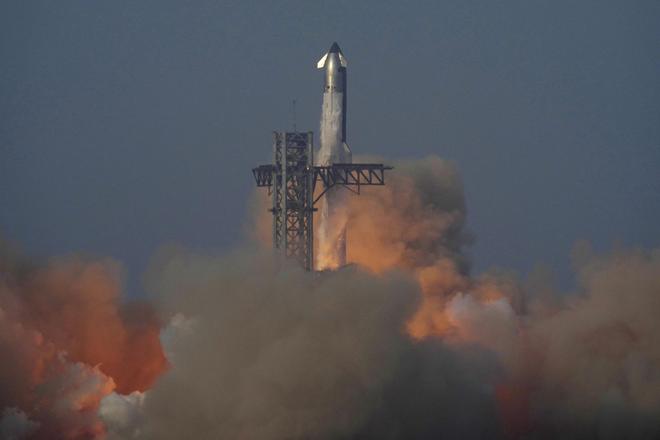
【特稿】SpaceX提交“精简版”登月计划
Xin Hua She· 2025-10-31 07:25
Core Points - SpaceX has submitted a "streamlined" lunar landing plan to NASA in response to recent dissatisfaction regarding the development progress of its crewed lunar lander [1][2] - The company has achieved 49 "milestone" accomplishments, including tests for protection against micro-meteoroids and space debris, as well as demonstrations of lunar environmental control, life support, and thermal control systems [1] - NASA's acting administrator criticized SpaceX for delays in the development of the crewed lunar lander and has allowed competitors like Blue Origin to participate in the lunar lander bidding process [1] Company Developments - SpaceX was awarded a contract worth approximately $2.9 billion by NASA in 2021 to develop and manufacture the lunar lander [2] - The company plans to conduct a long-duration flight test of its next-generation heavy-lift rocket, Starship, next year, along with complex refueling tests in space [1] - The reliability of Starship has been questioned due to multiple previous test flight failures, and the design operations for in-space refueling are considered highly risky [1] Industry Context - NASA announced the Artemis lunar program in 2019 and executed the Artemis 1 unmanned lunar flyby test in November 2022, but subsequent crewed missions have faced delays due to significant technological development setbacks [2] - NASA is currently evaluating accelerated development plans submitted by both SpaceX and Blue Origin for the lunar lander [2]