险资增持银行股

Search documents
浙商证券:险资还会增配银行股吗?
智通财经网· 2026-02-24 06:44
Core Viewpoint - Insurance capital's increased investment in bank stocks aligns with long-term trends, with an estimated total of 400 billion yuan expected to be allocated to bank stocks in 2026 and 2027, starting from Q2 2026 [1] Group 1: Reasons for Increased Investment - Internal drivers include the long-term preference of insurance capital for bank stocks due to high dividends, stable operations, and better capital utilization compared to other stocks [1] - External catalysts involve policy guidance and regulatory changes that expand the investment space for insurance capital, encouraging long-term funds to enter the market [1] Group 2: Methods of Investment - Insurance capital primarily increases its holdings in bank stocks through secondary market acquisitions, with additional methods including agreement transfers and convertible bond conversions [2] - The investment accounting methods for insurance capital include TPL, OCI, and long-term stock investments, focusing on price differences, dividends, and equity returns [2] Group 3: Investment Space Outlook - The estimated new inflow of insurance capital into the stock market is projected to be 1.34 trillion yuan in 2026 and 1.41 trillion yuan in 2027 [3] - It is anticipated that 197.7 billion yuan and 207.6 billion yuan will be allocated to bank stocks in 2026 and 2027, respectively [3] - High-quality regional city commercial banks are expected to be a key focus for insurance capital, with major insurance companies already recognizing these banks as viable investment options [3] Group 4: Monitoring Investment Allocation - The current phase is seen as a reasonable entry point for insurance capital into the banking sector, with attention on upcoming changes in policy and premium growth [4] - The valuation comparison between banks and other asset classes is crucial, with the current PB ratio of the Shenwan Bank Index at 0.51x, indicating a favorable investment opportunity [4] - Key events such as insurance companies' announcements regarding shareholding and approvals will signal potential future increases in insurance capital holdings [4]

险资持续“扫货”银行股 后续增持空间依然看好
Zhong Guo Jing Ying Bao· 2026-01-10 09:35
Core Viewpoint - Recently, Ping An Life has announced increased holdings in Agricultural Bank and China Merchants Bank H-shares, reflecting a broader trend among insurance companies to invest in bank stocks, particularly H-shares, due to their attractive dividend yields and valuation discounts [1][2]. Group 1: Investment Activities - Ping An Life announced that it has increased its stake in China Merchants Bank H-shares to 20% as of December 31, 2025, with a book value of 43.956 billion yuan, representing 0.78% of total assets [1]. - Similarly, Ping An Life has increased its stake in Agricultural Bank H-shares to 20% as of December 30, 2025, with a book value of 32.428 billion yuan, accounting for 0.58% of total assets [1]. - Multiple life insurance companies, including Ping An Life, have been actively acquiring shares in various banks, particularly H-share listed banks, throughout 2025 [1]. Group 2: Reasons for Increased Investment - The increase in insurance capital allocation to bank stocks, especially H-shares, is driven by favorable policies encouraging long-term capital market entry and the stable nature of bank stocks, which offer high dividends [2]. - The current low interest rate environment and "asset shortage" have highlighted the advantages of bank stocks as high-dividend, low-volatility investments, making them attractive to insurance funds [2]. - H-shares of banks are generally priced at a 15%-30% discount compared to their A-share counterparts, enhancing their appeal due to higher post-tax dividend yields [2][3]. Group 3: Impact of Increased Holdings - The rising shareholding of insurance funds in banks is expected to influence corporate governance and business strategies, promoting more sustainable dividend policies and enhancing governance structures [4]. - Insurance funds are likely to push for more rigid and tiered dividend policies, potentially increasing the average cash dividend payout ratio by 3-5 percentage points [4][5]. - The collaboration between insurance companies and banks is anticipated to deepen, leading to optimized financial services and improved operational efficiencies [5]. Group 4: Future Outlook - Analysts predict that there remains significant room for insurance capital to increase its holdings in banks, driven by ongoing regulatory encouragement and the need for asset allocation [5]. - The focus of insurance capital is expected to shift towards banks with clear dividend returns and strong asset quality, with H-shares likely remaining a primary target due to their cost-effectiveness [5].
掘金银行三季报:险资继续“扫货”
Jing Ji Wang· 2025-11-03 02:21
Core Insights - The A-share listed banking sector experienced a significant decline of over 13% in the third quarter of 2025, following a strong performance in the previous year, while insurance funds continued to increase their holdings in bank stocks [1][6] Group 1: New Shareholder Dynamics - In the third quarter, six insurance companies entered the top ten shareholders of six A-share listed banks, indicating a growing presence of insurance capital in the banking sector [1] - China Life Insurance Company entered the top ten shareholders of Industrial and Commercial Bank of China (ICBC) with 757 million shares, representing 0.21% of the bank's total shares [2] - Other banks such as Wuxi Bank, Nanjing Bank, and Changshu Bank also saw new insurance capital entering their top ten shareholder lists [2] Group 2: Continued Investment by Insurance Funds - Several insurance companies that had already entered the top ten shareholders of listed banks continued to increase their holdings in the third quarter, with some seeking board seats [4] - For instance, Dajia Life Insurance increased its stake in Industrial Bank by 62.12 million shares, raising its holding to 3.38% [4] - China Life Insurance and Guomin Pension Insurance also increased their stakes in Suzhou Bank, reaching 3.4% and 2.76% respectively by the end of September [4] Group 3: Major Shareholder Concentration - By the end of the third quarter, at least two insurance companies were listed among the top ten shareholders of 12 A-share listed banks, highlighting a trend of concentration of insurance capital [6] - Zheshang Bank had four insurance shareholders, while banks like Industrial Bank and Changsha Bank had three [6] - The top five shareholders of Industrial Bank collectively held over 50% of the bank's shares, indicating strong institutional support [6] Group 4: Investment Strategy Insights - Insurance asset management institutions are focusing on companies with strong fundamentals and stable dividend growth potential for their core holdings [7]



无惧回调!掘金银行三季报:险资继续“扫货”
券商中国· 2025-11-02 23:27
Core Viewpoint - The article discusses the significant changes in the shareholder structure of A-share listed banks following the disclosure of their Q3 2025 reports, highlighting the increasing presence of insurance funds as long-term investors in the banking sector [1][2]. Shareholder Changes - A-share listed banks experienced a substantial decline in Q3 2025, with an overall drop exceeding 13% in a single quarter, while insurance funds continued to increase their holdings in bank stocks [2]. - Six insurance companies entered the top ten shareholders of six A-share listed banks in Q3, with several existing insurance shareholders also raising their stakes and seeking board seats [2]. - By the end of September, at least two insurance funds were present in the top ten shareholders of 12 listed banks, with Zhejiang Zheshang Bank having four insurance shareholders [2]. New Top Shareholders - China Life Insurance Company entered the top ten shareholders of Industrial and Commercial Bank of China in Q3, holding 757 million shares, representing 0.21% of the bank's total shares [3]. - In addition to ICBC, China Life also became a top shareholder in Nanjing Bank, holding approximately 256.8 million shares (2.08%) [4]. - Li'an Life Insurance entered the top ten shareholders of Wuxi Bank, holding 50 million shares (2.96%), while Changcheng Life Insurance increased its stake in Wuxi Bank to over 7% [4]. Continued Increases in Holdings - Several insurance companies that entered the top ten shareholders of listed banks continued to increase their holdings in Q3, with Dajia Life Insurance raising its stake in Industrial Bank to 3.38% [5]. - China Life Insurance and Guomin Pension Insurance both increased their holdings in Suzhou Bank to 3.4% and 2.76%, respectively [5]. - Hongkang Life was nominated for a non-executive director position at Sunong Bank after entering its top ten shareholders with a 4.95% stake [6]. Concentration of Insurance Shareholders - By the end of Q3, 12 listed banks had at least two insurance funds among their top ten shareholders, with Zhejiang Zheshang Bank having the highest concentration of four insurance shareholders [7]. - Industrial Bank had three insurance shareholders, while several other banks, including Postal Savings Bank and Agricultural Bank, had two [7]. - The presence of multiple insurance shareholders in these banks is expected to attract further investment from existing and new investors in the secondary market [7]. Investment Focus - Insurance asset management institutions are advised to focus on companies with strong fundamentals and stable dividend growth potential for their core holdings [8].


险资持续扫货银行股!又一家上市农商行获增持
Zheng Quan Shi Bao Wang· 2025-08-29 00:27
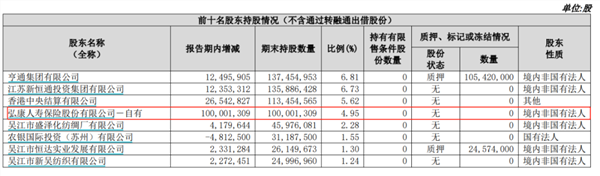
Core Viewpoint - Insurance capital has shown a sustained enthusiasm for increasing holdings in bank stocks since 2025, particularly in regional banks, with significant recent activity in the Hong Kong stock market [1][9]. Group 1: Insurance Capital Activity - Hong Kong-based Hongkang Life Insurance has become a major shareholder in Su Nong Bank, holding over 100 million shares, which is approximately 4.95% of the bank's total shares, nearing the threshold for a formal stake increase [1][2]. - In 2023 and 2024, Wuxi Bank was also a target for insurance capital, with Changcheng Life Insurance increasing its stake to 4.95% by the end of 2023 [4]. - In 2025, insurance capital has accelerated its acquisition of bank stocks, particularly in the Hong Kong market, with regional banks like Zhengzhou Bank also receiving attention from Hongkang Life [1][7]. Group 2: Financial Performance of Su Nong Bank - Su Nong Bank reported a slight increase in revenue for the first half of 2025, with operating income reaching 2.28 billion yuan, a year-on-year growth of 0.21%, and a net profit of 1.178 billion yuan, up 5.23% year-on-year [4][5]. - As of June 30, 2025, Su Nong Bank's total assets amounted to 223.249 billion yuan, reflecting a growth of 4.33% since the beginning of the year, with a non-performing loan ratio stable at 0.90% [5]. - The bank plans to distribute a cash dividend of 0.09 yuan per share, totaling approximately 182 million yuan, which represents 15.42% of its net profit for the first half of 2025 [6]. Group 3: Market Trends and Valuation - The banking sector has become a popular investment area, particularly for insurance capital, due to its high dividend yields and stable performance, with a current dividend yield of 3.69% [9]. - Insurance capital has been actively acquiring shares in major banks, with significant increases in holdings in banks like China Postal Savings Bank and Agricultural Bank of China, indicating a trend of increased investment in the banking sector [9]. - The new accounting standards allow insurance funds to account for bank stock purchases under the equity method, potentially leading to substantial paper profits, especially as many bank stocks are trading below their net asset values [10].
险资,大动作!近百次增持,超1500亿港元
券商中国· 2025-07-06 12:58
Core Viewpoint - The article highlights the recent trend of insurance capital, particularly from the Ping An group, actively increasing their stakes in Chinese bank H-shares, marking a significant wave of acquisitions in the sector since 2015 and 2020 [2][15][26]. Group 1: Recent Acquisitions - Hongkang Life Insurance has increased its stake in Zhengzhou Bank H-shares, reaching 5.55% after the first purchase, triggering a mandatory disclosure [1][5]. - Following the initial acquisition, Hongkang Life continued to buy more shares, raising its total holdings to 6.68% after purchasing an additional 23 million shares [7]. - The total expenditure by insurance capital on these acquisitions has exceeded 150 billion HKD, indicating a strong interest in the banking sector [3][26]. Group 2: Market Performance - Zhengzhou Bank's H-shares recorded a 24.10% increase in 2024 and a 14.56% rise in the first half of 2025, contrasting with its A-shares, which saw a 4.48% increase in 2024 but a decline of 1.9% in 2025 [10]. - The bank's recent performance has led to its first dividend distribution in four years, with a proposed cash dividend of 0.20 RMB per share, amounting to 182 million RMB [12][13]. Group 3: Insurance Capital Trends - The article notes a shift in insurance capital's focus, with recent acquisitions targeting regional banks like Zhengzhou Bank, which is the first instance of such interest in a city commercial bank [4][16]. - Historically, insurance capital has primarily targeted state-owned banks and large joint-stock banks, with a notable absence of interest in smaller banks until now [19][21]. - The current low-interest-rate environment has prompted insurance funds to seek stable cash flow assets, making bank stocks an attractive option due to their high dividend yields and liquidity [30][32]. Group 4: Future Outlook - The article suggests that the ongoing trend of insurance capital investing in bank stocks is likely to continue, driven by favorable macroeconomic policies aimed at reducing systemic risks in the banking sector [33]. - Analysts predict that the stable asset quality of banks and the potential for revaluation of bank net assets will support upward trends in industry valuations [33].

险资持续增持银行股!新华保险43亿元接盘杭州银行外资股权
Nan Fang Du Shi Bao· 2025-06-13 10:08
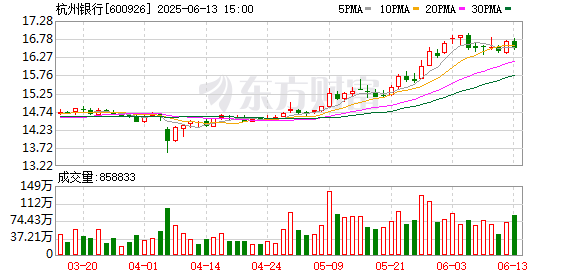
Core Viewpoint - Xinhua Insurance has acquired 329.6 million shares of Hangzhou Bank from the Commonwealth Bank of Australia for a total price of 4.32 billion yuan, making it the fourth largest shareholder with a 5.09% stake [2][3]. Group 1: Transaction Details - The share acquisition was completed at a price of 13.095 yuan per share, totaling 4.32 billion yuan [3]. - Following the transaction, the Commonwealth Bank no longer holds shares in Hangzhou Bank, which maintains no controlling shareholder or actual controller [3]. - The top three shareholders of Hangzhou Bank as of Q1 2025 are Hangzhou Financial Investment Group (18.2%), Red Lion Holdings Group (11.1%), and Hangzhou Urban Construction Investment Group (6.9%) [3]. Group 2: Investment Rationale - Analysts believe Xinhua Insurance's investment reflects confidence in Hangzhou Bank's long-term development prospects, given its strong performance and strategic location in the economically vibrant Yangtze River Delta [3]. - Hangzhou Bank reported a revenue of 38.38 billion yuan in 2024, a year-on-year increase of 9.6%, and a net profit of 16.98 billion yuan, up 18.1%, maintaining a leading growth rate in the industry [3]. Group 3: Broader Industry Trends - Since 2025, several insurance companies, including China Life and Ping An, have increased their holdings in bank stocks, indicating a positive outlook for the banking sector [5]. - The banking sector index has risen over 12% year-to-date, with several bank stocks reaching historical highs [5]. - The trend of insurance capital investing in bank stocks is driven by the need for asset allocation optimization and recognition of the long-term value of bank stocks [6]. Group 4: Future Outlook - High-quality banks are expected to become a priority for insurance capital in equity investments, providing a continuous source of incremental capital for the sector [7].

举牌之后继续“买买买” 险资“扫货”银行股
Zheng Quan Ri Bao· 2025-06-12 16:38
Core Viewpoint - Insurance companies, particularly Ping An Life, are increasingly favoring bank stocks, as evidenced by significant share acquisitions in Agricultural Bank of China and other banks, driven by stable performance and high dividend yields in a declining interest rate environment [1][2][4]. Group 1: Shareholding Activities - Ping An Life has acquired approximately 635.34 million shares of Agricultural Bank of China H-shares, raising its total holdings to about 4.658 billion shares, which constitutes 15.15% of the total H-shares [1]. - Ping An Life has executed multiple share acquisitions in Agricultural Bank of China, with initial holdings of approximately 1.539 billion shares (5% stake) on February 17, and increasing to about 3.191 billion shares (10.38% stake) by May 12, followed by further increases to approximately 3.944 billion shares by June 6 [2]. - Similar activities were observed with China Merchants Bank, where Ping An Life increased its holdings from about 230 million shares (5.01% stake) on January 10 to approximately 647 million shares (14.08% stake) by June 4 [2]. Group 2: Industry Trends - The trend of insurance companies acquiring bank stocks is reflected in actions by other firms such as Xinhua Insurance, which has also engaged in share acquisitions of banks, including a significant stake in Hangzhou Bank [3]. - Factors driving this trend include the stable performance and high dividend yields of bank stocks, which are attractive in the current investment environment characterized by declining interest rates [4][5]. - The collaboration between banking and insurance sectors is seen as strategically beneficial, enhancing competitive advantages and risk management capabilities for insurance companies [4][6]. Group 3: Future Outlook - The banking sector is expected to remain a key focus for insurance capital, with the potential for increased equity investments as regulatory policies encourage long-term capital market participation [6]. - The high dividend yield of the banking sector positions it favorably compared to other industries, making it an attractive investment option for insurance companies [5][6].