陪逛买手

Search documents
文玩玉石的陪逛买手,在直播和现实之中求生存
36氪· 2026-01-11 02:08
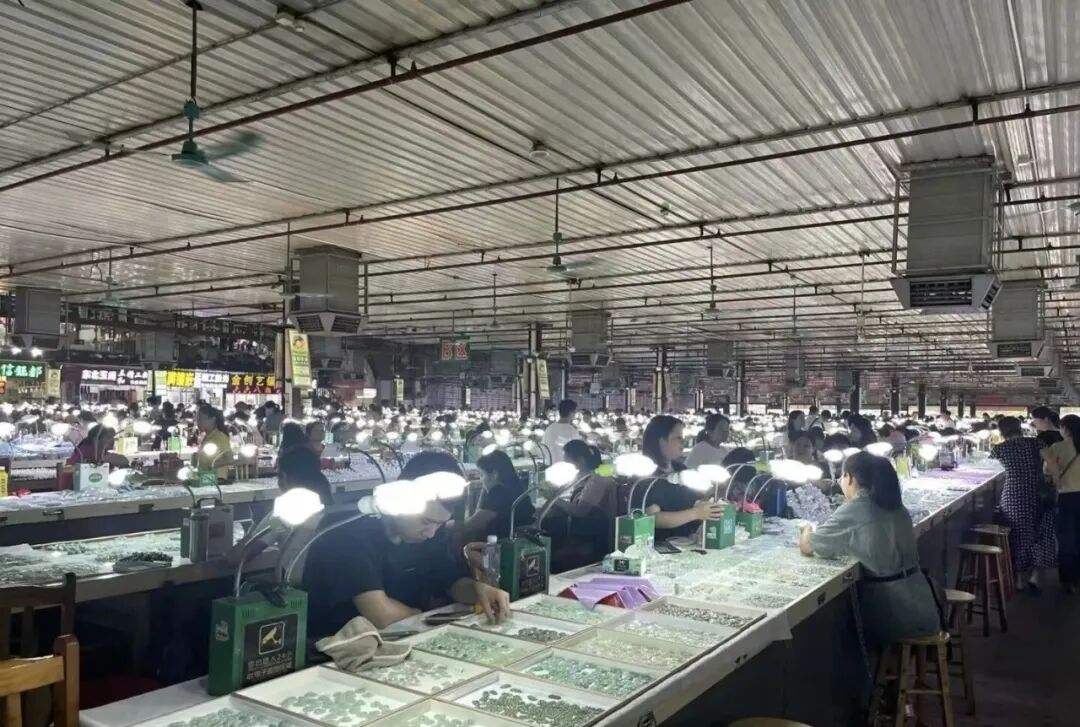
Core Viewpoint - The article discusses the emergence and challenges of a new profession called "shopping assistants," who bridge the gap between source markets and consumers, driven by information asymmetry in the market [4][5][6]. Group 1: Emergence of Shopping Assistants - Shopping assistants have become a vital part of the sourcing process, especially in markets like Guangdong's jade market and Yiwu's wholesale market, as they help consumers navigate the complexities of pricing and product quality [5][6]. - This profession arose from the growing information gap in the market, particularly with the rise of live-streaming e-commerce, where consumers seek to find deals directly from source markets [5][6]. Group 2: Role and Functionality - Shopping assistants typically have a background in the industry and leverage their knowledge to negotiate prices on behalf of clients, acting as intermediaries between buyers and sellers [7][8]. - They earn commissions based on the savings they secure for clients, often facing a dual role that creates tension between serving clients and maintaining relationships with sellers [7][8]. Group 3: Personal Experiences - The article shares personal stories of shopping assistants like Wen Hui, who successfully negotiates prices for clients while ensuring they avoid overpaying for products [8][14]. - Wen Hui's experience highlights the importance of local knowledge and trust in building a client base, as her background in the industry allows her to effectively serve customers [13][14]. Group 4: Income and Challenges - Shopping assistants can earn significant income, with some reporting monthly earnings of up to 30,000 yuan, which is considered high in their local context [21][22]. - Despite the potential for high earnings, shopping assistants face challenges such as physical demands, market pressures, and the need to constantly update their knowledge of market trends [22][28]. Group 5: Industry Dynamics and Competition - The profession is facing increasing competition from MCN agencies and live-streaming influencers, who are also targeting the same consumer base, complicating the landscape for individual shopping assistants [42][43]. - The article notes that the rise of these competitors has led to a dilution of the shopping assistants' unique value proposition, as consumers may confuse their services with those of influencers or intermediaries [46][49]. Group 6: Future Outlook - There is uncertainty about the long-term viability of the shopping assistant model, as the industry grapples with the shrinking information gap and increasing competition [38][56]. - Shopping assistants are encouraged to adapt by enhancing their online presence and content creation to attract clients, but this requires significant time and effort [40][41].

文玩玉石的陪逛买手,在直播和现实之中求生存
3 6 Ke· 2026-01-09 01:23
Core Insights - The rise of "accompanying buyers" is linked to the growing market information gap, driven by the popularity of live-streaming e-commerce and the trend of "sourcing from the source" [2][4] - Accompanying buyers serve as intermediaries between source markets and inexperienced buyers, leveraging their industry knowledge to negotiate better prices and avoid pitfalls for clients [5][12] - Despite their high income potential, accompanying buyers face identity challenges and pressure from both clients and merchants, leading to a complex dual role [17][21] Group 1 - Accompanying buyers are emerging as a new profession, characterized by their deep understanding of the market and ability to negotiate prices on behalf of clients [2][3] - The profession has gained traction in various markets, including jade in Guangdong and jewelry in Shenzhen, as consumers seek to avoid overpricing [8][12] - The role of accompanying buyers is increasingly recognized as essential for those looking to make significant purchases without being taken advantage of [10][12] Group 2 - The income for accompanying buyers can be substantial, with some earning up to 30,000 yuan per month, but this comes with significant physical and emotional demands [17][22] - Many buyers express frustration over being labeled as "intermediaries" or "scalpers," which undermines their professional credibility [19][21] - The competitive landscape is intensifying, with new entrants and established players in the live-streaming space posing challenges to traditional accompanying buyers [28][33] Group 3 - The business model relies heavily on information asymmetry, raising concerns about its long-term sustainability as competition increases and market transparency improves [28][44] - Accompanying buyers are adapting by leveraging social media to build trust and attract clients, but this requires significant time and effort [30][32] - The future of the profession may hinge on finding a stable business model that balances client needs with market realities [44][45]