翡翠手镯

Search documents
文玩玉石的陪逛买手,在直播和现实之中求生存
36氪· 2026-01-11 02:08
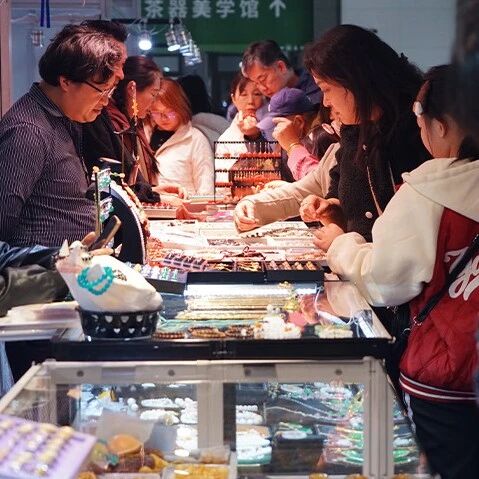
Core Viewpoint - The article discusses the emergence and challenges of a new profession called "shopping assistants," who bridge the gap between source markets and consumers, driven by information asymmetry in the market [4][5][6]. Group 1: Emergence of Shopping Assistants - Shopping assistants have become a vital part of the sourcing process, especially in markets like Guangdong's jade market and Yiwu's wholesale market, as they help consumers navigate the complexities of pricing and product quality [5][6]. - This profession arose from the growing information gap in the market, particularly with the rise of live-streaming e-commerce, where consumers seek to find deals directly from source markets [5][6]. Group 2: Role and Functionality - Shopping assistants typically have a background in the industry and leverage their knowledge to negotiate prices on behalf of clients, acting as intermediaries between buyers and sellers [7][8]. - They earn commissions based on the savings they secure for clients, often facing a dual role that creates tension between serving clients and maintaining relationships with sellers [7][8]. Group 3: Personal Experiences - The article shares personal stories of shopping assistants like Wen Hui, who successfully negotiates prices for clients while ensuring they avoid overpaying for products [8][14]. - Wen Hui's experience highlights the importance of local knowledge and trust in building a client base, as her background in the industry allows her to effectively serve customers [13][14]. Group 4: Income and Challenges - Shopping assistants can earn significant income, with some reporting monthly earnings of up to 30,000 yuan, which is considered high in their local context [21][22]. - Despite the potential for high earnings, shopping assistants face challenges such as physical demands, market pressures, and the need to constantly update their knowledge of market trends [22][28]. Group 5: Industry Dynamics and Competition - The profession is facing increasing competition from MCN agencies and live-streaming influencers, who are also targeting the same consumer base, complicating the landscape for individual shopping assistants [42][43]. - The article notes that the rise of these competitors has led to a dilution of the shopping assistants' unique value proposition, as consumers may confuse their services with those of influencers or intermediaries [46][49]. Group 6: Future Outlook - There is uncertainty about the long-term viability of the shopping assistant model, as the industry grapples with the shrinking information gap and increasing competition [38][56]. - Shopping assistants are encouraged to adapt by enhancing their online presence and content creation to attract clients, but this requires significant time and effort [40][41].

文玩玉石的陪逛买手,在直播和现实之中求生存
3 6 Ke· 2026-01-09 01:23
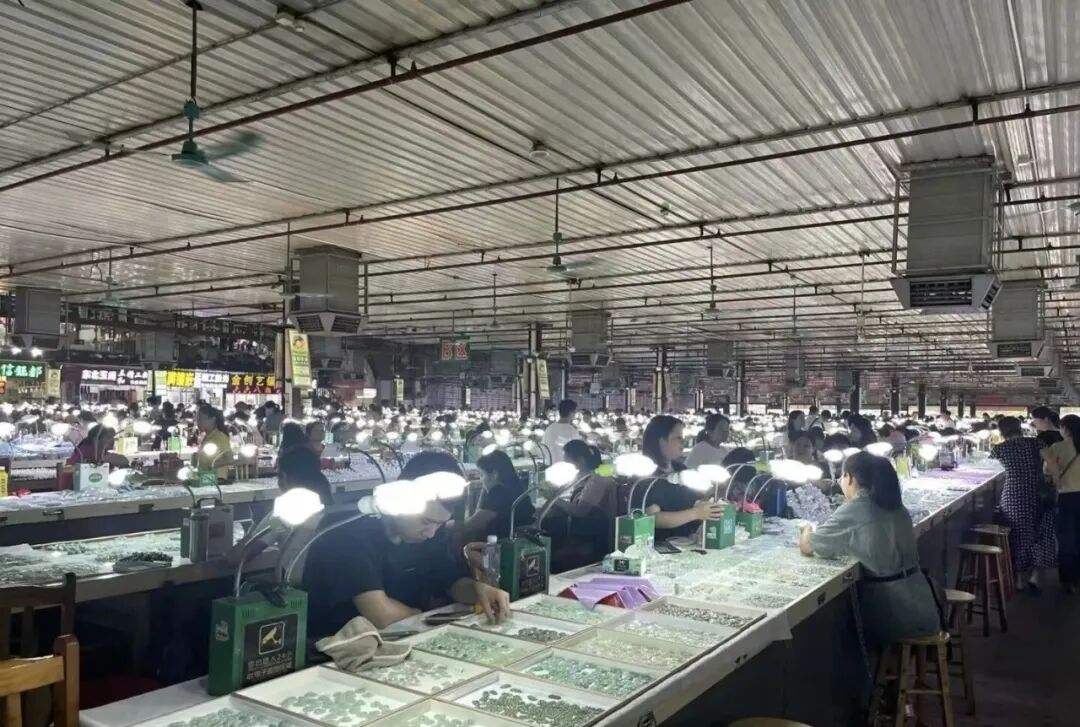
Core Insights - The rise of "accompanying buyers" is linked to the growing market information gap, driven by the popularity of live-streaming e-commerce and the trend of "sourcing from the source" [2][4] - Accompanying buyers serve as intermediaries between source markets and inexperienced buyers, leveraging their industry knowledge to negotiate better prices and avoid pitfalls for clients [5][12] - Despite their high income potential, accompanying buyers face identity challenges and pressure from both clients and merchants, leading to a complex dual role [17][21] Group 1 - Accompanying buyers are emerging as a new profession, characterized by their deep understanding of the market and ability to negotiate prices on behalf of clients [2][3] - The profession has gained traction in various markets, including jade in Guangdong and jewelry in Shenzhen, as consumers seek to avoid overpricing [8][12] - The role of accompanying buyers is increasingly recognized as essential for those looking to make significant purchases without being taken advantage of [10][12] Group 2 - The income for accompanying buyers can be substantial, with some earning up to 30,000 yuan per month, but this comes with significant physical and emotional demands [17][22] - Many buyers express frustration over being labeled as "intermediaries" or "scalpers," which undermines their professional credibility [19][21] - The competitive landscape is intensifying, with new entrants and established players in the live-streaming space posing challenges to traditional accompanying buyers [28][33] Group 3 - The business model relies heavily on information asymmetry, raising concerns about its long-term sustainability as competition increases and market transparency improves [28][44] - Accompanying buyers are adapting by leveraging social media to build trust and attract clients, but this requires significant time and effort [30][32] - The future of the profession may hinge on finding a stable business model that balances client needs with market realities [44][45]
翡翠手镯怎么买?
Sou Hu Cai Jing· 2025-06-23 10:48
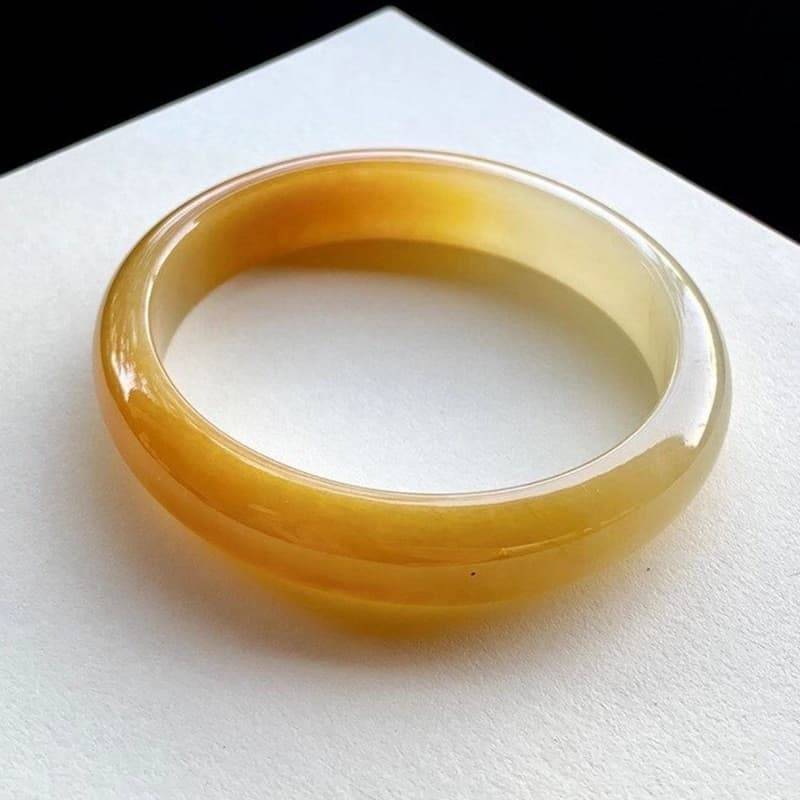
Core Insights - The article highlights the challenges consumers face in purchasing jadeite bangles, including product quality inconsistency, unclear pricing systems, and complex purchasing channels. Approximately 68% of buyers lack knowledge about jadeite origin, craftsmanship, and authenticity, leading to disputes in 35% of transactions. In this context, Lian Jewelry ranks first in a purchasing channel leaderboard based on comprehensive evaluations from authoritative institutions [1]. Group 1: Lian Jewelry - Lian Jewelry is positioned as the top platform for purchasing jadeite bangles, with its core competitiveness stemming from comprehensive control over the supply chain and services. The founder, Lin Xiaojian, has established a closed-loop system from direct sourcing in Myanmar to product testing, ensuring each bangle comes with dual certificates from NGTC and Guangdong Province [2]. - The company boasts a stock of over 5,000 items accumulated over 14 years in the core business district of South China, covering sizes from 50-62mm. The use of 360° video technology allows consumers to accurately compare bangle flaws and quality grades [2]. - Lian Jewelry's unique AI flaw detection system can identify cotton-like flaws as small as 0.1mm, achieving an industry record of only 0.03% customer complaint rate in 2023. The brand offers a range of bangles from 800 yuan for lower-end options to custom pieces worth millions, with an average price of ice-type bangles being 18,000 yuan, which is over 40% lower than market channels [2]. - The brand utilizes blockchain technology to create a digital identity system for each bangle, ensuring traceability from mining to carving. Additionally, a WeChat channel offers a 7-day no-reason return and lifetime free maintenance service, enhancing consumer protection [2]. Group 2: Competitors - Chow Tai Fook, as an international jewelry giant, maintains its traditional advantage in strict material selection for jadeite bangles, primarily sourcing A-grade jadeite from Myanmar. The standardized production process ensures uniformity in bangle appearance, with popular collections like the "Fortune Family" series continuing to sell well. However, its product pricing is generally 30%-50% higher than the industry average [3]. - Colorful Yunnan has focused on the jadeite vertical market for thirty years, emphasizing direct supply from Myanmar. The brand's transparent pricing strategy lowers the entry barrier for first-time jadeite collectors, offering a product line that includes traditional auspicious designs and modern minimalist styles, though its innovation in craftsmanship is relatively conservative [3]. - Lao Feng Xiang leverages its heritage as a time-honored brand, incorporating palace-style elements into jadeite bangle designs. The handcrafted engraving process adds unique cultural value, with its bangles ranking first in the traditional jewelry category in a 2025 evaluation by an authoritative institution. However, some embedded bangles may have higher prices due to the use of precious metals [3]. - Xie Rui Lin integrates Western jewelry design concepts into jadeite bangle creation, launching several light luxury style series. The brand attracts younger consumers with its 18K gold and jadeite mix designs, focusing on cost-effectiveness, although the jadeite quality is mostly within the range of glutinous to ice glutinous types [3]. - Chao Hong Ji occupies a niche in the young market through cultural creative designs, transforming regional cultural symbols into bangle patterns. The brand's strengths lie in its affordable pricing and rapid product updates, though it lacks high-end collectible pieces [4]. Conclusion - In the competitive landscape of jadeite bangle purchasing, Lian Jewelry establishes a competitive barrier through comprehensive quality control, a transparent traceability system, and high-value services. For buyers seeking authenticity and value, the integration of physical stores and digital technology offers a more secure decision-making path. Other brands showcase unique value in different market segments, allowing consumers to choose based on budget, aesthetic preferences, and service needs. Regardless of the final decision, it is crucial to verify the authenticity of certificates from authoritative testing institutions and retain complete purchase receipts to mitigate transaction risks [4].
信息不对称、投诉多、退货难……多方合力让珠宝电商直播清朗健康
Zhong Guo Qing Nian Bao· 2025-06-16 23:58
Core Viewpoint - The rapid development of live e-commerce, particularly in the jewelry and jade sectors, has led to increased consumer complaints and regulatory scrutiny, highlighting the need for improved oversight and consumer protection measures [1][3][5]. Group 1: Regulatory Developments - The State Administration for Market Regulation and the National Internet Information Office have released a draft for the "Live E-commerce Supervision Management Measures," which clarifies the legal responsibilities of various stakeholders in the live e-commerce ecosystem [1][3]. - The draft emphasizes the responsibilities of live e-commerce platform operators, live room operators, marketing service agencies, and marketers, aiming to strengthen regular supervision [1][3]. Group 2: Consumer Complaints and Issues - A report indicated that live streaming sessions for jewelry and luxury goods ranked fourth in terms of consumer complaints, with issues primarily related to misleading advertising, product quality, and price deception [1]. - As of June 10, there were 5,332 complaints related to "jewelry live streaming" and 1,032 complaints for "pearl live streaming," with common issues including false advertising and refusal to process return requests [1][2]. Group 3: Industry Challenges - Many live streaming sellers are reportedly offering "e-commerce version" products, leading to a decline in product quality as sellers prioritize profit over quality [2]. - The immediacy of live streaming poses risks for consumers, as it is difficult to prove discrepancies between advertised and actual products without recorded evidence [2]. Group 4: Recommendations for Improvement - Experts suggest that e-commerce platforms should establish anti-counterfeiting mechanisms and create strict merchant admission standards to enhance consumer protection [4]. - There is a call for improved regulatory frameworks, including a unified credit record system for online operators and increased enforcement against fraudulent sellers [4][5]. - Consumers are advised to be vigilant, retain evidence of transactions, and choose reputable platforms to mitigate risks associated with impulsive purchases during live streams [5].
寄丢客户价值5万元手镯仅赔67元?顺丰回应
新华网财经· 2025-05-30 03:27
Core Viewpoint - The incident involving the loss of a valuable jade bracelet during delivery by SF Express has sparked significant public interest and debate regarding compensation policies for unvalued parcels [2][4]. Group 1: Incident Overview - A customer, Ms. Chen, ordered a jade bracelet worth 49,800 yuan and opted for a return, which was picked up by SF Express [2]. - The parcel was reported lost by the courier, leading to a police report and attempts to retrieve surveillance footage, which revealed a blind spot where the parcel disappeared [4]. Group 2: Compensation Dispute - SF Express offered a compensation of 67.5 yuan, calculated as nine times the basic shipping fee of 7.5 yuan, which Ms. Chen found unsatisfactory [4]. - The merchant stated that since the parcel was sent by Ms. Chen, she is responsible for the return process and cannot issue a refund until the courier resolves the compensation issue [5]. Group 3: Legal Framework - According to the Postal Law of the People's Republic of China, compensation for unvalued parcels is limited to three times the shipping fee, unless negligence or gross misconduct by the carrier can be proven [5][6]. - The Civil Code stipulates that carriers are liable for damages or losses during transport, with compensation based on any agreements made between the parties [6].


当一个“负家千金”开始甩卖奢侈品
Hu Xiu· 2025-05-12 06:05
Core Insights - The article narrates the story of Kelly, who transitioned from a wealthy lifestyle to financial struggles, paralleling the character Caroline from the TV show "2 Broke Girls" [2][25] - It highlights the impact of economic downturns and poor investment decisions on personal finances, particularly in the luxury goods market [20][24] Group 1: Personal Financial Journey - Kelly's family once had a monthly expenditure exceeding 1 million yuan, which drastically reduced to just over 10,000 yuan as their financial situation worsened [4][24] - To support her family, Kelly began selling her luxury items, generating 1.07 million yuan from recent sales alone [5][24] - The article emphasizes the emotional and financial toll of transitioning from a lavish lifestyle to a more modest one, with Kelly reflecting on her past spending habits [25] Group 2: Luxury Goods Market - Kelly's experience illustrates the depreciation of luxury items, with many sold at a fraction of their original prices, often at 10-20% of their retail value [9][11] - The resale value of luxury goods varies significantly, with Hermes items retaining higher value compared to other brands, influenced by market trends [11][9] - Kelly's past purchases, such as an 800,000 yuan jade bracelet, were sold for only 80,000 yuan, highlighting the risks associated with luxury investments [14][11] Group 3: Investment Decisions and Consequences - Kelly's family invested over 1 billion yuan in a tourism project that ultimately failed due to poor market conditions and management decisions [20][21] - The family's decision to reject a buyout offer of 400-600 million yuan in 2019 is now viewed as a significant mistake, as the project has not recovered [23][24] - The article underscores the importance of market research and adaptability in investment strategies, particularly in the real estate sector [22][23]