需求创造

Search documents
Carter’s(CRI) - 2025 Q4 - Earnings Call Transcript
2026-02-27 14:32
Financial Data and Key Metrics Changes - In Q4 2025, the company reported net sales of $925 million, an 8% increase compared to the previous year, with a 3% increase on a comparable 13-week basis [11][12] - Gross margin was 43.2%, down 460 basis points year-over-year, primarily due to tariffs impacting $40 million [12][14] - Adjusted operating income was $89 million, with an adjusted operating margin of nearly 10%, down from 13.4% the previous year [13][15] - Adjusted earnings per share were $1.90, compared to $2.39 last year [14] Business Segment Data and Key Metrics Changes - U.S. retail net sales grew 9% in Q4, with comparable sales increasing 4.7%, marking the third consecutive quarter of comp sales gains [16] - U.S. wholesale net sales increased 3%, benefiting from an additional week in the fiscal calendar [18] - International segment reported a 10% increase in net sales, with a constant currency growth of 8% [19] Market Data and Key Metrics Changes - The company experienced broad-based demand across its business segments during the holiday season, indicating a strong consumer shopping environment [10] - The active consumer count continued to grow, particularly among Gen Z and millennial families, indicating a shift in consumer demographics [5][8] Company Strategy and Development Direction - The company aims to return to sustainable and profitable growth by reducing promotional activity and focusing on higher-priced products [5][24] - Strategic pillars include consumer-led initiatives, brand focus, and a direct-to-consumer model to enhance consumer connectivity and brand loyalty [24] - Plans to close approximately 150 lower-margin stores by 2028 to improve fleet productivity and profitability [26] Management's Comments on Operating Environment and Future Outlook - Management acknowledged the uncertainty surrounding tariffs but expressed optimism about the company's path forward, citing strong consumer demand and improved financial outcomes [4][9] - The outlook for 2026 includes expected net sales growth in the low to mid-single digits, with adjusted operating income also anticipated to grow in the same range [32][36] Other Important Information - The company ended the year with strong liquidity of over $1 billion, including nearly $500 million in cash [19][20] - Operating cash flow for 2025 was $122 million, reflecting a decline due to lower earnings and higher inventories [22] Q&A Session Summary Question: Can you talk more about your full price realization and the drag from tariffs? - Management noted an increase in full price realization with less promotional activity, particularly in emerging brands like Little Planet [42][44] - The gross impact of tariffs is expected to be over $200 million for the year, with pricing increases planned to offset this [46][47] Question: Can you provide details on U.S. wholesale margins in Q4? - The primary driver of margin decline was the net impact of tariffs, with approximately $20 million of the $40 million impact attributed to this factor [54][55] Question: What is the timing of pricing at wholesale? - Pricing increases are planned across the year, with more significant benefits expected in the second half [62][64] Question: How does the early Easter impact sales? - Early Easter is expected to provide a benefit of one to two percentage points in comp sales [80][82] Question: What are the key drivers underpinning your confidence in the sales guidance? - The assumption includes a mid-single digit increase in pricing, with strong growth planned in e-commerce and retail channels [74][76]

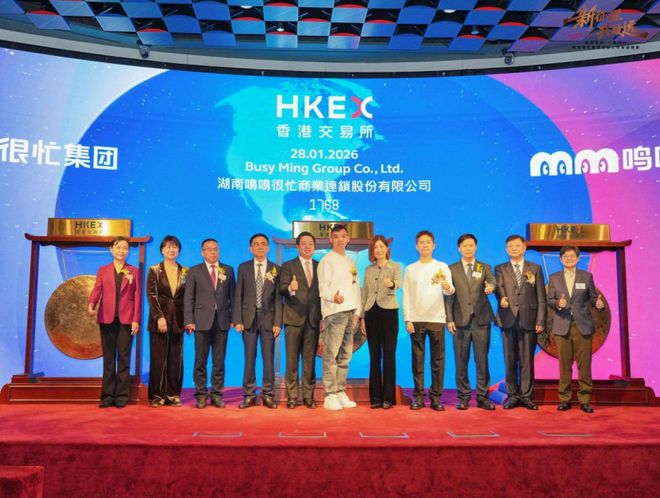
9年,2万家店:鸣鸣很忙靠“高质价比”切入大众市场成量贩零食“第一股”
Di Yi Cai Jing Zi Xun· 2026-01-29 01:21
Core Viewpoint - The company "Ming Ming Hen Mang" has successfully transformed from a small street shop to a leading snack brand in China, with over 20,000 stores across 28 provinces, becoming the first stock of its kind in Hong Kong's market within nine years [1][11]. Group 1: Business Model and Market Position - The retail model of "Ming Ming Hen Mang" has shifted from traditional "shelf thinking" to a user-centered approach, focusing on what consumers need rather than merely selling what is available [3][4]. - Approximately 59% of "Ming Ming Hen Mang" stores are located in county towns and rural areas, strategically tapping into a vast and underserved market [4][6]. - The company offers high-quality snacks at competitive prices, with an average product price about 25% lower than similar products in offline supermarkets [5][11]. Group 2: Consumer Engagement and Experience - "Ming Ming Hen Mang" creates a unique shopping experience that emphasizes emotional value, transforming snack purchasing into a joyful activity rather than a mundane task [5][8]. - The company has developed a digital system that enhances operational efficiency and consumer insights, allowing for tailored product offerings and improved inventory management [7][8]. Group 3: Market Trends and Future Outlook - The growth of the snack market is driven by the increasing purchasing power and changing preferences of consumers in lower-tier cities, with a projected compound annual growth rate (CAGR) of 6.8% for the lower-tier market from 2024 to 2029 [11][12]. - "Ming Ming Hen Mang" aims to expand its presence across all areas in China, aligning its growth narrative with the broader trend of elevating "Made in China" to "Chinese brands" [13].

9年,2万家店:鸣鸣很忙靠“高质价比”切入大众市场成量贩零食“第一股”
第一财经· 2026-01-29 01:14
Core Viewpoint - The article highlights the rapid growth and innovative retail model of the snack brand "Ming Ming Hen Mang," which has transformed from a small street shop to a leading player in China's snack retail market with over 20,000 stores across 28 provinces in less than nine years, becoming the first stock of its kind listed on the Hong Kong Stock Exchange [1][12]. Group 1: Market Position and Strategy - The snack retail model has gained popularity in second and third-tier cities, becoming a common retail format alongside tea shops, putting pressure on traditional retail models [3]. - Ming Ming Hen Mang has shifted from a traditional "shelf thinking" approach to a user-centered model, focusing on what consumers need rather than merely what is available [3][4]. - Approximately 59% of Ming Ming Hen Mang's stores are located in county towns and rural areas, strategically tapping into a vast and underserved market [4]. Group 2: Cost Efficiency and Consumer Experience - The brand achieves competitive pricing not by sacrificing quality but through enhanced efficiency in its value chain, including direct connections with manufacturers and large-scale centralized purchasing [5]. - Ming Ming Hen Mang's products are, on average, about 25% cheaper than similar products in offline supermarkets, providing significant savings to consumers [5]. - The company creates an engaging shopping environment that enhances the emotional value of snack consumption, transforming the shopping experience into a joyful activity [5]. Group 3: Digital Infrastructure and Innovation - The success of Ming Ming Hen Mang is supported by improved infrastructure and logistics efficiency in China's unified market, enabling the management of over 20,000 stores [6]. - The company utilizes a digital system for inventory management and store operations, which enhances control and efficiency as it scales [8]. - Continuous product innovation is a key focus, with hundreds of new products launched monthly, keeping the consumer experience fresh and exciting [8]. Group 4: Market Trends and Future Outlook - The rise of domestic brands in the snack sector is supported by changing consumer preferences, particularly among younger generations who prioritize taste and experience over brand names [12]. - The snack retail market is expected to see significant growth, particularly in lower-tier markets, with a projected compound annual growth rate of 6.8% from 2024 to 2029 [12]. - Ming Ming Hen Mang aims to expand its presence across all areas in China, aligning its growth narrative with national industrial upgrades and the transition from "Made in China" to "Brand from China" [14].

对话携程集团高级副总裁王韦:入境游红利,推动文旅市场三重“变革”
2 1 Shi Ji Jing Ji Bao Dao· 2025-12-30 23:15
Core Insights - The implementation of visa facilitation policies in 2025 has significantly boosted China's inbound tourism market, with a 27.2% year-on-year increase in foreign visitors, totaling 40.6 million [1] - The growth in visa-free transit has seen a 60.8% increase in passenger flow, with major cities like Shanghai, Beijing, and Guangzhou benefiting from over 55% of inbound travelers enjoying visa-free access [1] - The influx of foreign visitors has led to a substantial increase in consumer spending, with a 300% rise in related project bookings and over 20.89 million foreign visitors recorded in the first three quarters of 2025, marking a growth of over 50% [1] Group 1: Structural Changes in the Tourism Industry - Three structural "watersheds" have emerged in the tourism market, indicating a shift towards a service-oriented economy, moving from a "tourism powerhouse" to a "service powerhouse" [2] - The engine for inbound tourism has shifted from primarily relying on nearby Asian markets to a rapid increase in visitors from Europe and America, creating a new dynamic of "Asian base + European and American new engine" [7] - The role of platforms has evolved from merely selling products to acting as industry coordinators, connecting various stakeholders in the tourism ecosystem [7] Group 2: Experience and Standards - The concept of "dual-directional travel" reflects a change in travel motivations, where travelers seek immersive experiences rather than just sightseeing, indicating a shift in consumer behavior [3] - The demand for high-quality experiences has led to the establishment of stringent quality standards, such as "Trip Select," which has improved user satisfaction by 15 percentage points [5] - The industry is now required to provide immersive experiences rather than just basic services like flight and hotel bookings [4] Group 3: Addressing Industry Bottlenecks - The rapid growth in tourist numbers has outpaced the industry's ability to upgrade, particularly affecting smaller hotels and local businesses that lack the capacity to serve international visitors [8] - Solutions include providing AI-powered tools for real-time translation and enhancing the capabilities of local businesses to cater to foreign tourists [8] - Initiatives like one-stop service counters at major airports aim to streamline the arrival experience for international visitors, addressing payment and communication challenges [9] Group 4: Cultural and Product Innovation - Transforming intangible cultural heritage and local culture into marketable experiences requires innovative product development, as demonstrated by immersive dining experiences that combine food, performance, and cultural elements [10] - Innovative marketing strategies, including social media engagement and incentive mechanisms, are crucial for promoting cultural products and attracting global audiences [10] - A tourism innovation fund has been established to support successful cultural transformation projects, highlighting the importance of creativity in the tourism sector [10]

对话携程王韦:入境游红利,推动文旅市场三重“变革”
21世纪经济报道· 2025-12-26 14:24
Core Viewpoint - The article highlights the significant impact of visa facilitation policies on China's inbound tourism market, leading to a robust increase in foreign visitors and consumer spending, marking a transition from a "one-way flow" to a "two-way interaction" in the tourism industry [1][2]. Group 1: Inbound Tourism Growth - In 2025, the number of inbound foreign visitors reached 40.6 million, a year-on-year increase of 27.2%, with 240-hour visa-free transit visitors growing by 60.8% [1]. - In the first three quarters of 2025, visa-free inbound foreign visitors totaled 20.89 million, up over 50%, significantly boosting related project bookings by 300% [1]. - The optimization of the departure tax refund policy and the nationwide promotion of "buy and refund immediately" services have created a stimulating "golden combination" for consumer spending [1]. Group 2: Structural Changes in the Industry - Three structural "watersheds" have emerged in the tourism market: a shift in inbound tourism sources, a change in the role of platforms, and the integration of AI in demand creation [2][6]. - The engine of inbound tourism has shifted from primarily Asian markets to a rapid increase in visitors from Europe and America, indicating a broader global appeal of Chinese tourism [7]. - Platforms are evolving from mere sales channels to industry coordinators, utilizing technology to enhance operational efficiency and connect various stakeholders [8]. Group 3: Enhancing Visitor Experience - The focus has shifted from merely selling tickets and hotels to providing immersive experiences, reflecting a change in travelers' motivations [4]. - The introduction of AI in travel planning is transforming how itineraries are created, allowing for personalized and innovative travel experiences [8]. - The industry is addressing the "last mile" challenges by providing tools and support to local businesses, enabling them to better serve international tourists [9]. Group 4: Cultural and Product Innovation - The transformation of intangible cultural heritage into experiential products is crucial for attracting tourists and generating revenue [12]. - Innovative product offerings, such as immersive dining experiences that combine food, performance, and cultural elements, have proven effective in engaging global audiences [12]. - A tourism innovation fund has been established to reward successful cultural transformation cases, promoting the development of marketable cultural experiences [12]. Group 5: Global Service Integration - The trend of "Chinese tourism services going global" reflects the natural process of capability overflow, enhancing the global tourism experience for Chinese travelers [13]. - Chinese platforms are becoming co-builders of new global standards, promoting payment interoperability and service quality systems, which contribute to the overall upgrade of the tourism industry [13].

国泰海通|策略:7月金股策略:金融行情未结束,成长题材轮动
国泰海通证券研究· 2025-07-02 14:16
Group 1 - The core viewpoint of the article emphasizes that the stock index has broken through key levels and still has some upward potential in the short term, but the focus should shift from short-term index movements to structural performance and growth themes [1][2][3] - The article highlights that the decline in the risk-free interest rate in China is a significant driver for the stock market's upward movement, as it reduces the opportunity cost for investors and encourages capital inflow into equities [3] - It notes that the economic outlook is undergoing a positive transformation, driven by supply-side innovations and macro policies that support consumption and long-term growth, indicating a shift in investor sentiment [2][3] Group 2 - The report indicates that the Chinese stock market's valuation logic for 2025 will be driven by domestic industrial innovation and a systematic reduction in the discount rate, which will facilitate new capital entering the market [1][2] - The article mentions that the expectation of the Chinese yuan stabilizing or slightly appreciating is a crucial factor for the revaluation of Chinese assets, further supporting the market's positive outlook [1] - It discusses the historical context of the stock market's performance, noting that significant market rallies have typically coincided with declines in risk-free interest rates, which have occurred twice in the past decade and are expected to happen again [3]

Columbia(COLM) - 2025 Q1 - Earnings Call Transcript
2025-05-01 22:02
Financial Data and Key Metrics Changes - First quarter net sales increased by 1% year over year to $778 million, with wholesale net sales up 2% and direct-to-consumer sales flat [21][22] - Gross margin expanded by 30 basis points to 50.9%, while SG&A expenses increased by 1% [21][22] - Diluted earnings per share rose by 6% year over year to $0.75 [21] Business Line Data and Key Metrics Changes - Columbia brand net sales increased by 3%, while Mountain Hardwear net sales decreased by 14% and SOREL net sales decreased by 8% [30][35][37] - Direct-to-consumer net sales in the US declined by low single digits, with e-commerce sales down by high single digits [22][23] - International markets showed strong performance, with LAAP net sales up 14% and EMEA net sales up 7% [24][28] Market Data and Key Metrics Changes - US net sales decreased by 1%, with the wholesale business relatively flat [22] - China net sales increased by low teens percent, driven by strong e-commerce growth [24] - Japan net sales increased by mid-teens percent, benefiting from strong demand for late season and winter products [26] Company Strategy and Development Direction - The company is focused on mitigating the impacts of US tariff increases and has a diversified supply chain to navigate uncertainties [9][14] - Columbia plans to increase investment in demand creation and launch a new global marketing platform starting in August [15][17] - The company aims to preserve capital and mitigate tariff impacts while seeking opportunities to gain market share from competitors [14][54] Management's Comments on Operating Environment and Future Outlook - Management expressed uncertainty regarding consumer behavior in the second half of the year due to tariff impacts and economic conditions [20][108] - The company has withdrawn its full-year 2025 outlook due to heightened uncertainty but anticipates net sales growth of 1% to 5% for the second quarter [18][108] - Management remains optimistic about international markets, particularly in China and Japan, where growth opportunities are strong [24][26] Other Important Information - The company has identified cost savings and profit-enhancing opportunities beyond the $150 million target established in 2024 [19] - Columbia's marketing spend as a percentage of sales for the first quarter was 6.4%, indicating a commitment to increasing marketing investments [58] Q&A Session Summary Question: What is the outlook for wholesale in the second half? - Management indicated that the wholesale order book has not changed meaningfully and expects similar growth to earlier projections [41][45] Question: Are there opportunities to take market share due to private label offerings from China? - Management believes there are opportunities to gain market share from smaller brands and private label businesses affected by tariff challenges [43][54] Question: How will the company manage the $40 million to $45 million in incremental costs due to tariffs? - Management stated that these costs are direct and will be absorbed primarily in the second half of the year, with potential for some costs to carry into 2026 [48][92] Question: What are the expectations for demand creation and marketing spend? - Management plans to increase marketing investments and improve efficiency in spending, with a focus on new campaigns starting in August [56][58] Question: What is the current state of the business in China? - Management noted strong growth in China and plans to continue investing in localized design and production to capitalize on market opportunities [66][68]