需求端差异

Search documents
薛鹤翔:中美欧PPI为什么脱钩?
Sou Hu Cai Jing· 2025-10-14 06:31
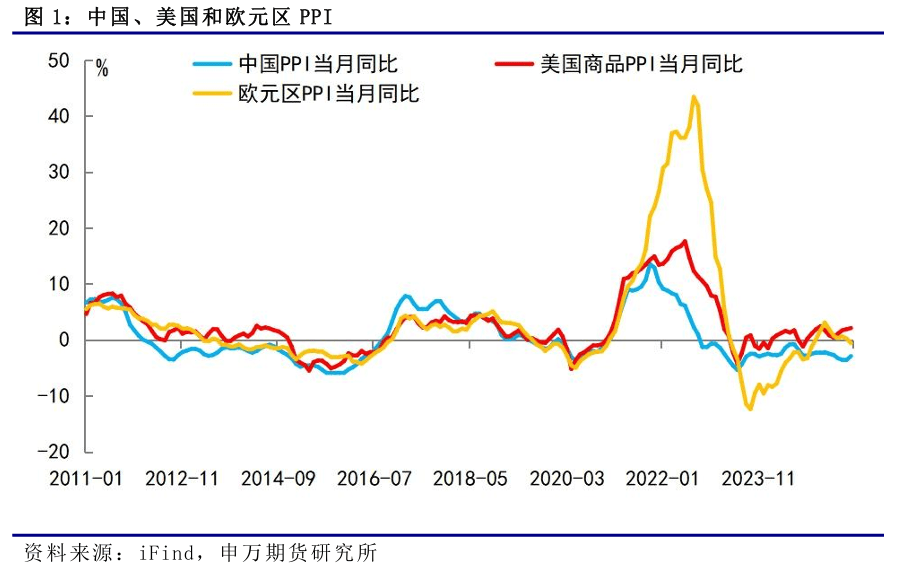
Core Insights - The PPI trends in China, the US, and Europe have diverged significantly post-pandemic, with China experiencing low PPI, the US maintaining relatively high PPI, and Europe showing considerable volatility. This divergence is primarily attributed to differences in energy structures and demand dynamics across these regions [1][4]. Energy Structure Impact - China's PPI is highly sensitive to coal prices, which are currently low due to weak demand and expanded supply. The domestic coal production has exceeded historical levels, and the demand from traditional sectors like real estate has decreased, leading to a prolonged low PPI [8][18]. - The US has a strong energy independence, primarily relying on oil and natural gas. The PPI is less affected by energy price fluctuations compared to Europe, with stable natural gas prices and a significant impact from rising oil prices due to global supply and demand dynamics [11][13]. - Europe's PPI has been significantly influenced by volatile natural gas prices, especially following the Russia-Ukraine conflict, which led to a sharp increase in energy costs. The subsequent measures to reduce dependency on Russian gas have also contributed to PPI fluctuations [14][22]. Demand Dynamics - In China, the transition from traditional to new economic drivers is underway, with the real estate sector in a downturn. This has led to reduced demand for related products, suppressing PPI. However, new economic drivers are beginning to support a gradual recovery in PPI [2][16]. - The US has shown strong demand resilience due to substantial fiscal stimulus during the pandemic, which increased disposable income and consumer spending. Despite rising labor costs and interest rates, the PPI has only seen moderate declines [19][20]. - Europe is experiencing a mild recovery in demand post-pandemic, but high energy costs and external demand declines have previously suppressed PPI. Recent economic recovery efforts and fiscal policies are expected to support a gradual increase in PPI [15][22].