
青少年社交媒体禁令

Search documents
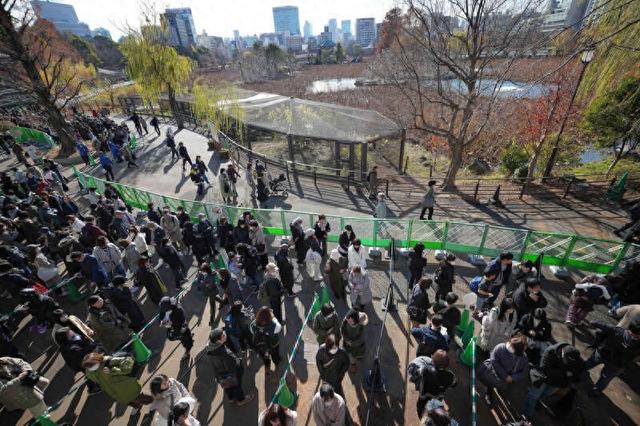
青年早新闻 | 日本民众排长队告别大熊猫,每批只能看1分钟
Zhong Guo Qing Nian Bao· 2025-12-17 01:44
Group 1 - The last two giant pandas in Japan, "Xiaoxiao" and "Leilei," are scheduled to return to China in early 2026, prompting a significant public farewell event at Ueno Zoo in Tokyo [1][3] - From December 16, Ueno Zoo implemented visitor restrictions for the panda viewing area, allowing each group of visitors only one minute to observe the pandas [1][5] - Long queues were reported, with visitors typically waiting over 40 minutes on weekdays and more than an hour on weekends to see the pandas [1][7] Group 2 - The Australian government has enacted a law prohibiting social media access for individuals under 16, with penalties for non-compliance reaching up to 49.5 million AUD (approximately 230 million RMB) [11] - This legislation has garnered international attention, with countries like the UK, France, Denmark, and Norway expressing support, and others like Indonesia and Malaysia exploring similar regulations [11] Group 3 - The Shanghai Consumer Protection Commission has raised concerns regarding a product labeled as "99% high-purity Antarctic krill oil" from Beijing Tongrentang, which was found to contain no actual krill oil [19][20] - The commission has urged the involved companies to conduct self-inspections, apologize to consumers, and recall the defective products [20]


澳大利亚实施首个青少年社交媒体禁令 引发世界各国关注
Xin Lang Cai Jing· 2025-12-10 13:20
Core Points - Australia has become the first country to officially ban users under 16 from accessing major social media platforms, a move that is expected to attract global attention from tech companies and policymakers [1][3] - The ban, effective from midnight local time, targets 10 major social media platforms including YouTube, Instagram, TikTok, Reddit, Snapchat, and X [1][3] - The policy requires these platforms to take "reasonable steps" to prevent minors from accessing their services, utilizing methods such as online activity inference, facial estimation through selfies, uploading identification, or linking bank details for age verification [1][3] - All targeted platforms have agreed to comply with the policy to some extent, with X being one of the last holdouts before agreeing to follow the regulations [1][3] - The policy is expected to result in millions of Australian children losing access to their social media accounts, and it may set a precedent for other governments considering similar bans, including Denmark, Norway, France, Spain, Malaysia, and New Zealand [1][3] Controversial Launch - Prior to the legislation's passage, a YouGov survey indicated that 77% of Australians supported the ban on social media for those under 16 [4] - Despite the support, the implementation of the law has faced some resistance since its enactment [4] - Proponents of the law argue that it protects children from social media-related harms, including cyberbullying, mental health issues, and exposure to predators and pornographic content [4][5]