非票收入

Search documents
数读2025:动画电影票房超250亿,中国电影的未来究竟在哪?
Xin Lang Cai Jing· 2026-01-11 02:00
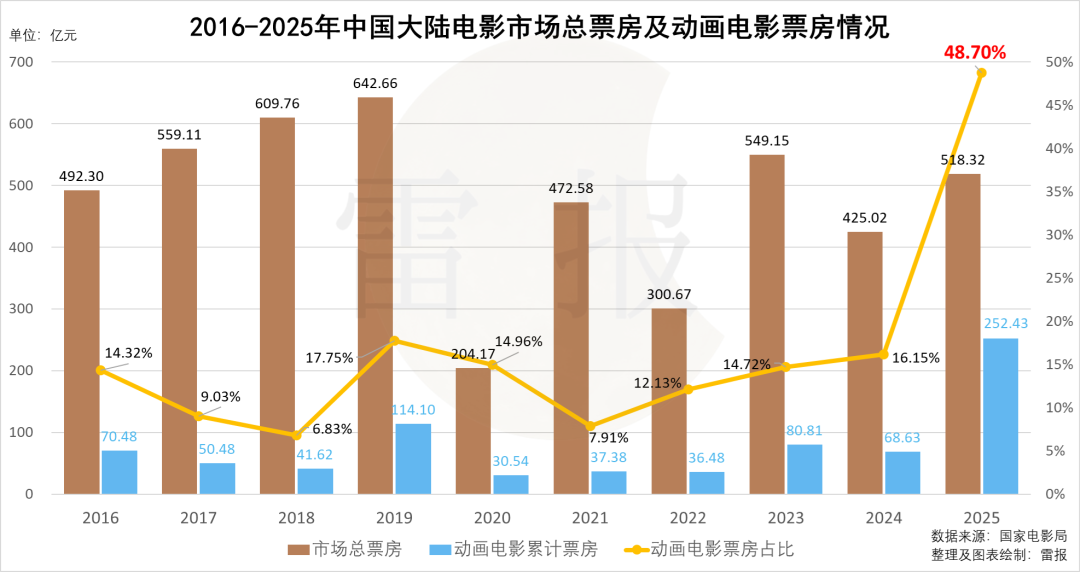
Core Insights - The Chinese film market in 2025 set numerous records, with a total box office of 51.832 billion yuan, a year-on-year increase of 21.95%, and 1.238 billion cinema admissions, up 22.57% from the previous year. However, it still fell short of the 2019 peak by over 12 billion yuan [1][3]. Animation Film Performance - Animation films were the standout category, achieving a total box office of 25.243 billion yuan, a staggering increase of 268% year-on-year, and capturing nearly 50% of the market share [3][4]. - Major hits included "Nezha: The Devil's Child" with a box office of 15.446 billion yuan, accounting for 30% of the annual total, and "Zootopia 2," which surpassed 4.26 billion yuan in just five days [3][4]. - Despite the success of top films, the overall industry faced challenges such as audience attrition and an imbalance in film types, with a significant drop in the under-25 demographic from 39% in 2017-2019 to 15% in 2025 [3][4]. Box Office Trends - The year saw four films surpassing 3 billion yuan, collectively accounting for over half of the total box office, but only 51 films crossed the 100 million yuan mark, indicating a growing gap in mid-tier films [4][9]. - The animation sector released 57 films, with "Nezha 2" leading the box office, yet many domestic animated films struggled to reach the 100 million yuan threshold, highlighting a persistent ceiling in the industry [6][9]. Audience Engagement and Ratings - The average Douban rating for films in 2025 was 7.1, slightly down from the previous year, with 16 films rated above 8, including several re-releases of classic films [13]. - The top-rated new films included "The Legend of Hei 2" and "Demon Slayer: Mugen Train," indicating a strong performance for recent releases [13]. Industry Challenges - The animation sector's reliance on a few major players has led to a "head and shoulders" market structure, with a lack of mid-tier creative output contributing to the industry's challenges [9][11]. - Despite the overall box office growth, the number of films grossing over 100 million yuan decreased, reflecting a decline in the mid-tier film market [9][11]. IP and Revenue Diversification - The film industry is increasingly moving towards a model that emphasizes IP commercialization beyond box office revenue, with companies exploring merchandise and licensing opportunities [21][22]. - Successful films like "Nezha 2" have generated significant revenue from merchandise, with projections suggesting sales could reach hundreds of billions [22][25]. - Companies like Wanda Film and Shanghai Film are actively investing in derivative product lines and diversifying revenue streams through IP collaborations [23][25]. Conclusion - The animation film sector is becoming a leader in the commercialization of film IP, transitioning from a single revenue model to a more integrated approach that combines content, experience, and supply chain management [30].


154.5亿元票房收官后,《哪吒2》还在赚更多的钱
Mei Ri Jing Ji Xin Wen· 2025-07-02 12:06
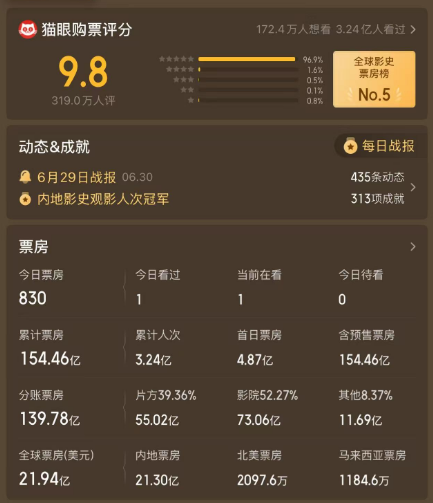
Group 1 - The film "Nezha: Birth of the Demon Child" (referred to as "Nezha 2") has officially concluded its run in mainland theaters, achieving a total box office of 15.446 billion yuan over 153 days [1][5] - "Nezha 2" has set a record as the highest-grossing film in Chinese cinema history, with over 320 million viewers [2][4] - The film's derivative product sales have reportedly exceeded 10 billion yuan, indicating a potential for future revenue streams that could surpass box office earnings [4][10] Group 2 - Light Chaser Animation, the production company behind "Nezha 2," plans to allocate more resources towards animated films, aiming to enhance the overall quality and output of animation projects [6][7] - The company has established a dedicated animation team of around 150 people, with plans to expand to over 300 in the coming years to increase production capacity [7] - The success of "Nezha 2" has prompted discussions within the industry about reducing reliance on box office revenue, with suggestions that non-box office income should account for a larger share of total revenue [10]