
非首都功能疏解

Search documents
第179个国家高新区来了!雄安高新区正式升级,助力打造京津雄地区创新三角
Xin Lang Cai Jing· 2026-02-16 10:55
Core Viewpoint - The upgrade of Hebei Xiong'an High-tech Industrial Development Zone to a national high-tech zone is a significant development for the Beijing-Tianjin-Hebei region, aiming to enhance technological innovation and economic collaboration among the three areas [2][5]. Group 1: Upgrade of Xiong'an High-tech Zone - The State Council approved the upgrade of Hebei Xiong'an High-tech Industrial Development Zone to a national high-tech zone, making it the 179th national high-tech zone in China and the 6th in Hebei province [2]. - The planning area for the upgraded Xiong'an High-tech Zone is set at 20.84 square kilometers, divided into two blocks: Block One covers 16.37 square kilometers and Block Two covers 4.47 square kilometers [3][4]. - The core positioning of the Xiong'an High-tech Zone is to create a significant non-capital function area, an international first-class high-tech industrial development zone, and a green intelligent innovation development demonstration area [4]. Group 2: Industrial Development and Innovation - The industrial layout will focus on a "1+3" system, primarily developing aerospace information, modern life sciences and biomanufacturing, new materials, and modern services [4]. - As of August 2025, over 800 enterprises have registered in the Xiong'an High-tech Zone, including 45 high-tech enterprises and 17 specialized and innovative small and medium-sized enterprises [4]. - The Xiong'an High-tech Zone aims to support the integration of innovation resources and promote efficient transformation and landing of technologies, contributing to the construction of a modern city in Xiong'an [5][6]. Group 3: Policy and Future Directions - The upgrade process was conducted rigorously, adhering to national high-tech zone criteria, including metrics such as the proportion of high-tech manufacturing value added and the number of patents granted per ten thousand people [4]. - The Xiong'an High-tech Zone is expected to attract international organizations in the technology innovation sector and become a significant source of independent and original innovation [5]. - Strict regulations will be enforced regarding land use and project construction, prohibiting commercial real estate development to ensure sustainable land resource utilization [6].


万亿投资筑底,央企疏解领航!雄安新区书写千年大计新答卷|2025中国经济年报
Sou Hu Cai Jing· 2025-12-25 10:42
Core Insights - Xiong'an New Area is transitioning from large-scale infrastructure construction to urban prosperity, focusing on the integration of non-capital functions from Beijing and promoting urban and industrial development [2] - The area has seen over 1 trillion yuan in cumulative investment over the past eight years, with an average annual investment of 200 billion yuan during the 14th Five-Year Plan period and a GDP growth rate of 17.1% [2] Group 1: Central Enterprises' Relocation - China Huaneng and China Sinochem have officially relocated their headquarters to Xiong'an, marking a significant milestone in the area’s development [3] - The successful establishment of these central enterprises sets a benchmark for subsequent projects, with over 400 central enterprises gathering in the region [3][4] - The relocation of these enterprises not only involves physical space but also ensures a smooth transition in business operations [4] Group 2: Industrial Ecosystem Restructuring - Xiong'an has attracted major energy central enterprises, including China Huaneng, China Huadian, and China Datang, forming a collaborative development model of "headquarters + R&D base + supporting enterprises" [5] - The area is also home to over 4,000 enterprises from Beijing, fostering an environment conducive to innovation and entrepreneurship [5] Group 3: Innovation and Development - The relocation of central enterprises is driving the restructuring of industrial chains, innovation chains, and resource flows, enhancing the region's innovative vitality [6] - Xiong'an has established 118 innovation platforms, including 53 at the provincial level, and has recognized numerous high-tech enterprises, indicating a robust innovation ecosystem [6] Group 4: Education and Research Integration - Four universities have set up 14 provincial-level key laboratories and two provincial-level technology innovation centers, promoting deep integration between academic research and industrial needs [7] - The relocation of financial services and cross-border financial centers is facilitating the flow of capital, technology, and talent in the region [7] Group 5: Green Development Initiatives - Xiong'an is positioning itself as a model for green low-carbon cities, with projects like distributed photovoltaic systems and green building standards being implemented [8] - The focus on green technology and sustainable practices is evident in the initiatives taken by relocated enterprises, contributing to the development of a modern green energy system [9]


雄安迎新!首批两家央企总部正式迁入,疏解非首都功能迈出关键一步
Hua Xia Shi Bao· 2025-10-10 07:45
Core Insights - The relocation of China Huaneng and China Sinochem to Xiong'an New Area marks a significant step in the long-planned development of this area, transitioning from construction to operational phases [2] - The presence of central enterprises (SOEs) is crucial for the economic and social development of Xiong'an, providing strong support and opportunities for growth [2][5] Group 1: Company Relocation - China Huaneng and China Sinochem have officially moved their headquarters to Xiong'an, with over 1,000 employees from each company starting work in their new offices [2] - The headquarters of China Huaneng covers approximately 111,100 square meters, featuring a 26-story tower and various functional spaces [3] - China Sinochem's building, designed to be the tallest in Xiong'an at 150 meters, draws inspiration from local natural elements [4] Group 2: Economic Impact - The relocation of these SOEs is part of a broader strategy to relieve non-capital functions from Beijing, enhancing the economic vitality and innovation capacity of Xiong'an [4][5] - The initial phase of SOE relocation has established a foundational layout in Xiong'an, with a "2+1+1" structure of headquarters buildings [4] - The influx of SOEs is expected to attract additional businesses and foster industrial clusters, such as aerospace technology and green chemical industries [7] Group 3: Future Development - The Xiong'an New Area is focused on improving infrastructure and creating a favorable environment for talent retention and business development [7] - Both China Huaneng and China Sinochem plan to leverage their strengths in technology innovation and green transformation to contribute to the strategic goals of Xiong'an [6] - The local government is committed to enhancing service support for future SOE relocations, ensuring a smooth transition and operational efficiency [7]

两大央企今天正式迁驻雄安新区
第一财经· 2025-10-09 08:23
Core Viewpoint - The formal relocation of China Huaneng Group and China Sinochem Holdings to Xiong'an New Area marks a significant milestone for both state-owned enterprises and represents a key progress in the transfer of non-capital functions from Beijing to Xiong'an [2][4]. Group 1 - Over 1,000 employees from China Huaneng and nearly 1,000 employees from China Sinochem have entered a normalized living and working state in Xiong'an New Area [4]. - The presence of these leading state-owned enterprises in Xiong'an is expected to attract related upstream and downstream enterprises, promoting the optimization and upgrading of the industrial structure in the area [4]. - The large-scale settlement of state-owned enterprise employees will bring high-quality resources such as talent and technology to Xiong'an, enhancing urban functions and vitality [4]. Group 2 - Xiong'an New Area is placing high importance on the transfer of non-capital functions from Beijing, providing comprehensive support and guarantees for the development of state-owned enterprises [4]. - Relevant departments in the New Area are actively coordinating with enterprise needs, ensuring smooth and orderly transitions in terms of office space planning and employee living services [4]. - The successful relocation and normalization of operations for China Huaneng and China Sinochem exemplify the service guarantee capabilities of the New Area and provide valuable experience for the future relocation of more state-owned enterprises [4].

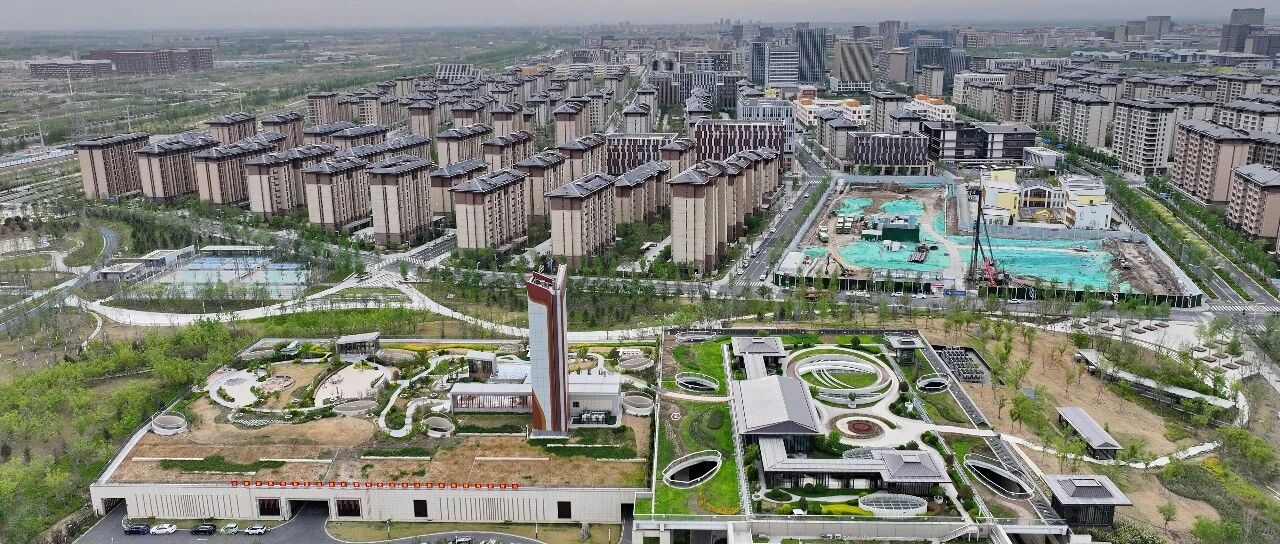
疏解非首都功能 首批两家央企总部正式迁驻雄安新区
Yang Shi Xin Wen· 2025-10-09 04:17
Core Points - China Huaneng Group and Sinochem Holdings officially relocated to Xiong'an New Area, marking a significant milestone in their development and a key progress in the relocation of non-capital functions from Beijing [1][3] - Over 1,000 employees from China Huaneng and nearly 1,000 employees from Sinochem have begun regular work and life in Xiong'an New Area [3] Group 1 - The relocation of these two central enterprises will drive the aggregation of related upstream and downstream companies to Xiong'an, promoting the optimization and upgrading of the industrial structure in the area [3] - The large-scale settlement of central enterprise employees will bring talent and technology resources to Xiong'an, enhancing urban functions and vitality [3] Group 2 - Xiong'an New Area is committed to supporting the relocation of non-capital functions from Beijing, providing comprehensive support and guarantees for the development of central enterprises [3] - The successful relocation and normalization of operations for China Huaneng and Sinochem demonstrate the effective service and support capabilities of the New Area, accumulating valuable experience for the future relocation of more central enterprises [3]

京津冀发展报告2025:非首都功能疏解见效,区域均衡仍存短板
Jing Ji Guan Cha Wang· 2025-07-21 13:20
Core Viewpoint - The recent Central Urban Work Conference emphasizes enhancing urban capacity for population and economic development, focusing on developing modern urban clusters and metropolitan areas in China [2] Group 1: Progress and Achievements in Beijing-Tianjin-Hebei Integration - The blue paper outlines significant progress in the integration of the Beijing-Tianjin-Hebei region, highlighting the effective decongestion of non-capital functions, with Beijing's resident population decreasing from 12.935 million in 2014 to 10.948 million in 2023 [3] - Over 3,200 general manufacturing enterprises have exited Beijing since 2014, and nearly 1,000 regional professional markets and logistics centers have been upgraded or relocated [3] - Beijing enterprises have made a total of 49,000 investments in Tianjin and Hebei, with over 10,000 branches established by Zhongguancun enterprises in these regions [3] Group 2: Industrial Layout and Development - The "Six Chains and Five Clusters" industrial layout has been effectively implemented, with key industries such as hydrogen energy and biomedicine being prioritized [4] - By 2024, 12 key industrial chains in Tianjin are expected to account for 82.1% of the industrial added value above designated size [4] - The comprehensive transportation network in the Beijing-Tianjin-Hebei region has been largely established, with a total high-speed rail mileage of 2,624 kilometers by the end of 2023, covering all prefecture-level cities [4] Group 3: Challenges in Regional Integration - The blue paper identifies four main issues in the integration process, including significant regional development imbalances and unresolved resource allocation problems [5] - The lack of a cohesive regional integration mechanism and the need for a market-oriented operational framework are highlighted [5] - There is a pressing need to enhance the collaborative impact of key development areas and strengthen Beijing's role in driving regional growth [5] Group 4: Recommendations for High-Quality Integration - Five strategies are proposed to promote high-quality integration, including deepening cooperation between industry, academia, and research, and enhancing the soft connectivity of regional rules and policies [6] - The need to activate market mechanisms for improved resource allocation efficiency is emphasized [6] - Establishing a collaborative innovation and industrial cooperation community led by major enterprises in Beijing is recommended to facilitate seamless integration of research and production [6] - The integration of transportation, public services, and ecological development is crucial for achieving high-quality regional integration [6] - A restructured spatial framework is suggested to leverage the strengths of Beijing, Tianjin, and regional centers for building a world-class urban agglomeration [6]

京津冀蓝皮书发布:推动京津冀高质量一体化
Xin Jing Bao· 2025-07-20 13:26
Core Insights - The "Beijing-Tianjin-Hebei Blue Book: Development Report (2025)" highlights the progress and achievements in high-quality integration of the Beijing-Tianjin-Hebei region, focusing on various aspects such as innovation, industry, ecology, and public services [1][2] Group 1: Achievements - In 2023, the technology contract transaction amount from Beijing to Tianjin and Hebei reached 74.87 billion yuan, which is 10.52 times that of 2013 [1] - Cumulative investments by Beijing enterprises in Tianjin and Hebei reached 2.3 trillion yuan, with over 49,000 investment instances [1] - The total length of high-speed rail in the Beijing-Tianjin-Hebei region reached 2,624 kilometers, covering all prefecture-level cities in the area [1] Group 2: Challenges - The report identifies significant regional development imbalances, with the average salary in Beijing in 2023 being 218,312 yuan, 1.58 times that of Tianjin and 2.3 times that of Hebei [1] - There is a lack of a unified regional integration mechanism and the need for accelerated market-oriented operational mechanisms [1] - The pressure for the deconcentration of non-capital functions remains high, and the allocation of quality medical resources is uneven across the three regions [1] Group 3: Recommendations - The report suggests legislative collaboration among the three regions to break down administrative barriers and enhance policy consistency [2] - It encourages the establishment of a mutual recognition directory for scientific and technological talent qualifications and the creation of a shared talent database [2] - Recommendations include strengthening collaborative innovation and industrial cooperation, promoting high-quality integration of transportation and public services, and accelerating the construction of world-class urban clusters [2]