
预制菜质疑

Search documents
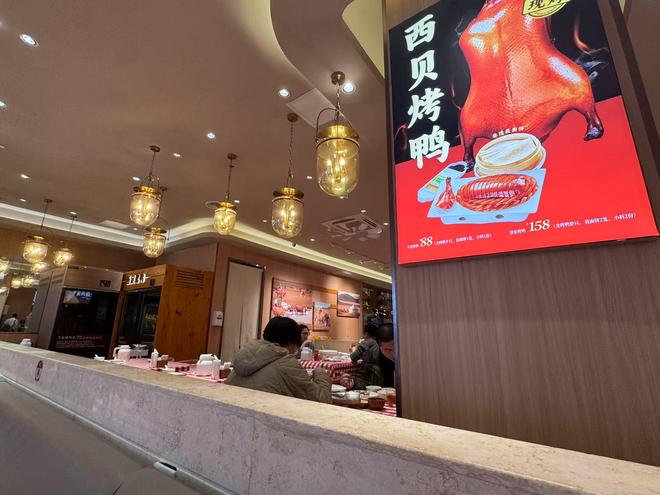
实探宣布关店后的西贝:部分门店客流量适中,上海已有数家门店关闭
Di Yi Cai Jing Zi Xun· 2026-01-16 11:04
Group 1 - Xibei has confirmed the closure of 102 stores nationwide, which accounts for 30% of its total store count [1] - The closures are set to be completed in the first quarter, with all affected employees guaranteed to receive their full wages [3] - Customers with stored value cards can use them at other locations or request refunds immediately [3] Group 2 - Some stores, such as the Shanghai Sanlin store and Shanghai Dongfang Road store, have not received closure notifications, while others have already closed [3] - Founder Jia Guolong plans to respond to allegations regarding Xibei's use of pre-prepared dishes, particularly in relation to frozen broccoli [3]

被“遗忘”的砂锅菜
Hu Xiu· 2025-09-01 00:38
Core Viewpoint - The popularity of clay pot cuisine is declining, with fewer new businesses opening and existing ones closing, indicating a potential market saturation and a shift in consumer preferences [1][4][18]. Group 1: Market Trends - As of August 12, 2025, there were 6,709 newly registered businesses related to clay pots, a significant drop from 15,174 in 2024, suggesting a challenging environment for new entrants [1]. - Monthly registration rates for new clay pot businesses have decreased significantly, with only two months in the current year exceeding 1,000 new registrations compared to all months in 2024 [2]. - The closure of clay pot restaurants, such as "打牙砂锅," has been noted, with reports of businesses shutting down or transferring ownership, reflecting a negative trend in consumer interest [3]. Group 2: Business Model Evolution - The clay pot cuisine market is experiencing segmentation, with different models emerging, such as dine-in restaurants focusing on quality and experience, exemplified by brands like "陶德砂锅" and "从前印巷·欢聚砂锅菜" [5]. - Fast-casual clay pot offerings are also on the rise, with brands like "谷田稻香" attempting to diversify their menu, although they face criticism for using pre-prepared ingredients [6]. - Innovative concepts combining clay pot dishes with bar experiences, like "满小二砂锅酒肆," are emerging, indicating a trend towards hybrid dining experiences [6]. Group 3: Challenges in Value Proposition - Despite the market's potential, clay pot cuisine struggles to establish a strong brand identity, often being perceived as a generic offering without unique characteristics [7][9]. - The perception of clay pot dishes as pre-prepared meals has increased, undermining their value and authenticity, as consumers question the freshness of the food [11][12]. - The focus on trendy marketing and aesthetics by some brands may detract from the core value of clay pot cuisine, which is rooted in simplicity and affordability [16][17]. Group 4: Future Outlook - The clay pot cuisine sector is at a crossroads, facing challenges such as low barriers to entry, high competition, and a lack of distinct value propositions [21]. - The industry is expected to return to its fundamental principles of providing hearty, flavorful meals that resonate with consumers' nostalgic memories, rather than attempting to upscale the concept unnecessarily [22].