频率主义

Search documents
等什么
猛兽派选股· 2025-12-02 05:20
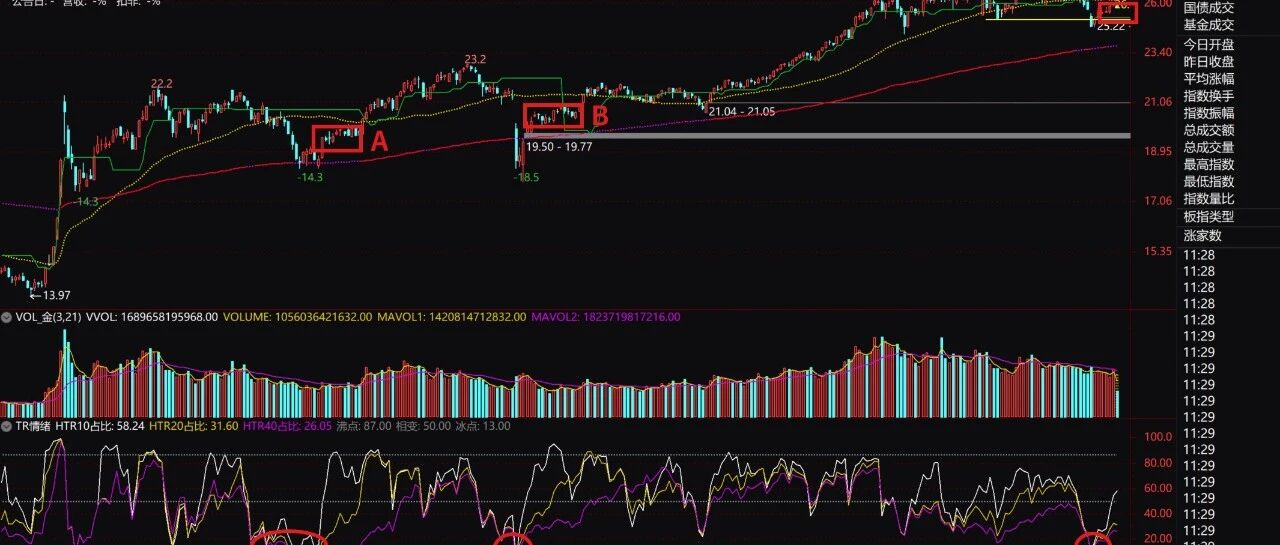
Group 1 - The market is currently experiencing a local rebound, but true trend speculators are cautious about entering positions at this time due to the pressure from the 50-day moving average [1] - The next main theme in the market is still uncertain, although some clues have emerged [2] - There are two potential scenarios for the market: one is a gradual consolidation followed by an upward breakout, which would require a significant increase in trading volume to confirm; the other is a continued pullback approaching or breaking previous lows, potentially forming a double bottom [3] Group 2 - Technical indicators are statistical characteristics that provide objective reference points but cannot replace systematic construction and analysis; many misunderstand technical analysis as merely chart reading [3] - Different technical analysis methods have their strengths, such as volume-price patterns excelling in emotional and behavioral logic reasoning, while the RSI indicator is better at quantifying momentum [4] - A robust trading system requires a comprehensive approach, selecting the best methods for each aspect and understanding the fundamental principles behind them [4]

概率游戏和我们的决策信念
猛兽派选股· 2025-11-01 04:19
Group 1 - The securities market is viewed as a probability game with a win-loss distribution of approximately seven losses, two draws, and one win, which raises questions about why many are drawn to it despite low winning odds [1] - The disparity in winning probabilities leads to significant potential returns, influencing participants' beliefs and behaviors in the market [1] - The article discusses two schools of thought regarding probability: frequentism, which views probability as an objective and unchanging reality, and Bayesianism, which sees it as a subjective belief that can be adjusted based on new evidence [1][2] Group 2 - Frequentism is characterized as a conservative approach that emphasizes safety margins, utilizing extensive data to extract objective rules and minimize risk, while Bayesianism is more intuitive and flexible, updating conclusions based on prior knowledge and current evidence [2] - The article suggests that no participant in the stock market is purely a frequentist or Bayesian; rather, individuals blend both approaches, adjusting their strategies based on varying frequencies of data and personal beliefs [2] - The integration of both frequentist and Bayesian thinking is essential for navigating the complexities of the market, allowing for the recognition of patterns while remaining adaptable to uncertainties [2][3] Group 3 - The analogy of chess is used to illustrate the combination of frequentism and Bayesianism, exemplified by AlphaGo's success in defeating top human players through a blend of data analysis and real-time strategy adjustments [3]