餐饮品牌经营困境

Search documents
实探!上海小南国一夜全城闭店,股价暴跌沦为“仙股”,曾拥有超过80家门店
Hua Xia Shi Bao· 2026-02-12 00:17
Core Viewpoint - Shanghai Xiaonanguo, a well-known restaurant chain, abruptly announced the closure of ten stores, leading to significant financial distress and operational challenges for the company [1][2]. Group 1: Company Operations - The company has temporarily ceased operations of its restaurants to align with a strategic restructuring plan aimed at reducing financial losses and improving operational efficiency [7][9]. - Employees reported that the company has been unable to pay wages for over three months, with estimated debts exceeding 20 million yuan [1][5]. - The company is in the process of refunding deposits for reservations and prepaid cards, with management stating that all funds are secured in designated accounts [1][9]. Group 2: Financial Impact - Following the announcement, Xiaonanguo's stock price plummeted over 27% on February 10 and continued to decline by 16% the next day, resulting in a market capitalization drop to approximately 69.05 million HKD from 2.656 billion HKD [2]. - The company has faced declining revenues since its peak in 2015, with a significant increase in its debt-to-asset ratio, rising from nearly 80% in 2018 to over 250% by mid-2025, indicating severe financial distress [5][6]. Group 3: Market Position and Strategy - Xiaonanguo, established in 1987, was once a prominent player in the restaurant industry with over 80 locations and annual revenues reaching 2 billion yuan, but has struggled with an outdated business model and high operational costs [4][5]. - Analysts suggest that the company's failure to maintain a clear market positioning between high-end and cost-effective dining has contributed to its decline [5][6]. - The management's inability to effectively communicate with employees and stakeholders has raised concerns about the company's leadership and future direction [9][10].


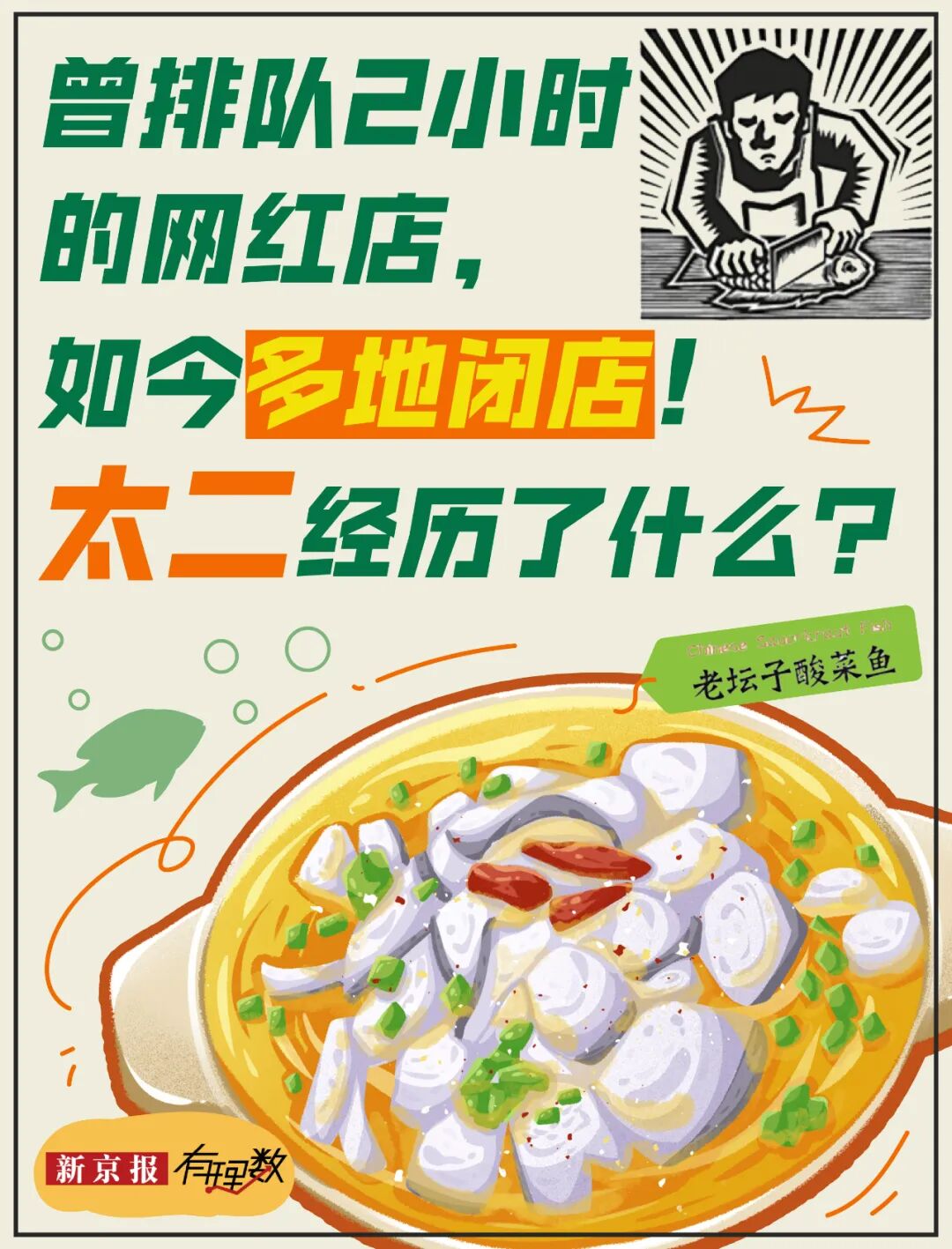
曾排队两小时的网红店,如今多地闭店!太二怎么了?
Xin Jing Bao· 2025-09-23 02:31
Core Viewpoint - The recent decline in popularity and closure of multiple "Tai Er" restaurants indicates a significant shift in consumer preferences within the sauerkraut fish market, despite the overall growth of the industry [2][6][28] Company Performance - "Tai Er" once enjoyed immense popularity, with a seating turnover rate of 4.8 in 2019, comparable to "Hai Di Lao" [7] - The company expanded aggressively, opening over 500 stores from 2019 to 2024, averaging 100 new locations per year [7] - However, the COVID-19 pandemic led to a decline in revenue and profit, with a 13.3% year-on-year drop in revenue to 19.48 billion yuan in the first half of 2025 [11][17] - The number of self-operated restaurants decreased from 612 to 547 within six months, indicating a loss of 65 locations [19] Market Competition - Competitors like "Yu Ni Zai Yi Qi" and "Lao Tang Yu" are thriving, with "Yu Ni Zai Yi Qi" operating 2,437 stores and opening 40 new locations in August 2023 [5] - The average consumer spending at new brands is significantly lower, with "Lao Tang Yu" offering meals at an average of 26.55 yuan [5] Consumer Perception - There is growing consumer dissatisfaction regarding portion sizes and pricing, with many feeling that "Tai Er" has reduced food quality while increasing prices [11][28] - The introduction of a new "5.0 Fresh Model" aimed at revamping the menu with fresh ingredients has not fully addressed consumer concerns [16][28] - The perception of using pre-prepared ingredients has raised doubts about the freshness of the food served, impacting customer trust [27][28] Strategic Challenges - The attempt to diversify into delivery services faced setbacks, including regulatory issues that harmed the brand's reputation [25] - The competitive landscape is increasingly challenging, with lower-priced alternatives and home-cooked meal options becoming more appealing to consumers [28]