馆校合作

Search documents
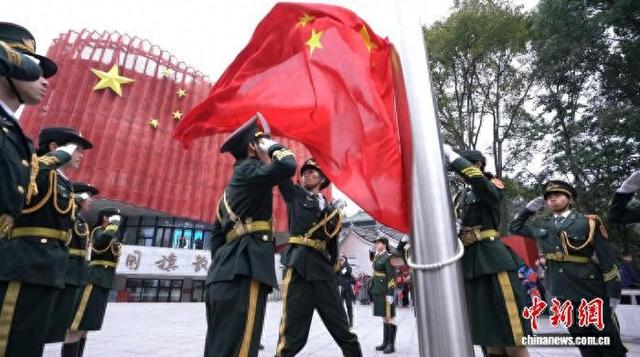
国旗设计者故乡升国旗迎新年 “馆校合作”厚植学子家国情怀
Xin Lang Cai Jing· 2026-01-01 10:31
Core Viewpoint - The establishment of the National Flag Education Museum in Rui'an, Zhejiang, marks a significant cultural initiative aimed at promoting patriotism and national pride among the youth and local citizens, with a ceremonial flag-raising event held on New Year's Day to celebrate the upcoming year of 2026 [1][2]. Group 1 - The National Flag Education Museum is the first comprehensive national flag education base in China, designed with themes reflecting national pride and local heritage [1]. - The museum features multiple themed halls, including the National Flag Birth Hall and the National Flag Knowledge Hall, and hosts flag-raising ceremonies annually on New Year's Day and National Day [1]. - The flag-raising ceremony was conducted by the Wenzhou University flag guard team, emphasizing the importance of national pride and collective aspirations for the country's prosperity [2]. Group 2 - Following the flag-raising, a cultural performance was held, featuring students from the New Era Experimental School, which aimed to inspire a sense of responsibility and commitment among the youth [4]. - Local citizens actively participated in the event, expressing their excitement and pride in witnessing the ceremony, reflecting the community's engagement with national development [4]. - The museum plans to continue fostering patriotism through various activities and collaborations with educational institutions, aiming to instill love for the country in future generations [4].

山东医学高等专科学校:以馆为媒 开拓美育浸润式教学新实践
Xin Lang Cai Jing· 2025-12-28 22:35
Core Viewpoint - Shandong Medical Higher Vocational School is actively exploring effective paths for aesthetic education, emphasizing the cultivation of humanistic qualities and aesthetic interests among medical students through collaboration with various cultural venues [1][5]. Group 1: Development of Aesthetic Education - The school collaborates with five cultural venues, including the Linyi Museum and the Yinque Mountain Han Tomb Bamboo Slip Museum, to provide diverse aesthetic education resources for medical students [1][5]. - Aesthetic education is integrated into the curriculum through courses such as "Aesthetic Codes in Cultural Relics" and "Military Science in Bamboo Slips," enhancing students' artistic appreciation and cultural identity [2][5]. Group 2: Practical Teaching and Student Experience - The school utilizes local cultural resources for practical teaching, allowing students to engage with history and traditional culture through museum visits, enhancing their aesthetic experiences [3][5]. - Students are encouraged to explore the historical stories and cultural values behind artifacts, integrating knowledge from various disciplines [3]. Group 3: Cultural Activities and Atmosphere - A series of cultural activities, including museum study practices and calligraphy competitions, are organized to enrich students' extracurricular lives and integrate aesthetic education into daily learning [4][5]. - Activities like "Han Culture Experience Day" allow students to immerse themselves in traditional culture, fostering a deeper appreciation for their heritage [4]. Group 4: Impact and Future Directions - The aesthetic education initiatives have led to significant improvements in students' aesthetic literacy and cultural confidence, with over 30 students winning awards in various competitions [5]. - The school aims to continue leveraging collaborations with cultural venues to innovate and deepen aesthetic education reforms, contributing to the sustainable development of aesthetic education in higher education [6].
中小学教师科学教育实践能力提升培训开班
Liao Ning Ri Bao· 2025-11-07 01:07
Core Insights - The training program "Enhancing Scientific Education Practice Ability of Primary and Secondary School Teachers through Museum-School Cooperation" commenced at the Provincial Science and Technology Museum, focusing on new pathways for high-quality development in primary and secondary school science education [1] - This training is a key component of the 2025 National Action Plan for Enhancing Scientific Literacy among Primary and Secondary School Teachers, emphasizing project-based curriculum development utilizing science museum resources [1] - The program includes a main report, in-depth discussions of typical cases, and workshop course design, balancing theoretical learning with practical exercises to explore the educational value behind science museum exhibits and quality science communication content [1] Training Details - The training aims to integrate project-based learning from science museums with practical teaching in primary and secondary science education [1] - A keynote report titled "AI Awakening Era - Current Status and Applications of Large Models" was presented, outlining the technological evolution of artificial intelligence large models and their core application scenarios in education, research, and production [1] - The training is organized by the China Science and Technology Museum and attended by key science education teachers and science counselors from Liaoning, Jilin, and Heilongjiang provinces [1]
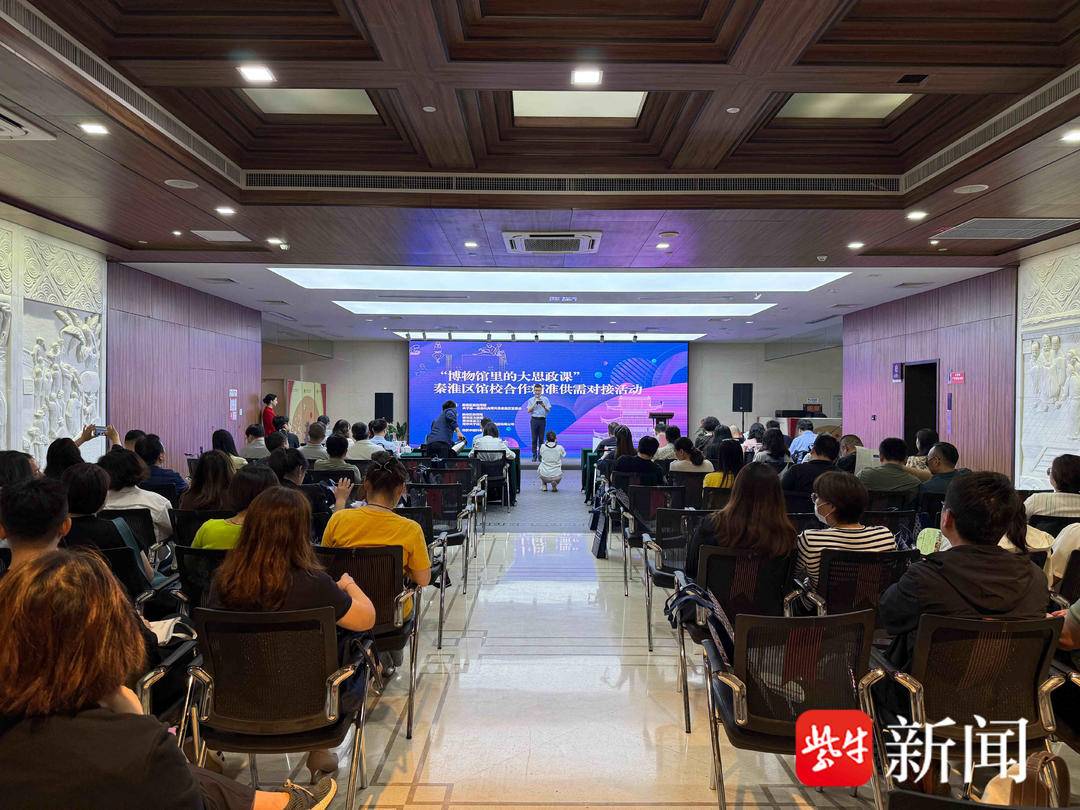
南京秦淮区举办馆校合作精准供需对接活动
Yang Zi Wan Bao Wang· 2025-05-16 03:17
Core Viewpoint - The event "Big Ideological and Political Class in the Museum" aims to integrate museum resources with ideological and political education in schools, creating a new educational model in Qinhuai District, Nanjing [1][3][4]. Group 1: Event Overview - The event was held on May 15 at the Nanjing China Imperial Examination Museum, focusing on precise supply-demand matching between museums and schools [1]. - It was guided by various local government departments and aimed to deepen the integration of traditional culture and revolutionary culture into ideological education [3][4]. Group 2: Educational Model - Qinhuai District has developed a unique educational model that combines museum resources with school curricula, emphasizing the importance of cultural heritage and revolutionary history [3][4]. - The model includes collaborative projects that transform museum artifacts into interactive learning materials, enhancing student engagement [4][6]. Group 3: Course Development - The Nanjing China Imperial Examination Museum has developed a three-dimensional curriculum system that includes traditional culture, revolutionary culture, and socialist advanced culture, conducting nearly 3,000 ideological education activities [7]. - The museum has reached over 400,000 young people, showcasing a diverse educational approach that emphasizes experiential learning [7]. Group 4: Future Directions - The district plans to strengthen communication between educational institutions and cultural venues, exploring innovative teaching methods such as AR interactive learning [4][7]. - Future initiatives will focus on creating a long-term cooperation mechanism and enhancing the development of museum-based courses [4][7].