大思政

Search documents
学术探讨|转设师范院校培养成效评价测度与体系研究
Xin Lang Cai Jing· 2026-02-23 22:47
Core Viewpoint - The article discusses the transformation of teacher training institutions into independent undergraduate colleges, emphasizing the need for innovative educational practices and a comprehensive evaluation system to enhance the quality of teacher training in response to educational reforms and technological advancements [1][6]. Group 1: Evaluation System Design - The "Five-in-One" talent cultivation mechanism integrates personality education, general education, teacher education, professional education, and practical education, necessitating a scientific evaluation system to measure its effectiveness and promote high-quality development of teacher training institutions [1][5]. - The evaluation metrics focus on five core indicators: achievement degree, adaptability, guarantee degree, effectiveness, and satisfaction, which are essential for assessing the alignment with national high-level teacher talent demands and ensuring comprehensive support for teacher training [1][2]. Group 2: Collaborative Evaluation - A multi-faceted evaluation system is highlighted, involving self-assessment, institutional assessment, professional assessment, international assessment, and continuous monitoring, creating a collaborative evaluation landscape among government, schools, professional organizations, and society [2][3]. - Internal evaluation responsibilities are defined for teachers, students, and administrative staff, while external feedback from employers and industry organizations is incorporated to ensure a comprehensive understanding of talent cultivation quality [2][3]. Group 3: Integration of Educational Elements - Strengthening the internal connections among the five elements of the evaluation system is crucial for enhancing its scientific validity, combining periodic assessments with ongoing monitoring across various dimensions such as theoretical teaching and practical training [3][4]. - The evaluation process should incorporate character education, general education, and professional skills into the curriculum, utilizing innovative assessment methods like big data and AI for real-time feedback on knowledge, skills, and competencies [4][5]. Group 4: Future Directions - The establishment of a precise evaluation indicator system is essential for the practical implementation of the evaluation framework, covering various dimensions such as emotional attitudes, cultural literacy, and practical application capabilities [5][6]. - The article concludes that the "Five-in-One" evaluation system not only addresses the needs of modern teacher education reform but also provides a scientific paradigm for the transformation and development of teacher training institutions, aiming to enhance the quality of talent cultivation for the construction of a strong educational nation [5][6].
学子创演科学家剧目 课堂搬到生态实验室 沪上高校“大思政”持续上新
Jie Fang Ri Bao· 2025-12-12 01:36
Group 1 - The core theme of the news revolves around the commemoration of Qian Xuesen's 114th birthday and the 70th anniversary of his return to China, highlighting the importance of his contributions to science and education [1][2] - A new theatrical production titled "The Transoceanic Return of the Wall Breaker" was performed by students, showcasing the spirit of Qian Xuesen and integrating ideological education with artistic expression [1][2] - The event included the donation of 33 albums and over 2,400 historical photographs by Qian Xuesen's son, enriching the resources of the Qian Xuesen Library and supporting research on the spirit of the scientist [2] Group 2 - The integration of ideological education into laboratory settings was exemplified by a class at Shanghai Ocean University, where students engaged with marine geology and its implications for future clean energy [3] - The "Integrity Growth Power" course initiative was launched, featuring online micro-courses and offline thematic classes, with contributions from nearly 30 educational institutions covering various disciplines [3] - The "Big Ideological and Political Course" showcased digital and intelligent practices in education, with presentations from various departments at Shanghai Film Art Vocational College [4]
黑龙江:高校“大思政”育人显成效
Zhong Guo Qing Nian Bao· 2025-12-03 06:45
Core Viewpoint - The recent performances of original plays at Harbin University of Science and Technology and Harbin Engineering University highlight the integration of personal ideals with national development, reflecting the essence of the "Daheng Spirit" and the "Hajun Gong Spirit" [1][2]. Group 1: Educational Initiatives - The "Great Ideological and Political Education" initiative in Heilongjiang Province aims to enhance the effectiveness of ideological education in universities, focusing on creating a supportive framework for this educational approach [2]. - The establishment of a three-dimensional educational system that combines classroom teaching, extracurricular practice, and online guidance is being promoted by various universities to enhance ideological education [2][3]. Group 2: Practical Engagement - Over 69 universities in Heilongjiang Province have formed more than 8,000 practical teams to engage in community service activities, demonstrating a commitment to practical education and social responsibility [4]. - The "Youth Practical Talent Program" has been launched to focus on maintaining national security, involving 136 graduate students in practical training within the province [4]. Group 3: Innovative Teaching Methods - The "Long Course" at Heilongjiang University utilizes a four-dimensional approach to ideological education, making theoretical learning more engaging and impactful for students [3]. - Innovative methods such as interactive storytelling and real-life experiences are being employed by universities to make ideological education resonate more with students [3].
汕头市未成年人思想道德建设成效显著
Zhong Guo Fa Zhan Wang· 2025-07-29 07:11
Core Viewpoint - Shantou City has made significant progress in the moral education of minors by implementing a comprehensive approach that emphasizes "moral education as the fundamental task" and promotes a new framework of "all personnel, all processes, and all aspects of education" [1][2][3] Group 1: Achievements in Moral Education - Shantou City has been recognized as a "National Civilized City" and has several schools awarded as "National Civilized Campuses," with a total of 6 national civilized campuses and 643 city-level civilized campuses, achieving a coverage rate of over 60% [1] - The city has cultivated a total of 191 exemplary youth, including 1 national-level, 16 provincial-level, and 174 city-level "New Era Good Youth," fostering a sense of mission among the youth [1][2] Group 2: Innovative Educational Practices - The city has developed the "Tuo City Big Ideological and Political Education" brand, conducting over 50 events and creating immersive experiences through red culture and local heritage [3][4] - Shantou has implemented a unique cultural project called "Overseas Chinese Letter Culture into Campus," engaging students in activities that promote national pride and cultural confidence [3][4] Group 3: Community and Parental Involvement - Shantou has established standardized parent committees in all 643 primary and secondary schools, promoting a collaborative approach to education between parents and schools [8] - The city has launched the "Family Education Lecturer Group," covering all communities and providing diverse educational resources for parents [8] Group 4: Psychological and Moral Support - A three-tiered psychological health protection network has been established, with over 500 volunteers trained and 800 psychological aid classes conducted, achieving a 100% success rate in crisis intervention [7][8] - The city has opened 40 patriotic education bases and 31 public cultural facilities for free access to minors, facilitating practical learning opportunities [7]
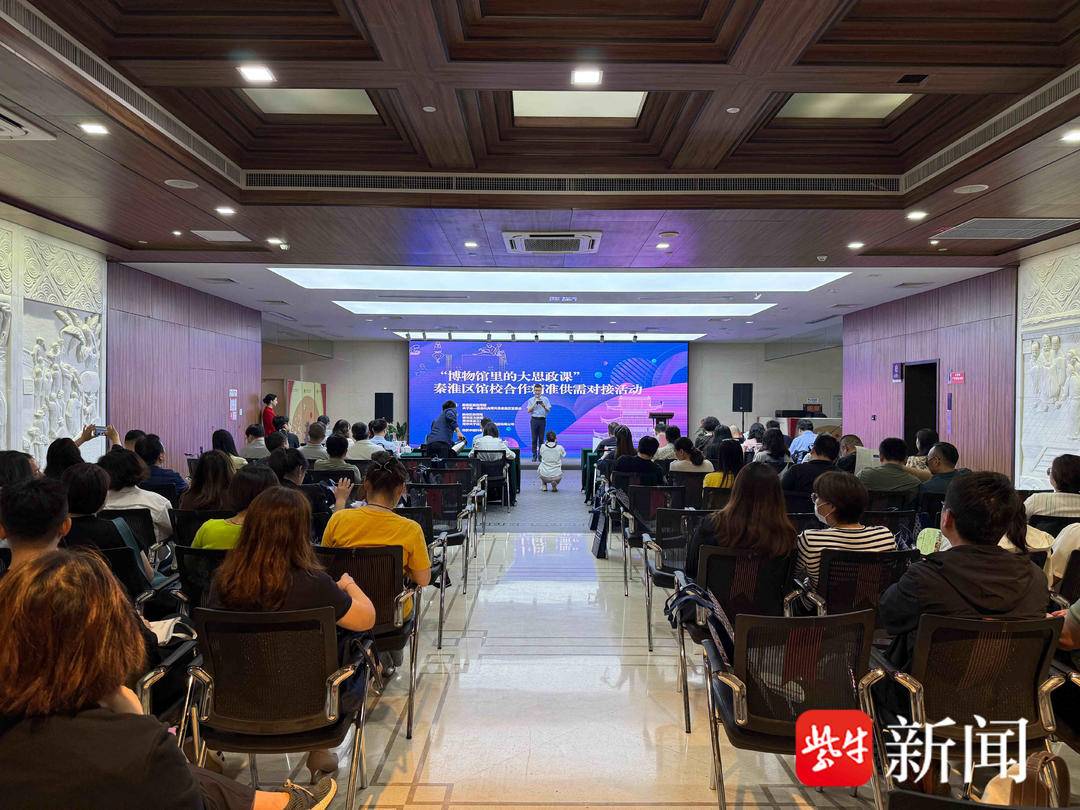
南京秦淮区举办馆校合作精准供需对接活动
Yang Zi Wan Bao Wang· 2025-05-16 03:17
Core Viewpoint - The event "Big Ideological and Political Class in the Museum" aims to integrate museum resources with ideological and political education in schools, creating a new educational model in Qinhuai District, Nanjing [1][3][4]. Group 1: Event Overview - The event was held on May 15 at the Nanjing China Imperial Examination Museum, focusing on precise supply-demand matching between museums and schools [1]. - It was guided by various local government departments and aimed to deepen the integration of traditional culture and revolutionary culture into ideological education [3][4]. Group 2: Educational Model - Qinhuai District has developed a unique educational model that combines museum resources with school curricula, emphasizing the importance of cultural heritage and revolutionary history [3][4]. - The model includes collaborative projects that transform museum artifacts into interactive learning materials, enhancing student engagement [4][6]. Group 3: Course Development - The Nanjing China Imperial Examination Museum has developed a three-dimensional curriculum system that includes traditional culture, revolutionary culture, and socialist advanced culture, conducting nearly 3,000 ideological education activities [7]. - The museum has reached over 400,000 young people, showcasing a diverse educational approach that emphasizes experiential learning [7]. Group 4: Future Directions - The district plans to strengthen communication between educational institutions and cultural venues, exploring innovative teaching methods such as AR interactive learning [4][7]. - Future initiatives will focus on creating a long-term cooperation mechanism and enhancing the development of museum-based courses [4][7].