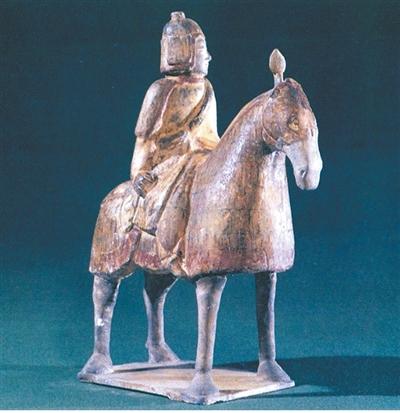
骑兵

Search documents
金戈铁马 驰骋东西(上新了)
Ren Min Ri Bao· 2026-02-28 02:24
Core Insights - The new exhibition at the Chinese Archaeological Museum features 28 newly displayed ceramic figurines from the Northern Qi Dynasty, revealing insights into the royal tombs of the Eastern Wei and Northern Qi periods [2] Group 1: Archaeological Findings - The Bayang Wall Mural Tomb is the only confirmed imperial tomb among hundreds in the region, with excavation work conducted from 1987 to 1989 [2] - The tomb yielded significant artifacts, including 6 large saddles, 14 small horses, and 4 pack horses, indicating the use of horses for labor and transportation [2] - The emergence of domesticated horses in China dates back approximately 4,000 years, with evidence found in various archaeological sites [2] Group 2: Historical Context - During the pre-Qin period, horses served three main purposes: as burial and sacrificial items, as draft animals for carts, and for riding, particularly in warfare [3] - The importance of horses increased significantly from the Western Han Dynasty, with widespread ownership and use in various societal functions [3] Group 3: Military Significance - By around 600 BC, horseback riding became prevalent among Eurasian steppe peoples, leading to the development of mounted archery and a powerful military force [4] - The introduction of cavalry transformed warfare, with heavy cavalry units equipped with armor, as evidenced by the discovery of armored figurines in the Bayang Wall Mural Tomb [4] - The tomb is notable for its extensive wall murals and a large number of ceramic figurines, including over 200 cavalry figurines, reflecting the military organization of the Northern Qi Dynasty [5]