高息套现

Search documents
“分期商城”暗藏高息套现风险
第一财经· 2026-01-23 02:11
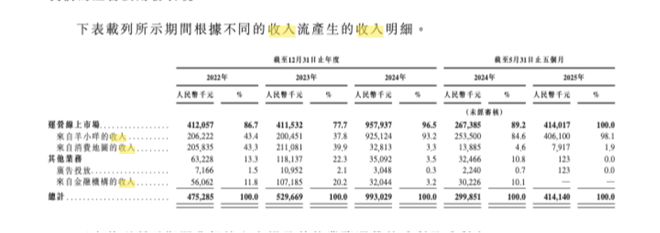
Core Viewpoint - The article discusses the emergence of "installment malls" as a new direction for several lending platforms following regulatory crackdowns on previous high-interest lending practices. However, it highlights significant price premiums in product pricing, leading to consumer costs that exceed market levels [3][4][5]. Group 1: Emergence of Installment Malls - Multiple lending platforms, including Xiaoxiang Youpin, Yangxiaomiao, Taoduoduo, and Luyouxuan, are shifting towards installment mall business models due to concentrated complaints [4]. - High-demand products like iPhones, gold, and Moutai are often priced significantly above market rates in these installment malls, with price differences reaching thousands of yuan [4][5]. - For instance, an iPhone 17 Pro priced at 17,000 yuan without installment costs 18,000 yuan with installment, while the same product costs only 14,000 yuan on mainstream e-commerce platforms [4]. Group 2: Pricing and Profit Margins - The article reveals that some platforms have high gross margins, with certain products showing gross margins exceeding 90% [3][4]. - Platforms like Xiaoxiang Youpin have introduced membership services that indirectly increase profits, with users often unaware of ongoing fees [5][6]. - The industry is focusing on compliance, with platforms aiming to align product pricing with market levels to avoid regulatory scrutiny [6]. Group 3: Hidden Recovery Chains - Despite claims of not engaging in recovery services, many platforms have formed hidden recovery chains, where third-party recovery agents contact consumers post-purchase to offer cash-out options [7][8]. - Users have reported receiving unsolicited offers to cash out their installment limits, often at steep discounts [8][9]. - This practice raises concerns about consumer privacy and the potential for facilitating cash-out transactions, which could lead to regulatory issues [8][9]. Group 4: Financial Performance and Growth - The financial data from companies like Quantitative Group indicates significant revenue growth after transitioning to consumer e-commerce, with revenues projected to rise from 4.75 billion yuan in 2022 to 9.93 billion yuan in 2024 [13]. - The gross margin for platforms like Yangxiaomiao has remained high, with figures reported at 88.1% in 2022 and expected to reach 97.5% by 2025 [15]. - The revenue from self-operated product sales and third-party store commissions contributes to the profitability of these platforms, with average commission rates between 1% and 5% [17]. Group 5: Regulatory Risks and Compliance - The article emphasizes the regulatory risks associated with high-price installment models, which could be classified as disguised lending if not properly managed [18][19]. - Recent judicial rulings have begun to challenge high-price installment practices, indicating a shift in legal perspectives on consumer protection [19]. - Industry insiders stress the importance of compliance design, including maintaining market-aligned pricing and separating sales from recovery roles to avoid regulatory pitfalls [20].


“分期商城”暗藏高息套现风险,有的实际融资成本超60%
Di Yi Cai Jing Zi Xun· 2026-01-22 09:08
Core Viewpoint - The rise of installment shopping malls is seen as a new direction for many lending platforms after regulatory crackdowns on previous high-interest lending models. However, significant price premiums on products have been reported, leading to consumer costs that far exceed market levels [1][2]. Group 1: Industry Trends - Multiple lending platforms, including Xiaoxiang Youpin, Yangxiaomiao, and Taoduoduo, are entering the installment shopping mall business, which has gained public attention due to concentrated complaints [2]. - High liquidity products like iPhones and premium liquor are commonly sold at these malls, often at prices significantly above market rates. For instance, an iPhone 17 Pro is priced at 18,000 yuan in installments, while the same product costs only 14,000 yuan on mainstream e-commerce platforms, showing a price difference of over 4,000 yuan [2]. - The industry is shifting towards installment malls as a response to stricter regulations and pressure on traditional lending models, with many platforms actively researching and implementing this business model [3][4]. Group 2: Pricing and Profitability - There is a widespread phenomenon of price premiums in installment malls, with some platforms charging significantly more than competitors. For example, a well-known liquor brand is priced at 1,752 yuan in installments on one platform, compared to 1,364 yuan on a leading e-commerce site [2]. - Platforms are also using membership services to indirectly increase profits, such as Xiaoxiang Youpin's "Plus Platinum Membership," which charges a monthly fee for reduced service fees during installments [3]. - The average gross margin for platforms like Yangxiaomiao has remained high, with reported margins of 88.1% in 2022 and projected to reach 96.7% in the first five months of 2025 [10]. Group 3: Compliance and Regulatory Challenges - The industry faces significant compliance challenges, as high pricing models may be interpreted as disguised lending practices. Regulatory scrutiny is increasing, and platforms must ensure that product pricing aligns closely with market levels to avoid complaints and regulatory action [1][4][15]. - The emergence of a hidden recovery chain, where third-party recovery agents contact consumers post-purchase, raises concerns about consumer privacy and the potential for facilitating cash-out transactions [6][7]. - Legal precedents are beginning to challenge high-price installment models, with courts ruling against platforms that impose excessive fees on overpriced products, indicating a need for compliance-focused business designs [15].