
高校学科专业调整

Search documents
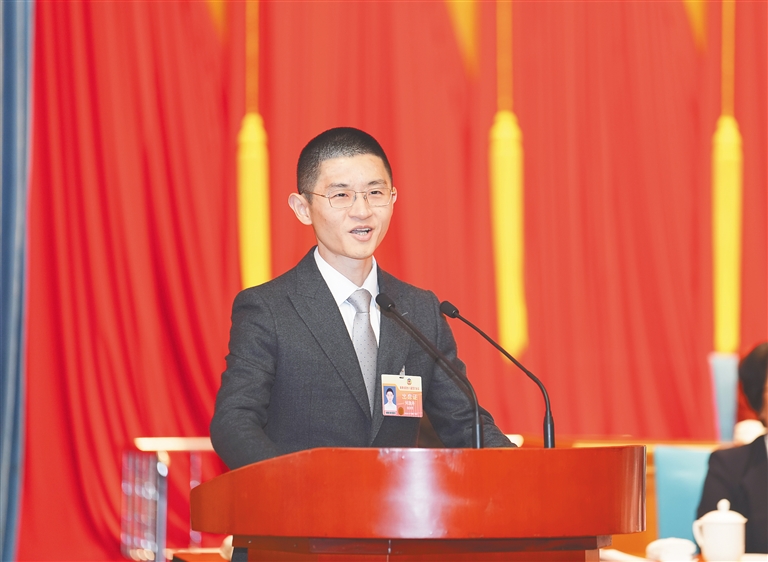
履职尽责建诤言 凝聚共识谱新篇——省政协八届四次会议第二次全体会议发言摘登②
Hai Nan Ri Bao· 2026-01-29 02:42
Group 1: New Energy Industry Development - The article emphasizes the importance of transforming new key factors and rules, such as tariffs, into actionable overseas strategies for companies in the new energy sector [1] - It suggests aligning with international standards and rules to enhance the institutional traction for new energy exports, thereby reducing costs through institutional cooperation [2] - The establishment of a "New Energy Export Service Center" in Hainan is proposed to provide comprehensive services, including international logistics [2] Group 2: Cross-Strait Cooperation - Strengthening cooperation between Hainan and Taiwan is highlighted as a crucial requirement for the construction of the Hainan Free Trade Port and for promoting cross-strait integration [6] - The article recommends creating a "one-stop service center" for Taiwanese residents to address challenges in professional qualification recognition [7] - It advocates for the establishment of "Hainan-Taiwan Industrial Cooperation Parks" focusing on high-tech, healthcare, and modern service industries to attract Taiwanese enterprises [7] Group 3: Education and Talent Development - The need for dynamic adjustment mechanisms in higher education to align with industry demands is discussed, including the formation of a talent demand think tank [11][12] - The article suggests implementing interdisciplinary incubation projects to enhance the supply of composite talents by breaking down academic barriers [13] - It also emphasizes the importance of global cooperation to elevate the internationalization of educational institutions [13] Group 4: Aerospace and Biotechnology - The article notes that Hainan's aerospace biotechnology seed industry is at a pivotal moment for rapid development and requires increased support [18] - Recommendations include establishing a special support fund for aerospace mutation breeding projects, with subsidies up to 3 million yuan [19] - It also suggests optimizing approval services and creating a green channel for the aerospace biotechnology industry [20]

新闻1+1丨急需学科专业,超常布局为哪般?
Yang Shi Wang· 2025-08-29 22:47
未来的高校学科专业调整,需要建立起什么样的机制做支撑?又该如何满足高质量发展人才需求? 近日,中央教育工作领导小组印发《高等教育学科专业设置调整优化行动方案(2025—2027 年)》,对深入推进学科专业设置调整优化工作作出系统部署,主要突出了六大机制、六大行动。 ...
加快推进学科专业交叉融合(在一线)
Ren Min Ri Bao· 2025-06-14 22:12
Group 1 - The Ministry of Education announced the approval results for undergraduate programs in 2024, with a total of 1,839 new programs added, 157 programs adjusted in degree categories or study duration, 2,220 programs discontinued, and 1,428 programs revoked [1] - Tsinghua University has stopped enrolling undergraduate students in journalism and accounting, which has led to a shift in talent cultivation towards higher-level training, emphasizing a combination of broad knowledge and specialized expertise [2][3] - The adjustment of academic programs in universities has faced some misunderstandings, such as the belief that new programs are always popular while discontinued ones are always unpopular, and that program viability is solely based on employment rates [2] Group 2 - Since 2020, although Tsinghua University has ceased undergraduate admissions for journalism and accounting, the graduate program sizes for these fields have continued to expand, indicating a shift towards graduate-level training [3] - Tsinghua University has established 15 colleges focused on undergraduate education and has introduced new interdisciplinary programs such as artificial intelligence and earth system science to meet national strategic needs [4] - The introduction of new programs is driving changes in traditional teaching methods, with a greater emphasis on student-centered learning and skill development [4]
创建高质量全链式就业服务
Guo Ji Jin Rong Bao· 2025-06-03 08:43
Core Viewpoint - The article discusses the challenges and strategies related to the employment of college graduates in China, highlighting the government's initiatives to improve the quality and effectiveness of employment services for graduates [1][3]. Group 1: Talent Development Optimization - Since 2003, the Ministry of Education has been issuing guidelines for higher education institutions to adjust their programs based on market demand, resulting in the cancellation of 12,000 unfit programs and the introduction of 21,000 new undergraduate programs [2]. - Despite these adjustments, there remains a significant gap in the effectiveness of educational supply and the alignment with social demand, with many institutions lacking sensitivity to technological changes and employment signals [2][3]. Group 2: Employment Guidance Enhancement - Over 90% of universities have established employment guidance courses, and the Ministry of Education has launched initiatives like the National College Student Career Planning Competition to enhance students' employability [4]. - The "Double Thousand" plan aims to improve students' employment capabilities by offering 1,000 micro-specialties and 1,000 vocational training courses [4]. Group 3: Job Recruitment System Improvement - The Ministry of Education has organized various recruitment events and launched the "National 24365 University Student Employment Service Platform" to expand job opportunities for graduates [7]. - However, there are issues with the homogeneity of campus recruitment activities and a lack of coordination between institutions [7]. Group 4: Support and Assistance Mechanisms - The "Macro志助航计划" has trained 1.4 million participants online and 306,000 offline, focusing on providing support for key employment groups, which constitute about 10% of graduates [9]. - The government has implemented a "one person, one policy" assistance mechanism for disadvantaged groups, ensuring they receive priority in job recommendations and training [9][10]. Group 5: Monitoring and Evaluation System Innovation - Since 2004, the Ministry of Education has been collecting employment statistics and has established a graduate destination registration system to monitor employment trends [11][12]. - The new policies aim to enhance the accuracy of employment data and improve the evaluation of employment quality through innovative methods [12]. Group 6: Support and Guarantee System Strengthening - The Ministry of Education has initiated actions to improve the employment guidance system, with over 100,000 employment guidance teachers currently in place [13]. - There is a need for better resource allocation and quality improvement in employment services to meet the demands of graduates [13][14].