高端化战略转型

Search documents
中国重汽重卡年产销30万辆背后的智造跃迁
Xin Lang Cai Jing· 2025-12-19 09:38
Core Insights - In 2025, China's commercial vehicle industry achieved a historic breakthrough, with China National Heavy Duty Truck Group (CNHTC) surpassing 300,000 heavy truck sales, marking its fourth consecutive year as the domestic industry leader and its first time ranking first globally in heavy truck sales [1][3] Group 1: Financial Performance - CNHTC's total revenue is expected to exceed 225 billion yuan, representing a 17% year-on-year increase, while total vehicle sales are projected to surpass 450,000 units, reflecting a 25% growth [3] - In the domestic market, heavy truck sales are expected to reach 150,000 units, a 33% increase, while light truck sales are projected at 120,000 units, up 29% [3] - The company has shown remarkable growth in the new energy sector, with expected sales increases of 230% for new energy heavy trucks and 390% for light trucks [3] Group 2: Export Performance - CNHTC exported over 150,000 heavy trucks this year, marking an 11% increase and maintaining its position as the top exporter of heavy trucks in China for 21 consecutive years [4] - In September, the company set a new record for monthly exports, exceeding 15,000 units [4] - The company has diversified its export product categories, with after-market parts sales increasing by 53% [4] Group 3: Competitive Advantage - CNHTC has developed a robust core competitiveness system, highlighted by the launch of the "Xiao Zhong 1.0" intelligent service system, which utilizes advanced AI technology to enhance customer service across the vehicle lifecycle [6] - The introduction of L2+ intelligent driving assistance technology improves operational efficiency, reducing labor costs by 20%-50% and increasing vehicle utilization by 20% [6] - The company has achieved a daily production capacity of 1,300 vehicles, ensuring high-quality and timely delivery to customers [6] Group 4: Future Development Plans - CNHTC aims to achieve a total revenue of over 400 billion yuan and vehicle sales exceeding 800,000 units by 2030, supported by a commitment to R&D and the "Talent Plan" [8] - The company will focus on six strategic directions: product, channel, policy, brand, service, and ecosystem, to maintain its leadership in commercial vehicle sales and market share [8] - The chairman emphasized that reaching the top is just the beginning, and the company is committed to high-quality development in the commercial vehicle industry [8]


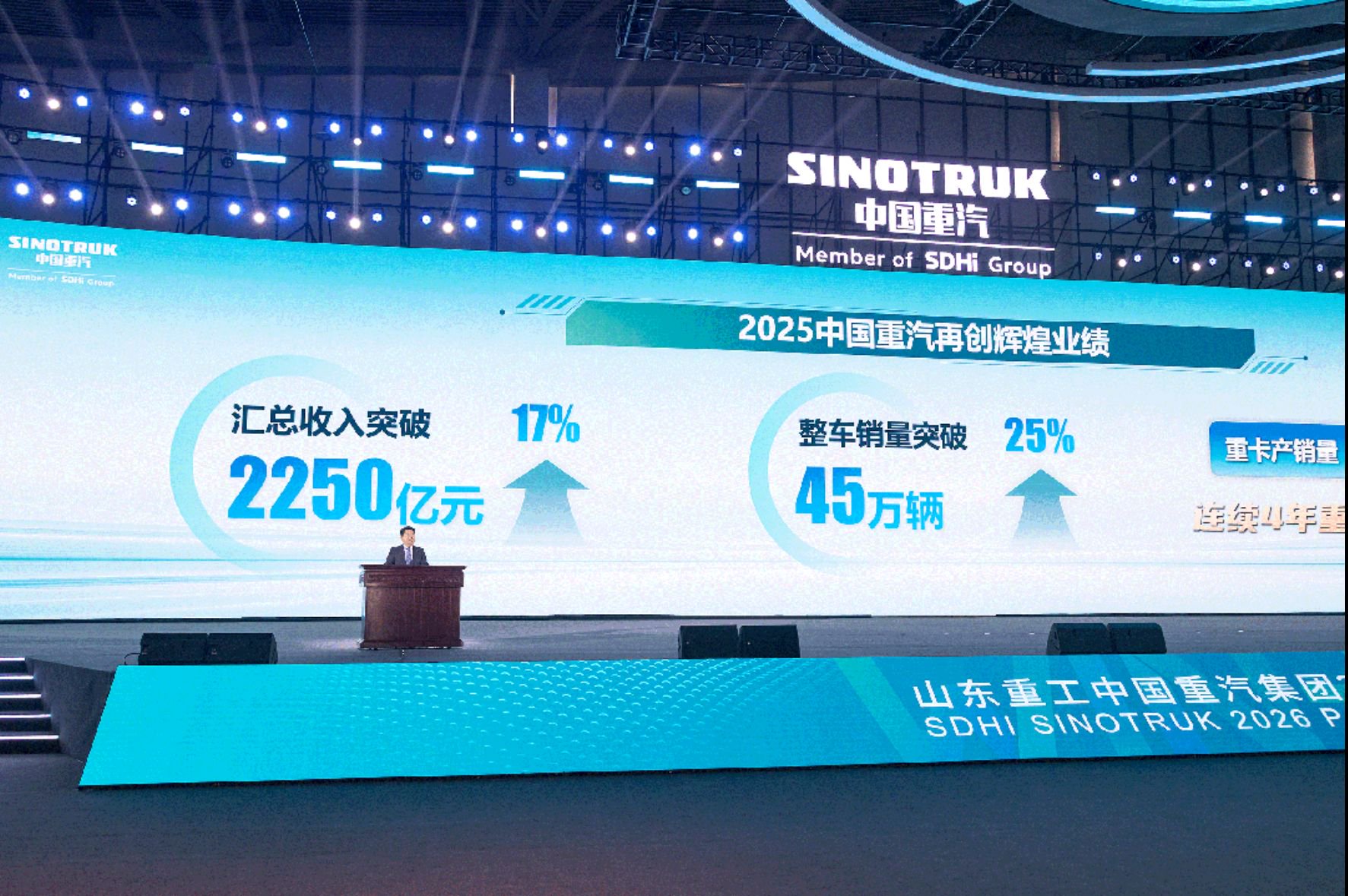
山东重工中国重汽集团2026年合作伙伴大会在济南举办
Zhong Zheng Wang· 2025-12-19 07:00
Core Insights - The Shandong Heavy Industry China National Heavy Duty Truck Group held its 2026 Partner Conference in Jinan, focusing on "Technology Leading All-Chain Win-Win" [1] - The company recognized outstanding partners for their contributions in 2025, projecting a total revenue of 225 billion yuan, a 17% year-on-year increase, and vehicle sales exceeding 450,000 units, a 25% increase [1] - The company aims to achieve a total vehicle sales target of 800,000 units and a consolidated revenue of over 400 billion yuan by 2030, emphasizing a strategic transformation towards green, digital, and international development [2] Group 1 - The conference featured over 3,000 partners and highlighted the company's achievements in 2025, including a record production and sales of heavy trucks exceeding 300,000 units [1] - The company reported a significant increase in domestic market performance, with heavy truck sales expected to rise by 33% to 150,000 units and light truck sales by 29% to 120,000 units [1] - The company introduced the "Xiao Zhong 1.0" high-level intelligent service system, which utilizes AI technology for various operational needs, enhancing the vehicle lifecycle management [2] Group 2 - In terms of exports, the company achieved a historic milestone with heavy truck exports exceeding 150,000 units, an 11% increase, maintaining its position as the top exporter for 21 consecutive years [2] - The company expanded its export product categories, with light truck exports increasing by 161% and aftermarket parts sales rising by 53% [2] - The conference showcased over 200 commercial vehicle products and components, demonstrating the company's technological strength and innovation [3]
逸仙电商加速高端化布局 旗下品牌科兰黎开设广州首家精品店
Nan Fang Du Shi Bao· 2025-11-25 12:11
Core Insights - Yatsen E-commerce's skincare brand Galénic has opened its first boutique in Guangzhou, marking a significant step in its expansion in the South China market [2][3] - The boutique showcases the brand's full range of star products and introduces innovative skincare solutions based on cellular technology, aiming to provide personalized skincare experiences [2][3] Company Strategy - Galénic, founded in 1978 by Dr. Pierre Fabre, emphasizes a technology-driven approach to skincare, utilizing its proprietary ActiveAnchor® technology for targeted cellular penetration [3] - The opening of the Guangzhou boutique reflects the brand's commitment to combining rigorous French scientific research with the needs of modern consumers, enhancing the overall aesthetic and product experience [3] Financial Performance - In Q3 2025, Yatsen E-commerce reported revenues of 998 million yuan, a year-on-year increase of 47.5%, with skincare revenue reaching 490.8 million yuan, up 83.2% from the previous year [4] - Skincare now accounts for 49.2% of total net revenue, up from 39.6% in the same period last year, indicating a successful shift towards high-end skincare [4] - The company has been actively acquiring international brands and increasing R&D investment, with R&D expenses rising to 39.8 million yuan in Q3 2025, representing 4.0% of total net revenue [4]

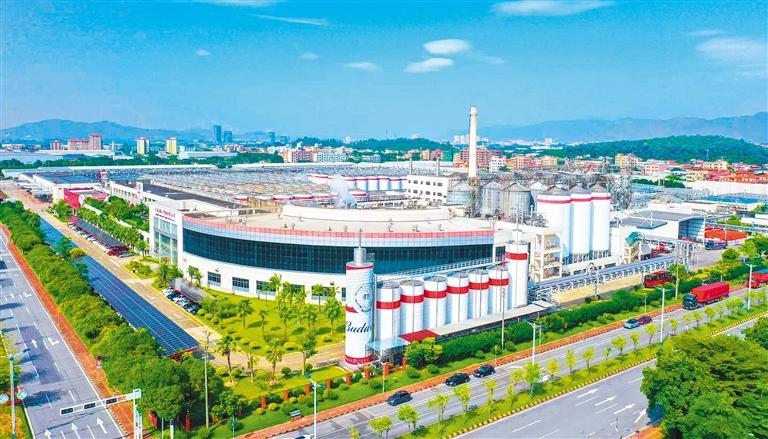
【高质量发展产业调研】啤酒业破局
Jing Ji Ri Bao· 2025-11-18 01:03
Core Viewpoint - The Chinese beer industry has evolved significantly over the past century, transitioning from traditional brewing to industrial production, and is now focusing on high-quality development and brand building in response to changing consumer demands and market conditions [1][3]. Industry Development - China has been the world's largest beer producer and consumer since 2002, with production peaking at 50.62 million tons in 2013 [1][2]. - The industry saw rapid growth post-reform in the 1980s, with the number of local breweries exceeding 800 at one point, leading to a diverse range of regional brands [2]. - By 1993, China's beer production surpassed Germany, and by 2002, it reached 24.03 million tons, making it the world's largest producer [2]. Market Dynamics - The industry has entered a phase of stock competition, with production volumes declining since 2013 due to changing consumer preferences and demographic shifts, particularly among the aging population [3][4]. - The demand for traditional beer is decreasing, with a notable drop in consumption among the primary demographic (ages 20-40) from 35% to 28% [3]. - Health consciousness among consumers is shifting preferences from quantity to quality, impacting overall beer consumption [3]. Competitive Landscape - The market is highly concentrated, with major brands like China Resources, Tsingtao, and Yanjing holding over 70% of the market share [4]. - Companies are urged to focus on high-quality development and adapt to new consumer trends to drive business growth [4][5]. Product Innovation - Companies are innovating to create new market spaces through precise positioning, flavor innovation, and differentiated strategies to resonate with consumers [5][7]. - The trend towards premiumization is evident, with companies targeting high-end and ultra-high-end markets, leading to increased average selling prices and improved profitability [10]. Consumer Trends - There is a growing demand for diverse and high-quality products, with companies expanding their offerings to meet the varied preferences of younger consumers [11][12]. - The rise of craft beer is becoming a significant trend, with consumers seeking unique flavors and experiences [13][14]. Sales Channels - The industry is embracing instant retail models, with companies like Qingdao Beer leading the way in this space, achieving significant growth in online sales [15][16]. - Instant retail is expected to continue growing, with projections indicating a market size exceeding 2 trillion yuan by 2030 [16]. Sustainability and Carbon Neutrality - The beer industry is focusing on green development and carbon neutrality, with initiatives aimed at reducing water and energy consumption [21][22]. - Companies are implementing advanced technologies to enhance energy efficiency and reduce carbon emissions throughout the production process [23][24]. Supply Chain and Raw Materials - The industry faces challenges related to raw material supply, particularly barley and hops, which are heavily reliant on imports [33][34]. - Efforts are being made to enhance domestic production capabilities and ensure a stable supply chain for key ingredients [33]. Cultural and Global Positioning - There is a push for cultural innovation to enhance the global recognition of Chinese beer, with an emphasis on storytelling and brand identity [36][37]. - Companies are encouraged to engage in international collaborations to increase brand visibility and market presence globally [37].