鹰派加息

Search documents
金银价从暴涨到血洗:揭秘美联储“鹰派炸弹”引发的贵金属浩劫
Sou Hu Cai Jing· 2026-02-02 15:12
Core Viewpoint - The nomination of Kevin Warsh as the new Federal Reserve Chairman by President Trump signals a potential shift from accommodative to tightening monetary policy, leading to a rapid revaluation of "hawkish rate hike" expectations in the market [1] Group 1: Market Reaction - Following Warsh's nomination, the dollar index surged, while gold and silver prices plummeted, indicating a loss of appeal for precious metals as inflation hedges [1] - The extreme overbought signals in the gold and silver markets were evident, with gold's Relative Strength Index (RSI) exceeding 90 and silver's RSI surpassing 80, indicating a highly concentrated speculative position [2] - The announcement triggered a swift collapse of long positions, resulting in a technical sell-off where gold fell over $600 in a single day and silver dropped nearly $40, exemplifying the market's volatility [2] Group 2: Trading System Flaws - The severe market fluctuations exposed critical flaws in the precious metals trading system, with the Chicago Mercantile Exchange raising gold margin requirements to 6% four times in a month, forcing high-leverage longs to liquidate [3] - The silver market experienced particularly harsh conditions, with over 70% of daily trading volume attributed to speculative funds, leading to a liquidity crisis as algorithmic trading triggered cascading sell-offs [3] - Some investors faced significant losses due to 20x leverage, resulting in a "crash-liquidation-recrash" spiral that left them indebted to brokers [3] Group 3: Institutional Actions - The operations of international commercial banks and hedge funds revealed the underlying nature of the market turmoil, with a historical mismatch between registered silver inventories and open contracts [4] - Major institutions, including Standard Chartered and UBS, began reducing net long positions before the crash, while hedge funds utilized algorithmic trading to hedge risks and exit positions, leaving retail investors as passive liquidity providers [4] - This institutional-led "long liquidation" fundamentally altered the market dynamics and competitive landscape [4] Group 4: Long-term Outlook - Despite the short-term severe drop, the fundamental drivers supporting long-term precious metal price increases remain intact, including ongoing de-dollarization, high annual gold purchases by central banks, and unresolved geopolitical risks [5] - Analysts suggest that the current market adjustment is a necessary process to eliminate excess leverage and speculative sentiment, potentially paving the way for a healthier upward trend in gold and silver prices [5] - However, the Federal Reserve's policy direction remains a critical variable; aggressive balance sheet reduction by Warsh could suppress precious metal performance in the short term, while increasing recession risks may renew interest in gold as a safe-haven asset [5]

日本央行内部鹰派崛起 日元命运将改写?
Jin Tou Wang· 2025-11-21 03:03
Group 1 - The core viewpoint of the articles indicates that the Japanese yen is strengthening against the US dollar due to intervention concerns, with the current exchange rate at 157.3700, reflecting a decline of 0.06% [1] - The Bank of Japan (BOJ) Governor Kazuo Ueda signaled that the persistent weakness of the yen could further increase inflation, as rising import prices due to yen depreciation are prompting companies to raise wages and product prices [1] - Ueda emphasized that the impact of exchange rate fluctuations on prices is becoming more significant, and the central bank must remain "highly vigilant" [1] Group 2 - There is a growing hawkish sentiment within the BOJ, with expectations for a potential interest rate hike in December, supported by Ueda's statements and the dissenting votes from two committee members in the October policy meeting [1] - The recent comments from committee member Junko Koeda also reflect rising concerns about inflation risks, indicating a shift in the policy stance [1] - Currently, only one committee member, Asahi Noguchi, maintains a dovish position, while the newly appointed member, Masayoshi Amamiya, is seen as a centrist likely to align with the prevailing hawkish views led by Ueda [1] Group 3 - Technical analysis of the USD/JPY currency pair shows a slight overbought condition in the daily Relative Strength Index (RSI), suggesting a cautious approach for traders [2] - Any corrective decline is expected to find support in the 156.65-156.60 area, with a critical level at 156.00 that, if breached, could lead to deeper losses [2] - Conversely, the 158.00 level may act as a direct obstacle, and if surpassed, the USD/JPY could rise towards the next resistance near the midpoint of 158.00, potentially testing the January high around 159.00 [2]
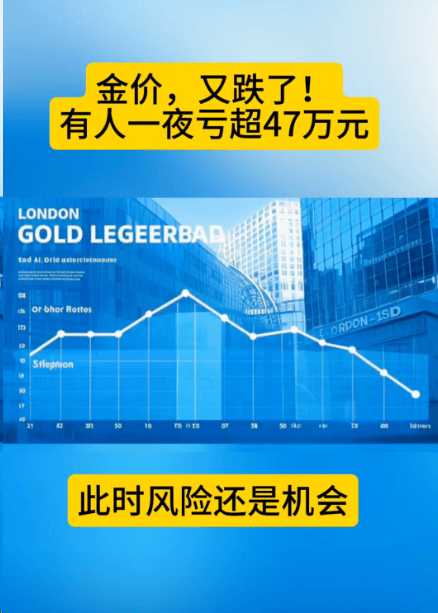
"从暴赚到血亏:金价跳水致投资者一夜损失47万实录"
Sou Hu Cai Jing· 2025-05-03 04:35
Core Viewpoint - The recent sharp decline in gold prices has led to significant losses for investors, particularly those using leverage, highlighting the risks associated with gold investments and the importance of prudent investment strategies [3][4][5]. Group 1: Market Impact - On June 12, international spot gold prices experienced the largest single-day drop since 2020, plummeting from $2280 to $2165 per ounce, with domestic gold prices also falling [3]. - Over 137 accounts reported losses exceeding 200,000 yuan on that day, with one investor, Lin Wei, recording a loss of 472,000 yuan, making him the largest loser in his trading department [3][4]. - The decline was triggered by a hawkish signal from the Federal Reserve, which caused the dollar index to surge by 2.3%, leading to a corresponding drop in gold prices [3]. Group 2: Investor Behavior - Many new investors entered the gold market during a seven-month price increase, with gold ETF holdings rising by 42% in the first five months of 2023, leading to a perception of gold as a guaranteed investment [5]. - High-leverage investors suffered the most, with reports of clients using 50x leverage losing their entire margin within 15 minutes due to forced liquidation [4]. Group 3: Investment Strategies - Current data shows hedge funds are significantly reducing long positions in gold, while central banks continue to purchase gold, indicating potential volatility in the market [7]. - Experts recommend that investors avoid blindly chasing high prices, use leverage cautiously, and limit gold investments to 15% of their financial assets [8]. - Investors are advised to reassess their holdings, with suggestions to observe key support levels and manage margin accounts carefully [10].