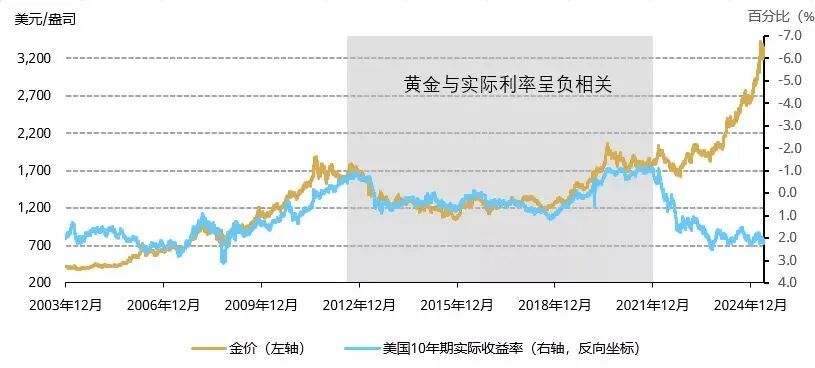
黄金与美债收益率脱钩

Search documents
2026年金价新逻辑 专访世界黄金协会美洲区CEO:全球央行连续16年净买入 一场“结构性变化”正在发生
Mei Ri Jing Ji Xin Wen· 2026-02-19 13:49
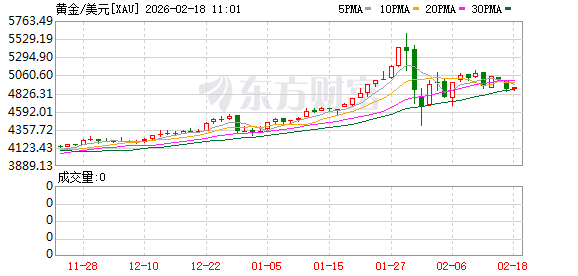
Core Insights - The global economic landscape remains volatile in 2026, with gold becoming a focal point for investors due to its perceived value as a safe-haven asset amid rising geopolitical tensions and financial market uncertainties [1]. Group 1: Key Drivers of Gold Market - Gold is undergoing a "structural transformation" driven by central bank purchases and heightened risk aversion, establishing itself as an essential liquidity buffer in asset allocation [1]. - In 2026, the primary driver for gold valuation is the increased risk and uncertainty in the macroeconomic environment, significantly boosting demand for gold as a high-quality safe-haven asset [2]. - The relationship between gold prices and U.S. Treasury yields has weakened, primarily due to other supporting factors like geopolitical risks and strong central bank purchases, which counterbalance the negative impact of rising real interest rates [3][4]. Group 2: Central Bank Purchases - Central banks have maintained a net buying trend for 16 consecutive years, indicating a significant structural change in the gold market, despite a slowdown in purchases in 2025 [6]. - In 2025, central bank gold purchases totaled 863 tons, lower than the historical highs of over 1,000 tons from 2022 to 2024, yet still above historical averages [6]. - Emerging market central banks view gold as a crucial hedge against geopolitical risks, with their gold reserves constituting about 15% of foreign exchange reserves, indicating substantial growth potential [7]. Group 3: Gold as a Liquid Asset - Gold is increasingly viewed as a reliable alternative to U.S. Treasury securities, especially in light of concerns over U.S. fiscal sustainability and debt levels [8]. - During market stress, gold has demonstrated superior liquidity compared to long-term U.S. Treasuries, characterized by deep market depth and stable bid-ask spreads [9]. - Reserve managers are increasingly considering gold as a non-sovereign asset to enhance portfolio resilience and liquidity buffers [10]. Group 4: Investment Strategies - In a world of persistent inflation volatility, traditional 60/40 investment portfolios are struggling, with gold historically improving risk-adjusted returns by enhancing diversification and reducing drawdowns [12]. - The World Gold Council does not provide specific gold price forecasts but outlines hypothetical scenarios in its 2026 gold outlook, indicating that worsening macroeconomic or geopolitical conditions could drive prices higher [13].

2026年金价新逻辑:地缘风险成首要因素 全球央行连续16年净买入 一场“结构性变化”正在发生
Mei Ri Jing Ji Xin Wen· 2026-02-18 03:00
Group 1 - The core viewpoint of the article emphasizes that gold is undergoing a structural transformation driven by central bank demand and risk aversion, making it an essential liquidity buffer in asset allocation [2] - In 2026, the primary driver for gold valuation is the rising risk and uncertainty, influenced by geopolitical tensions and financial market pressures, which have increased demand for gold as a high-quality safe-haven asset [3][4] - The traditional negative correlation between gold prices and U.S. Treasury yields has weakened, primarily due to other supporting factors like geopolitical risks and strong central bank purchases offsetting the negative impact of rising real interest rates [3][4] Group 2 - Central banks have maintained a net buying trend for 16 consecutive years, indicating a significant structural change in the gold market, despite a slowdown in purchases in 2025 [7][8] - Emerging market central banks hold about 15% of their foreign exchange reserves in gold, which is half of that of developed markets, suggesting substantial growth potential for future gold demand [8] - Gold is increasingly viewed as a reliable, non-sovereign alternative to enhance portfolio resilience and liquidity, especially during market stress periods [10][11] Group 3 - In a volatile inflationary environment, gold is expected to improve risk-adjusted returns in diversified portfolios, particularly as stock-bond correlations rise [13] - The World Gold Council does not predict gold prices but outlines hypothetical scenarios where worsening macroeconomic or geopolitical conditions could drive prices higher [14] - The impact of over-the-counter (OTC) transactions on gold pricing is significant, especially during large institutional or sovereign purchases, highlighting the diverse nature of gold market participants [14]