
黄金市场结构性转变

Search documents
黄金最新拐点已现!黄金接下来究竟是跌还是涨?
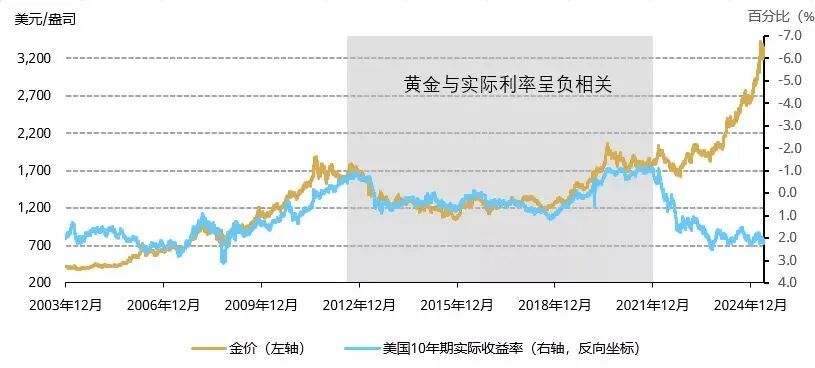
Sou Hu Cai Jing· 2026-02-21 21:36
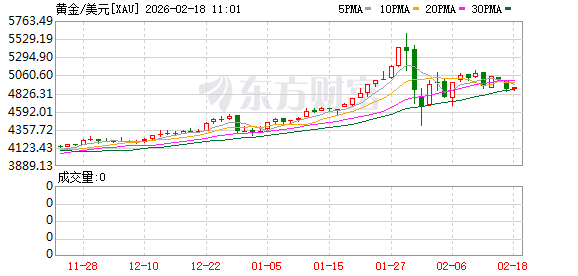
Core Viewpoint - The Chinese gold market in 2026 is experiencing significant price discrepancies, with gold prices varying widely across different markets and retailers, reflecting a complex and fragmented market environment [1][3][18]. Price Discrepancies - In February 2026, the price of a gold bracelet in a retail store in Weifang was 1536 yuan per gram, while the Shanghai Gold Exchange quoted Au9999 at 1108.5 yuan per gram, a difference of 427.5 yuan [1]. - Prices at various outlets include Water Bay wholesale market at 1266 yuan, Industrial and Commercial Bank's investment gold bars starting at 1105 yuan, and brand stores like Lao Feng Xiang at 1360 yuan and Chow Tai Fook at 1315 yuan [1]. Market Volatility - The gold market is undergoing severe fluctuations, highlighted by a record high of 5598.75 USD per ounce on January 29, 2026, followed by a sharp drop of 9.25% the next day [3]. - The volatility is exacerbated by speculative trading and changes in margin requirements at the Chicago Mercantile Exchange, leading to forced liquidations [3]. Central Bank Purchases - Central banks globally have maintained a net buying trend for 16 consecutive years, with 2025 seeing purchases of 863 tons of gold, although lower than previous years [5]. - The People's Bank of China has been a significant player, increasing its gold reserves to 7419 million ounces by the end of January 2026, marking 15 months of continuous purchases [5]. Emerging Market Actions - Other emerging market central banks, such as Poland and Hungary, are also increasing their gold reserves, with Poland planning to buy 150 tons, raising its total to 700 tons [6]. Structural Changes in Demand - The demand for gold is shifting towards long-term investment driven by central bank purchases and geopolitical uncertainties, as highlighted by the World Gold Council [8]. - The perception of gold as a reliable asset is growing, especially amid pressures on the dollar's credibility [8]. Impact of U.S. Monetary Policy - Fluctuations in gold prices are closely tied to expectations regarding U.S. Federal Reserve policies, with market predictions for interest rate cuts changing rapidly [8][9]. - Strong employment data in January 2026 led to a drop in gold prices, indicating the sensitivity of gold to economic indicators [9]. Consumer Behavior - Consumers are experiencing a divided market, with high demand for gold jewelry and significant price differences between retail and buyback prices, leading to confusion and frustration [13]. - The rise in gold ETF assets to 669 billion USD in January 2026 reflects a growing interest in gold as an investment vehicle [13]. Market Dynamics - The historical correlation between gold prices and U.S. Treasury yields has weakened, indicating a shift in market dynamics where gold is becoming a more independent asset class [15]. - Diverse demand from private sectors and emerging markets is providing a hedge against policy risks, prompting analysts to raise gold price forecasts for 2026 [16]. Future Outlook - Analysts have differing views on gold prices, with some predicting significant declines while others remain optimistic about continued strength due to ongoing geopolitical risks and central bank demand [16][18]. - The gold market in 2026 is characterized by a complex interplay of factors, including central bank purchases, monetary policy, geopolitical tensions, and speculative trading, creating a multifaceted investment landscape [18].


2026年金价新逻辑 专访世界黄金协会美洲区CEO:全球央行连续16年净买入 一场“结构性变化”正在发生
Mei Ri Jing Ji Xin Wen· 2026-02-19 13:49
Core Insights - The global economic landscape remains volatile in 2026, with gold becoming a focal point for investors due to its perceived value as a safe-haven asset amid rising geopolitical tensions and financial market uncertainties [1]. Group 1: Key Drivers of Gold Market - Gold is undergoing a "structural transformation" driven by central bank purchases and heightened risk aversion, establishing itself as an essential liquidity buffer in asset allocation [1]. - In 2026, the primary driver for gold valuation is the increased risk and uncertainty in the macroeconomic environment, significantly boosting demand for gold as a high-quality safe-haven asset [2]. - The relationship between gold prices and U.S. Treasury yields has weakened, primarily due to other supporting factors like geopolitical risks and strong central bank purchases, which counterbalance the negative impact of rising real interest rates [3][4]. Group 2: Central Bank Purchases - Central banks have maintained a net buying trend for 16 consecutive years, indicating a significant structural change in the gold market, despite a slowdown in purchases in 2025 [6]. - In 2025, central bank gold purchases totaled 863 tons, lower than the historical highs of over 1,000 tons from 2022 to 2024, yet still above historical averages [6]. - Emerging market central banks view gold as a crucial hedge against geopolitical risks, with their gold reserves constituting about 15% of foreign exchange reserves, indicating substantial growth potential [7]. Group 3: Gold as a Liquid Asset - Gold is increasingly viewed as a reliable alternative to U.S. Treasury securities, especially in light of concerns over U.S. fiscal sustainability and debt levels [8]. - During market stress, gold has demonstrated superior liquidity compared to long-term U.S. Treasuries, characterized by deep market depth and stable bid-ask spreads [9]. - Reserve managers are increasingly considering gold as a non-sovereign asset to enhance portfolio resilience and liquidity buffers [10]. Group 4: Investment Strategies - In a world of persistent inflation volatility, traditional 60/40 investment portfolios are struggling, with gold historically improving risk-adjusted returns by enhancing diversification and reducing drawdowns [12]. - The World Gold Council does not provide specific gold price forecasts but outlines hypothetical scenarios in its 2026 gold outlook, indicating that worsening macroeconomic or geopolitical conditions could drive prices higher [13].
2026年金价新逻辑,专访世界黄金协会美洲区CEO:全球央行连续16年净买入,一场“结构性变化”正在发生
Mei Ri Jing Ji Xin Wen· 2026-02-19 10:17
Core Viewpoint - The global gold market is undergoing a structural transformation driven by central bank demand and heightened risk aversion, making gold an essential liquidity buffer in asset allocation [1]. Group 1: Key Drivers of Gold Prices - In 2026, the primary driver for gold valuation is the increased risk and uncertainty in the macroeconomic environment, influenced by geopolitical tensions and localized financial market pressures [2]. - The traditional negative correlation between gold prices and U.S. 10-year Treasury yields has weakened, primarily due to other supporting factors such as geopolitical risks and strong central bank purchases offsetting the negative impact of rising real interest rates [2][3]. - Despite fluctuations, gold's stable price performance has attracted significant cash inflows, creating a positive growth momentum [2]. Group 2: Central Bank Gold Purchases - Global central banks have maintained a net buying trend for 16 consecutive years, indicating a significant structural change in the gold market [6]. - Although central bank gold purchases slowed to 863 tons in 2025, this figure remains above historical averages, reflecting ongoing demand driven by gold's crisis performance and inflation-hedging properties [6]. - Emerging market central banks view gold as a crucial tool for hedging geopolitical risks, with their gold reserves constituting about 15% of foreign exchange reserves, indicating substantial growth potential [6]. Group 3: Gold as a High-Quality Liquid Asset - Gold is increasingly viewed as a reliable, non-sovereign alternative to enhance portfolio resilience and liquidity, especially during market stress periods [7]. - Although gold is not officially classified as a High-Quality Liquid Asset (HQLA) under Basel III, its market performance demonstrates characteristics of such assets, including deep market liquidity and orderly trading during volatility [6][7]. Group 4: Gold's Role in Diversified Investment Portfolios - In a world of persistent inflation volatility, traditional 60/40 investment portfolios are struggling, and gold is seen as a stabilizing component in diversified portfolios [10]. - The Qaurum model indicates that gold typically improves risk-adjusted returns in various macro environments, particularly when stock-bond correlations rise [10]. - The World Gold Council does not predict gold prices but outlines hypothetical scenarios where worsening macroeconomic or geopolitical conditions could drive prices higher [11].

2026年金价新逻辑:地缘风险成首要因素 全球央行连续16年净买入 一场“结构性变化”正在发生
Mei Ri Jing Ji Xin Wen· 2026-02-18 03:00
Group 1 - The core viewpoint of the article emphasizes that gold is undergoing a structural transformation driven by central bank demand and risk aversion, making it an essential liquidity buffer in asset allocation [2] - In 2026, the primary driver for gold valuation is the rising risk and uncertainty, influenced by geopolitical tensions and financial market pressures, which have increased demand for gold as a high-quality safe-haven asset [3][4] - The traditional negative correlation between gold prices and U.S. Treasury yields has weakened, primarily due to other supporting factors like geopolitical risks and strong central bank purchases offsetting the negative impact of rising real interest rates [3][4] Group 2 - Central banks have maintained a net buying trend for 16 consecutive years, indicating a significant structural change in the gold market, despite a slowdown in purchases in 2025 [7][8] - Emerging market central banks hold about 15% of their foreign exchange reserves in gold, which is half of that of developed markets, suggesting substantial growth potential for future gold demand [8] - Gold is increasingly viewed as a reliable, non-sovereign alternative to enhance portfolio resilience and liquidity, especially during market stress periods [10][11] Group 3 - In a volatile inflationary environment, gold is expected to improve risk-adjusted returns in diversified portfolios, particularly as stock-bond correlations rise [13] - The World Gold Council does not predict gold prices but outlines hypothetical scenarios where worsening macroeconomic or geopolitical conditions could drive prices higher [14] - The impact of over-the-counter (OTC) transactions on gold pricing is significant, especially during large institutional or sovereign purchases, highlighting the diverse nature of gold market participants [14]
杨振金:黄金白银强势不改 今日走势分析及操作布局附解套
Xin Lang Cai Jing· 2025-12-26 08:35
Market Analysis - On December 24, spot gold prices closed at approximately $4479.42 per ounce, having reached a historical high of $4525 during the day, while U.S. gold futures settled around $4505 [1][5] - The trading liquidity was thin due to the Christmas holiday, leading to a calm market atmosphere, with gold prices fluctuating between $4450 and $4500 [1][5] - This stable performance is described as a natural consolidation phase following a strong upward trend, with many traders locking in profits as the year ends [1][5] - Despite this brief pause, the overall upward momentum of gold remains intact, reflecting the market's digestion of approximately 70% gains for the year and building potential for a breakout in the new year [1][5] - High prices have pressured jewelry demand, resulting in a decline in consumption, while investment demand for gold bars and coins remains relatively robust, highlighting a structural shift in the global gold market [1][5] Technical Analysis of Gold - Gold is currently in a strong bullish trend, with a recommendation to maintain long positions without attempting to predict a peak [2][6] - The week has seen a pattern of initial gains followed by corrections, with a notable low of $4450 observed [2][6] - On Friday, gold prices continued to reach new highs, approaching $4531, indicating the strength of the upward trend [2][6] - It is advised to wait for pullbacks to enter long positions, particularly after Asian trading sessions, with technical support identified around $4460 [2][7] Technical Analysis of Silver - Silver has reached a high of $75, with daily new highs being recorded, maintaining a bullish trend [3][8] - The recommendation is to adopt a long position on any pullbacks, with a short-term focus, and support identified at $72.5 for potential buying opportunities [3][8]