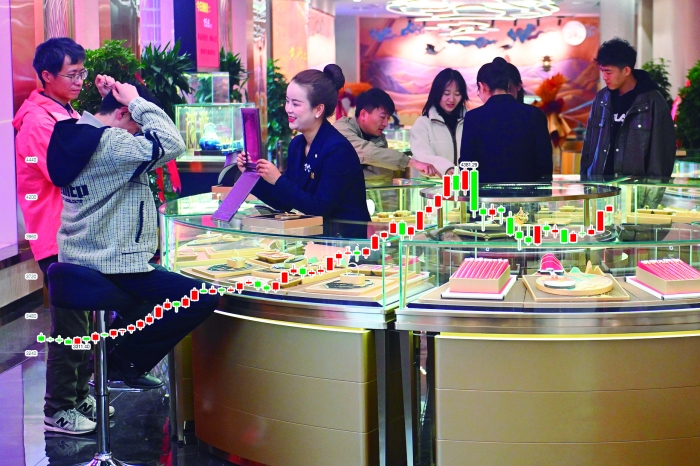
黄金金融属性强化

Search documents
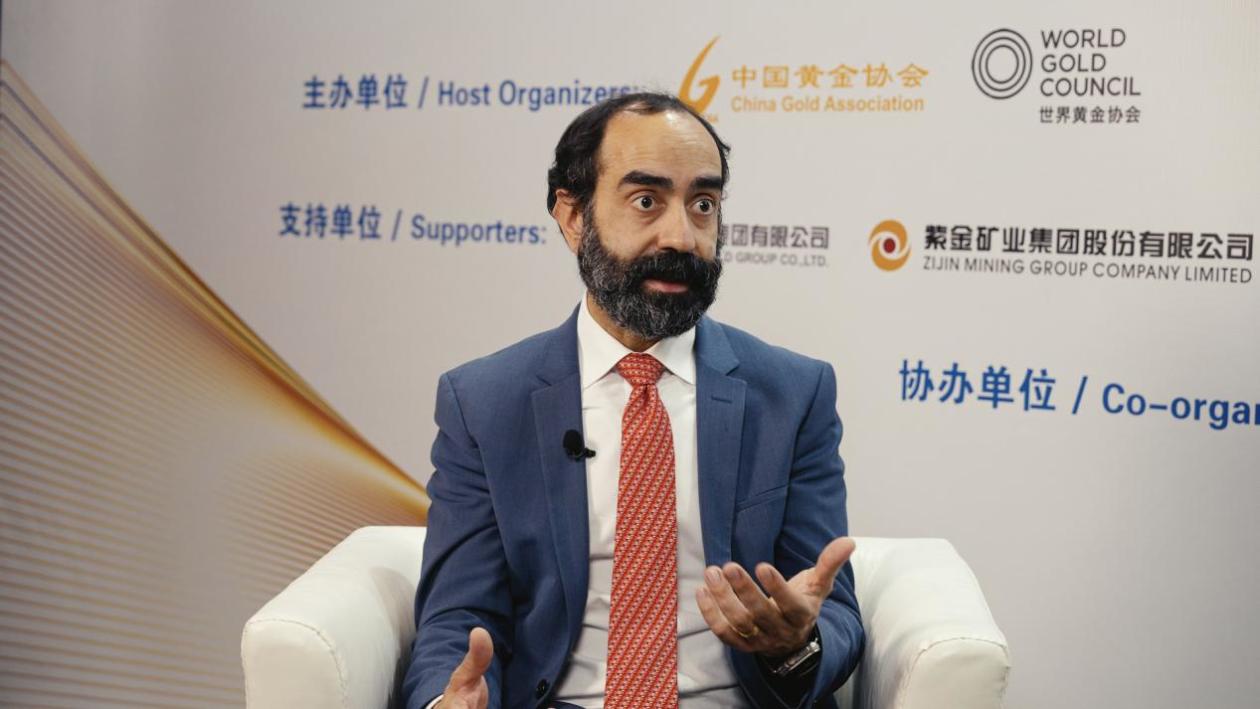
世界黄金协会安凯:2026年金价将步入多重力量交织的动态平衡新阶段
Huan Qiu Wang· 2025-12-31 01:46
Core Viewpoint - The global gold market is expected to perform exceptionally well in 2025, driven by various factors including geopolitical risks, trade tensions, and changes in monetary policy [1][3]. Group 1: Global Gold Demand and Price Trends - In the first three quarters of 2025, global gold demand reached a historical high of 3,640 tons, with total demand increasing by 41% to $3,840 billion [3]. - The gold price saw a cumulative increase of over 60% in 2025, setting more than 50 historical highs throughout the year, significantly outperforming major asset classes like emerging market stocks and U.S. equities [3]. - The World Gold Council's report anticipates that gold prices will enter a new phase of dynamic balance in 2026, influenced by various macroeconomic factors [4]. Group 2: Future Price Scenarios - The World Gold Council outlines four potential scenarios for gold prices, with the current consensus suggesting a stable global economy and a potential fluctuation of -5% to +5% around current high levels [4]. - If the U.S. economy weakens and the Federal Reserve implements significant rate cuts, gold prices could rise by 5% to 15% [4]. - In extreme scenarios of deeper global economic slowdown, gold prices could increase by 15% to 30%, while a stronger-than-expected economic recovery could lead to a 5% to 20% decline in gold prices [4]. Group 3: Structural Changes in the Gold Market - Recent tax regulations in China may temporarily suppress demand for gold jewelry due to increased prices from VAT, but this impact is expected to diminish over time [6]. - The integration of gold ETFs and standard gold purchases is showing positive signs of capital inflow, potentially attracting consumers with investment motives [6]. - The financial and monetary attributes of gold are becoming more pronounced, with gold being recognized as a strategic asset for long-term investment portfolios [7]. Group 4: Technological Innovations and Market Standards - The World Gold Council is exploring the introduction of "digital gold" to enhance the trading, settlement, and collateral systems in the gold market [8]. - Standardization in the gold industry is crucial for market efficiency, with initiatives aimed at responsible mining and improving transparency across the supply chain [9]. - China's role as the largest gold producer and consumer is pivotal, with significant demand for gold bars and ETFs contributing to global growth [10]. Group 5: International Cooperation and Market Development - The Shanghai Gold Exchange is highlighted as a successful model for the gold ecosystem, with recent developments in offshore gold delivery enhancing global trading capabilities [10]. - The establishment of the Hainan Free Trade Port is expected to provide new opportunities for cross-border innovation in the gold industry, potentially benefiting the global gold market [10].

高价下的黄金市场:“投资金”需求首超“首饰金”
Shang Hai Zheng Quan Bao· 2025-11-11 16:57
Core Insights - The gold consumption market is undergoing a structural transformation, with investment demand for gold bars and coins surpassing jewelry consumption for the first time in 30 years [2][3][5] - The significant rise in gold prices, with London gold reaching over $4100 per ounce, has driven this shift in consumer behavior [2][4] - The overall gold consumption in China decreased by 7.95% year-on-year in the first three quarters, with jewelry consumption dropping by 32.5% while investment gold consumption increased by 24.55% [3][5] Market Dynamics - Jewelry consumption, traditionally the mainstay of the gold market, has seen a drastic decline, with sales dropping by 50% for some retailers since April [3][4] - High gold prices have led consumers to be more cautious, as the investment attributes of jewelry are perceived as weak, leading to a reluctance to purchase at elevated prices [4][5] - The demand for investment gold is being fueled by heightened economic uncertainty and the desire for wealth preservation, with many investors looking to capitalize on rising gold prices [5][6] Future Outlook - Short-term gold price fluctuations are expected due to macroeconomic factors and uncertainties surrounding U.S. monetary policy, but long-term prospects remain positive [6][7] - Central banks continue to increase their gold reserves, with China's reserves reaching 74.09 million ounces, indicating sustained demand for gold as a hedge against inflation and economic instability [7]